Casinos That Accept Tether in the UK: What to Check
 Available in GB
A practical guide to confirming cashier access, network compatibility, transaction costs and the terms attached to deposits and withdrawals.

Table of Contents
- Checking Whether Tether Is Actually Available in the Cashier
- Tether Casinos and Slot Rules in Britain
- What a Tether Casino Transaction Can Cost
- Tether, GamStop and the Limits of What You Can Assume
- Crypto Payments: Check the Currency Before You Send
- How to Judge a Tether Casino Without a Promised Ranking
- TRC20 and ERC20: Confirm the Network Before Transferring
- Deposits, Bonuses and the Small Print
- No-KYC Claims and Withdrawal Verification
- BEP20 Transfers: Check Fees and Route Details
Checking Whether Tether Is Actually Available in the Cashier
A page can mention Tether without letting you deposit with it. I’ve learned to treat a cryptocurrency logo, a general “crypto accepted” line and a working cashier option as three different things. Only the last one tells you that the payment route is available to you now.
That distinction matters when looking for a Tether online casino in the UK. A site might describe several digital currencies in a general payment guide, while its current cashier offers only some of them. Availability can also depend on the customer’s location or account, so a claim on a public page is a lead to check, not confirmation.
Look for the specific payment option
Start with the operator’s own payment information, but read the detail rather than relying on a row of logos. Does the page name Tether, or does it say only “cryptocurrency”? Does it explain that the method is available to UK customers? Is the information presented as current, or does it look like a broad overview that could apply to other markets?
If you’re looking at casinos that accept Tether in the UK in 2026, check that USDT is currently available for your account before depositing. The details here are limited to the stated payout times.
Payout speed: 1-3 business days You can expect payouts in 1–3 business days.
Payout speed: 1-3 business days Payouts are stated to take 1–3 business days.
Payout speed: 1-3 business days You’re given a stated payout timeframe of 1–3 business days.
Payout speed: 1-3 business days The listed payout speed is 1–3 business days.
Payout speed: 1-3 business days You can use the stated 1–3 business day payout timeframe as a reference.
Payout speed: 1-3 business days Payouts are listed as taking 1–3 business days.
Payout speed: 1-3 business days You have a stated payout timeframe of 1–3 business days.
Payout speed: 1-3 business days The available payout-speed information gives a timeframe of 1–3 business days.
Payout speed: 1-3 business days You can expect payouts in 1–3 business days, according to the information provided.
Payout speed: 1-3 business days The stated payout speed is 1–3 business days.
A specialist review of casino payment options may mention Visa, Mastercard, bank transfer, e-wallets and several cryptocurrencies. That gives you a useful starting point, but it does not establish that a particular Tether route is available in the cashier today. Reviews can describe a site generally; they cannot show what your account will be offered at the point of payment.
I check for the exact currency name and then look for confirmation inside the operator’s own payment flow. If Tether is not named clearly, I do not translate “crypto” into “Tether” in my head. Close enough is not confirmation.
Check before committing to an account
If the cashier is visible without registration, inspect its deposit options without submitting a payment. If you need to sign in first, check whether the operator’s payment page or help centre explains availability to British customers. If it still is not clear, ask customer support a direct question: can a customer in Great Britain currently deposit using Tether, and is that option shown in the cashier?
Keep the answer specific. “We accept cryptocurrency” does not settle whether Tether is included. “Tether is listed on our site” does not establish whether it is enabled for your account. You want confirmation of the actual method, for your location, in the current cashier.
I have wasted time treating a polished payments page as if it were a live menu. It isn’t. A cashier can be account-specific, and a payment option may be unavailable even when the broader site mentions it. Check the point where you would actually choose the method, before sending funds.

Treat a mention as a clue, not a promise
Some sites use “Tether,” “USDT” or a general crypto label in different places. The wording alone may not tell you whether the same payment route is available in the cashier. Check that the option is explicitly identified there, and that the instructions relate to the deposit you are about to make. If the site’s public information and cashier disagree, pause and ask the operator to clarify rather than guessing which one is current.
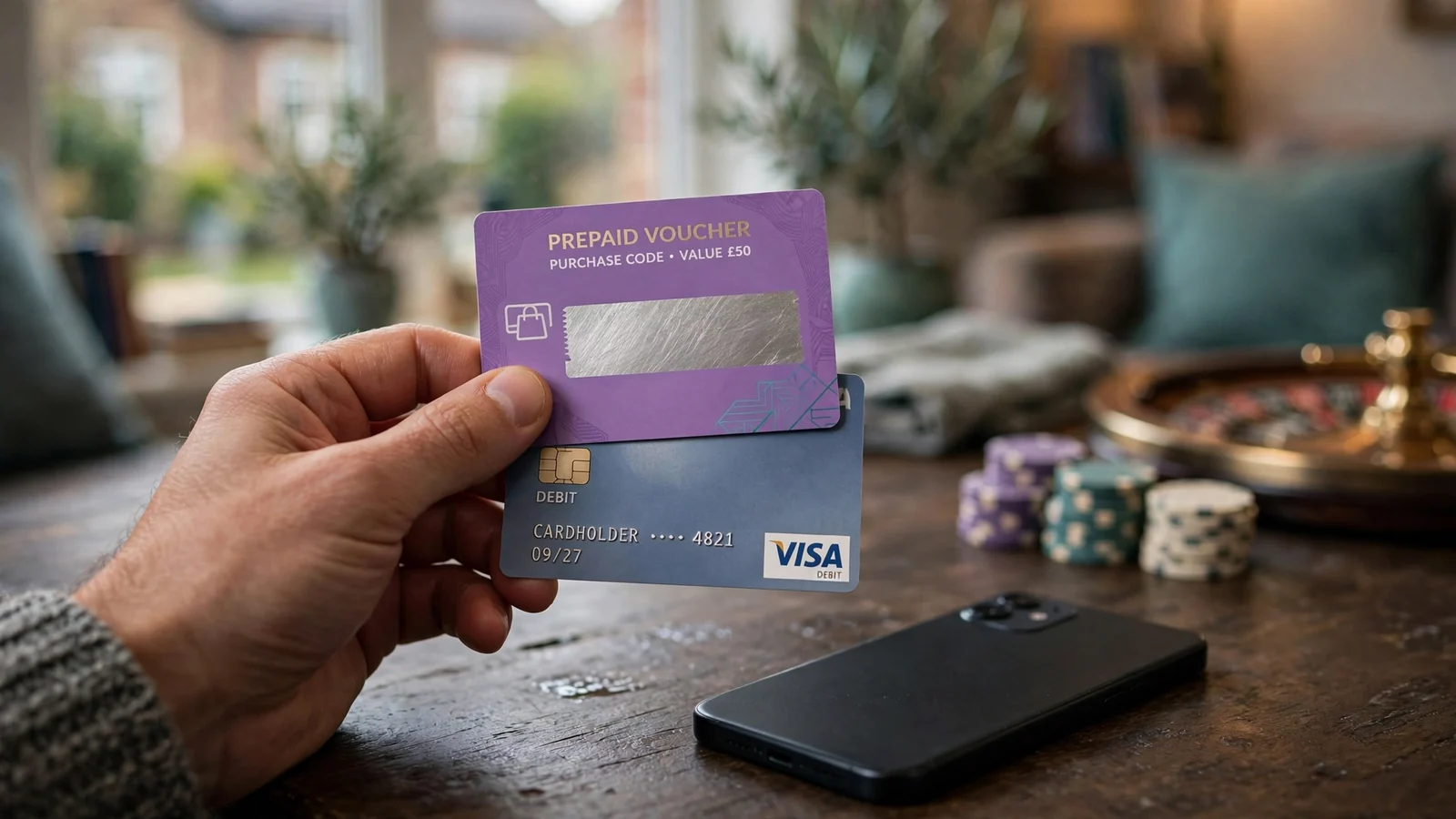
The same caution applies to card information. A specialist review may list Visa and Mastercard, but that does not prove that every card product is currently eligible for UK customers at that casino. The cashier is where you should check current availability and eligibility. A method name on a page is not a promise that it will work for you.
There is a separate point that should not get lost in the payment check: remote gambling operators selling into the British market must hold the relevant UK Gambling Commission licence. Online gambling in the UK is legal only at licensed and regulated sites. Check the operator’s licence on the Commission’s public register rather than treating a UK-themed page or a familiar payment logo as proof of status.
That is not the same as proving Tether works. A licence check addresses the operator’s regulatory position; the cashier check addresses the payment route. Do both separately. One does not answer the other.
- Check for the exact currency name in the cashier
- Ask customer support direct questions about availability
- Verify the operator’s UKGC licence on the public register
- Rely on a row of logos on a payments page
- Translate general “crypto” mentions into “Tether”
- Treat a UK-themed page as proof of regulatory status
What counts as a useful confirmation?
Before you deposit, you should be able to establish that Tether is named as a current option for your account and that the cashier provides instructions for using it. If the site offers no way to see that until you register, use its official support channel before paying in. Keep the response, especially if it resolves a contradiction between the payment page and cashier.
I would not rely on a search result snippet, an old review, a crypto logo or a general statement that a casino accepts digital assets. Those can point you in the right direction, but they cannot confirm today’s account-level availability. A real option should be visible and described clearly enough that you know what you are selecting.
No assumption. Check first.
Tether Casinos and Slot Rules in Britain
A casino can mention Tether and still offer a slot library that is a poor fit for you. The payment route and the games are separate things: accepting a cryptocurrency does not tell you which slots are available, how they work or whether they suit your preferences. I would treat “Tether casino” as a description of a cashier option, not as a recommendation about the games.
When assessing a site, look at its games catalogue and the information provided for each title. Check that slots are actually available to customers in Britain, rather than relying on a general page or a promotional banner. If you have a particular style of game in mind, use the site’s catalogue or search tools to see whether it is listed. A payment method alone is no evidence that a specific game is offered.


The same goes for claims about the “best” Tether casinos or slots. That label does not establish what is in the catalogue or how a game behaves. I would want to see clear game information and be able to check the title for myself, rather than infer anything from a crypto logo or a broad claim about choice. One thing at a time.
The payment method does not change slot rules
In Britain, the rules for online slots apply whether you deposit with Tether or another method. A cryptocurrency payment does not create a different version of the game, remove the stake restrictions or make a site exempt from the rules.
For customers aged 25 and over, the maximum stake for a single online-slot game cycle is £5. For those aged 18 to 24, it is £2. The all-adult £5 limit took effect on 9 April 2025, but the lower limit for younger adults remains relevant. Check the stake shown in the game and make sure you understand what a spin costs before playing.
There are also rules about how online slots operate. Autoplay is not permitted in Britain, and each spin must take at least 2.5 seconds. If a game or site presents slot play in a way that appears to sidestep those restrictions, that is a reason to stop and check what you are looking at. Paying with a digital token does not make those features acceptable.
Check that the site is authorised for Britain
The games themselves are only part of the decision. Remote gambling businesses taking customers in Great Britain need the relevant Gambling Commission licence, wherever the business is based. Online gambling is legal in the UK at licensed, regulated sites; an offshore location or a Tether option does not substitute for a UK licence.
Legal Requirement
Online gambling in the UK is legal only at licensed and regulated sites; an offshore location or a Tether option does not substitute for a UK licence.
Before depositing, look up the operator on the UK Gambling Commission’s public register and check that its licence is current and covers the service being offered. Operators must also verify a customer’s age before allowing a deposit. That requirement does not disappear because the payment is cryptocurrency or because a site markets itself as a crypto casino.
I would also pay attention to the controls available on the account, not just the games page. Remote operators must make customers set a financial limit before their first deposit and provide accessible controls for managing account limits. UK-licensed casinos must offer self-exclusion and an internal complaints route, as well as access to an approved Alternative Dispute Resolution service. Those protections matter independently of the slot selection.
Keep bonuses separate from game choice
A Tether deposit does not tell you whether a promotion applies, and a bonus does not tell you which slots are available. Read the offer’s terms before accepting it, including any conditions about eligible payment methods and games. Promotion details can vary, so do not assume that a Tether casino bonus is available just because a site advertises one.
I would avoid treating a bonus banner as proof that a game is eligible or that a payment route qualifies. Check the written terms and the game’s own listing. If either is unclear, leave the offer alone until you can confirm what applies to your account.
The practical order is simple: confirm that the operator is authorised for Great Britain, inspect the games separately, and remember that British slot rules remain in force whatever currency you use. A crypto badge is not a shortcut around the basics.

What a Tether Casino Transaction Can Cost
A Tether deposit can look fee-free in the cashier and still cost you elsewhere. I would not judge the price from the casino’s payment screen alone: a charge may come from the casino, the payment provider, a bank or card issuer, a currency conversion, or the blockchain network. Which ones apply depends on the route and the transaction, so check each stage rather than assuming the amount sent is the amount credited.
A specialist review of payment costs identifies those as separate possible charges. That distinction matters. A casino might show no deposit fee, for instance, while a provider applies its own charge or the sending wallet deducts a network fee. On the way back, a different service or route may have its own costs. “Free” can mean only that one party on the chain does not charge you.
The exchange rate is another part I would look at before comparing options. If an amount is converted, the displayed rate may include a spread: the difference between the rate used for the transaction and a reference rate. That cost can be less obvious than a flat fee, and a specialist review notes that the spread may outweigh a visible charge. So a route with no stated fee is not automatically the cheaper one.
For a Tether casino transaction, make a simple comparison using the amount you actually intend to move. Check whether the casino charges for deposits or withdrawals, whether the provider adds a fee, and whether any exchange rate applies. Then account for the network cost shown before sending. Keep deposit and withdrawal costs separate; they need not match. If the cashier gives only a general statement, look for the specific terms or ask support to clarify what would be deducted.
Transaction Costs
A “free” deposit may still involve charges from the payment provider, bank, blockchain network, or a spread in the exchange rate.
The same logic applies when comparing USDT with another payment method. One route may have a lower provider charge but a less favourable conversion rate; another may have a network cost that changes the total. There is no universally cheapest method. The result depends on the full set of charges for that transaction, not on a label such as “instant”, “zero fee” or “crypto-friendly”.
I used to focus on the obvious number and ignore the smaller print around it. That is an easy way to misjudge a payment. Check what leaves your wallet, what the casino credits, and what you would receive after any withdrawal deductions. If those figures are not clear before you confirm, pause and get the terms clarified. Guessing is not a saving.
Tether, GamStop and the Limits of What You Can Assume
“Not on GamStop” can sound like a useful shortcut when you are looking for a casino with Tether. It is not a verdict on whether a site is safe, suitable or legally allowed to serve you in Britain. It is a claim about one aspect of the site, and it does not tell you what protections are in place or who regulates the operator.
For customers in Great Britain, remote gambling licensees selling into the market must hold a UK Gambling Commission licence, wherever the company is based. That is the key distinction to check. A Tether payment option, or a label saying a site is outside GamStop, does not replace a licence. Nor does a polished-looking website prove that one is held.


I used to treat confident wording as evidence. It isn’t. Before depositing, find the operator’s licence details and check the licence number against the UK Gambling Commission’s public register. Make sure the registered business and the site you are using correspond; a logo or a sentence in the footer is not the same as a register entry. Online gambling in the UK is legal only at licensed and regulated sites.
Then look at the protections you can actually use from your account. UKGC rules require remote operators to ask new customers to set a financial limit before their first deposit and to make account-level limit controls accessible. I would check that the controls are easy to find and that the available settings make sense to me before putting money in. A feature buried in a help page is less reassuring than one I can locate in the account.
Self-exclusion is another important control: UK-licensed casinos must provide responsible-gambling tools, including it. That does not mean a “not on GamStop” description tells you what the operator offers, how its account controls work, or whether those controls fit your circumstances. Read the operator’s own information rather than treating the label as a substitute for checking.
There is also a difference between an operator’s promises and the protections attached to its regulatory status. UKGC licensees must provide an internal complaints process and access to an approved Alternative Dispute Resolution service. If a site’s claims about oversight are vague, or you cannot identify the licensed operator behind it, I would stop there rather than infer that a crypto-friendly cashier means the rest is in order.
Attention: A “not on GamStop” label is not a verdict on whether a site is safe, suitable, or legally allowed to serve you in Britain.
Most importantly, if you use GamStop because you want to restrict your gambling, a site advertising itself as outside that scheme is not a workaround worth testing. I learned the hard way that making access easier is not the same as making a choice better. If you are unsure whether playing is right for you, leave the deposit alone.
A Tether casino’s payment method answers only a narrow question: how it may handle a transaction. It does not establish licence status, account protections or suitability. Check those separately, and do not let one “not on GamStop” claim do the work of several checks.
Crypto Payments: Check the Currency Before You Send
Before sending Tether to a casino, check what currency the account is actually set to use. A crypto balance and a casino balance are not necessarily displayed in the same currency. If you assume they match, the amount shown after a transaction may be different from the figure you had in mind.
I’d check the cashier and account settings before making a first payment, not after. Some specialist reviews report that GBP is supported, but that is not a promise that every account or payment route will use pounds. Confirm the currency shown for your own account and look for any note explaining how a crypto deposit is converted. If the information is unclear, ask the operator before sending funds.

The detail that catches people out is the difference between the asset you send and the currency used to record your casino balance. A Tether payment may be quoted in a crypto amount while the account displays a sterling balance, or the operator may show a different account currency. Don’t infer the conversion from the amount in your wallet alone. Check the amount the cashier says will be credited and the currency attached to it.
That applies when withdrawing, too. Read how the account balance and payout are presented before you treat a displayed figure as a like-for-like return of what you deposited. If the casino account is set to a currency other than GBP, a conversion may be involved when you compare the balance with your bank or other sterling-denominated records.
I’ve learned to treat the currency setting as part of the payment route, not a cosmetic preference. A number can look familiar while representing a different currency. And if you change the account currency later, don’t assume earlier deposits or balances will be handled in the same way; check the operator’s explanation first.
Keep the checks simple: identify the account currency, read the cashier’s conversion wording, and make sure the credited amount is clear before you confirm. If you cannot tell which currency will appear in your balance, pause rather than sending first and sorting it out later. That is not a claim that conversion will always happen; it is a way to avoid relying on an assumption.
For a Tether casino in the UK, GBP may be the setting you want, but the label alone is not enough. Confirm it on the account you plan to use, then review the transaction summary. One minute spent reading the currency line is better than guessing what the balance means.
Currency Verification
- Identify the account currency setting
- Read the cashier’s conversion wording
- Confirm the exact amount to be credited
- Review the transaction summary before confirming
How to Judge a Tether Casino Without a Promised Ranking
A “best” label is easy to print and hard to prove. I would not treat a polished list of Tether casinos as a recommendation unless it explains how each payment route was checked and what the operator actually permits. A name on a page is not enough to establish that you can use Tether for both depositing and withdrawing.
Start with the route, not the sales pitch. Read the casino’s payment terms and look for clear information about whether Tether is supported on both sides of a transaction. If the wording only discusses deposits, do not assume a withdrawal will follow the same path. Ask customer support for a direct answer if the terms leave it unclear, and keep the reply. That is more useful than a badge saying “crypto-friendly”.
Then check whose account is being used. The casino account details and the payment account should belong to the same person. A mismatch in ownership can create avoidable questions or delays, even where the payment method itself is accepted. The least complicated arrangement is generally to use one account in your own name consistently for the deposit and any later withdrawal. Don’t borrow somebody else’s wallet or try to route funds through an account that does not belong to you.
I’d also look at whether the operator is authorised to serve people in Great Britain. Remote gambling businesses offering services to customers there need a UK Gambling Commission licence, wherever the business is based. Check the licence on the Commission’s public register rather than relying on a logo or a line in an advert. A Tether option does not change the operator’s regulatory position.
That does not mean every list is useless; it means you should be able to see what its claims rest on. Is the information specific to the operator? Does it distinguish a deposit option from a withdrawal option? Is the page clear about when it was checked? If it offers only broad praise, I would treat it as promotion, not evidence.
My own rule is plain: verify the operator, confirm the route works for deposits and withdrawals, and keep the account details aligned. If any of those points are fuzzy, pause before sending money. No glossy ranking fixes that.
TRC20 and ERC20: Confirm the Network Before Transferring
TRC20 and ERC20 refer to different network routes for transferring Tether. The currency name can look identical in your wallet, but that does not make the routes interchangeable. Before sending anything, check the network selected on the sending side against the network named for the deposit on the receiving side. The labels need to match.
I would not treat a page mentioning a Tether TRC20 casino as confirmation that its cashier currently accepts that route. Nor does seeing ERC20 mentioned elsewhere establish that the deposit screen offers it to you. The practical check is the live cashier: select the Tether deposit option, then read the network instructions shown for that transaction. If the cashier does not clearly identify a network, stop and ask the operator before transferring.
Then check the sending wallet or exchange. Confirm that it lets you choose the same network and that the destination details were generated for that route. Copy the address from the deposit screen rather than relying on an old address or one saved from a previous transaction. Payment details can differ between routes, and a correct-looking address is not enough if the network selection is wrong.
Network Transfer
Select the Tether deposit option and read the specific network instructions (e.g., TRC20 or ERC20).
Ensure the sending wallet or exchange is set to the exact same network specified by the casino.
Copy the address directly from the deposit screen and confirm the network matches before sending.
No guesswork. No “probably”.
The same check applies when you later plan a transfer in the other direction: do not assume that a deposit route automatically tells you what withdrawal route will be available. Read the instructions for the transaction you are making, and pause if the network or destination details do not line up. A Tether ERC20 casino and a service that accepts Tether over another route are not necessarily offering the same transfer option.
There can also be a network charge. A specialist payment guide describes possible transaction costs as including network fees alongside charges from a casino, payment provider, issuer or bank, and any exchange-rate spread. The fee shown by a wallet may therefore be only one part of the overall cost. Check what is displayed before confirming, and compare it with any charge stated by the receiving service; do not assume that a route is free because the deposit screen shows no separate casino fee.
If the details are unclear, leave the transfer unconfirmed. That is less frustrating than trying to work out afterwards why the funds have not appeared.
Deposits, Bonuses and the Small Print
A Tether deposit does not automatically qualify for a welcome offer. Before sending anything, open the promotion’s terms and check whether USDT is an eligible deposit method. If the wording names only certain payment options, do not assume a crypto payment counts just because the cashier accepts it. “Welcome bonus” is marketing language; the payment conditions decide whether it applies.

The same check matters for a deposit bonus. Look for any minimum deposit, maximum eligible deposit, and whether the offer must be claimed before you pay. A specialist review reports minimum deposits in the £10–£20 range, depending on the payment method, but that is not a promise about a particular cashier: check the amount shown for your account before confirming. Deposit ceilings can also differ by transaction, day or month, and may depend on account status. Read the cashier limits rather than relying on a general figure.
A no-deposit offer is a separate promotion, not a reason to expect that a Tether casino will credit you without a payment. Check whether the offer is available to new customers, whether registration or another step is required, and what its own terms say about eligibility and withdrawal. If the rules do not clearly say that the offer applies to your account, ask the operator before depositing. Don’t treat a banner as the full contract.
Payment choice can affect promotions beyond crypto. A specialist review notes that PayPal may be excluded from bonus eligibility, but that observation is not a rule for every operator or offer. The practical lesson is to check the specific promotion’s exclusions, not to assume every deposit method is treated alike.
There is another piece of small print worth noticing before you fund an account: remote operators must ask new customers to set a financial limit before the first deposit and make account-level limit controls accessible. I would pause if the setup makes that control hard to find. It is part of the account terms, not a bonus feature.
Bonus and Account Rules
- Verify if USDT is an eligible method in the promotion’s written terms
- Check for minimum and maximum deposit limits in the cashier
- Set a financial limit before making your first deposit as required by UKGC
- Save screenshots of the terms and payment wording for your records
Take a screenshot or save the terms you relied on, including the payment-method wording. If the offer disappears or the cashier changes, you will have a record of what was displayed when you made your decision. No guesswork.
No-KYC Claims and Withdrawal Verification
A “no-KYC” label sounds like a promise that you can deposit and withdraw without checks. I would not treat it that way. It is a claim to verify against the operator’s own terms, not proof that a Tether casino will never ask you to confirm who you are. The payment method does not, by itself, settle what checks may apply to your account.
For UK customers, there is a more basic point: remote gambling operators must verify a customer’s age before allowing a deposit. So a claim that no checks apply at all sits awkwardly with the rules for UK-licensed casinos. Read the operator’s account and withdrawal terms rather than relying on a short label in an advert or search result.
Verification can also affect the time a withdrawal takes. A specialist review notes that processing includes the casino’s own approval, and that a first payout may take longer if checks are still being completed. That is not a fixed timetable for every site. The operator’s review process and whether your account is fully verified both matter.
I have made the mistake of treating a displayed payment option as if it meant the whole cash-out process was settled. It doesn’t. Before depositing, find the operator’s current verification and withdrawal rules. Check whether any checks can be completed before you request a payout, and what the operator says to do if it asks for more information. Keep the details on your account accurate, and respond through the operator’s stated secure process if a check is requested.
If the terms are vague, ask support to explain them before sending funds. Save the answer. A confident “no KYC” banner is not the same as a clear explanation of what could delay a withdrawal. And if the operator does request checks, a payout may remain pending while its review is under way.

Read the terms, not the slogan.
BEP20 Transfers: Check Fees and Route Details
If you are looking for a Tether casino that takes BEP20, treat the network name as something to verify in the cashier, not as proof that a transfer route is available. A casino may mention Tether without confirming that it accepts this particular route for your account. Don’t send funds based on a search result or a general crypto logo.
Before transferring, check the deposit instructions for an explicit BEP20 option and read the fee information displayed for that route. Make sure the network shown by your wallet matches the one specified by the cashier. If the casino’s instructions are unclear, stop and ask support to confirm the route before sending. A transfer is not the place for guesswork.
Then look at the total cost, not just a line labelled “network fee”. A specialist payment review identifies possible charges from the casino, payment provider, bank or issuer, exchange-rate spread and network. Which of those apply can depend on the transaction and provider. The amount displayed by your wallet may not tell you whether the casino applies a separate charge, so check both sides before confirming.
I used to focus on the fee I could see and ignore the less obvious conversion cost. That was a poor comparison. Check whether the amount you send and the amount credited are shown in the same currency, and whether any conversion is involved. If the final cost is not clear, don’t assume the visible fee is the whole bill.
Keep the details together: the selected network, the destination information, the quoted charges and the amount you intend to send. If any part of the cashier’s route differs from your wallet’s transfer screen, pause rather than trying to make them fit. For a BEP20 Tether casino UK search, the useful answer is not a confident label; it is clear, matching instructions and costs you can inspect before committing funds.
Check first. Send second.
Do UK casino withdrawals require verification?
Yes, casinos may complete verification before approving a withdrawal, particularly the first one. Having your account fully verified can help avoid delays.
What is the fastest withdrawal method for UK casinos?
PayPal, open banking services and debit cards linked to fast payout systems are generally among the quickest options. The casino’s approval process and your verification status also affect how soon you receive the money.
Are Visa and Mastercard deposits definitely debit cards?
No. Seeing Visa or Mastercard listed does not confirm that every card product is eligible; check the cashier for the current options available to you.
Are fast casino withdrawals guaranteed?
No. Withdrawal speed depends on the casino’s internal approval process and whether your account is fully verified.
Why must withdrawals return to the deposit method?
Returning funds to the original payment source is a common anti-fraud and anti-money-laundering control. An alternative route may require additional verification.
Which payment methods are accepted in Great Britain?
Common options include debit cards such as Visa and Mastercard, PayPal, bank transfers and open banking. Some casinos also offer e-wallets such as Skrill or Neteller, Apple Pay, Paysafecard for deposits, or cryptocurrencies; check the cashier for current availability.
Why can a fast payout casino still delay my withdrawal?
A casino may need to approve the withdrawal internally, and a first withdrawal can take longer while verification is completed. An account that is not fully verified can also affect the payout speed.
Written by the editors at Tenobet Casino 2.