Casinos That Accept eCheque in the UK: What to Check
 Available in GB
An eCheque listing is only meaningful when the cashier offers it for the account and the payment terms are clear.

Table of Contents
- What to check before trying an eCheque deposit
- Does the cashier actually support eCheques?
- Deposit amounts and account limits
- Comparing payment costs without guessing
- Other payment routes you may see in the cashier
- Deposits are only half the payment question
- Check the currency and the full payment cost
- Keep payment details consistent
- What affects how quickly a withdrawal arrives
- Before depositing at a newly found casino
What to check before trying an eCheque deposit
If you are looking for an eCheque casino in the UK, be wary of any list that names a “best” site without showing that eCheque is available to customers there. A general claim that a casino accepts bank payments does not establish that it accepts eCheques. Nor does a payment logo elsewhere on the site prove that the method will appear for your account.
I would treat eCheque as unconfirmed until the casino’s own cashier offers it as a deposit option. That is a practical distinction, not wordplay: payment pages can describe broad categories, while the cashier is where you see the routes actually offered for a transaction. An online casino that mentions bank transfers may accept transfers without supporting eCheques at all.
That makes it difficult to name a dependable set of UK casinos that accept eCheque deposits. Rather than trusting a “top” list at face value, check what the operator itself presents and read the payment terms attached to that option. If eCheque is not clearly named, don’t assume that another bank-based method is equivalent. Close enough is not close enough when money is moving.
If you’re looking for a UK casino that accepts eCheque, check that the method is available to you before depositing. The details below provide a stated payout speed where one is known, but do not confirm eCheque support.
Payout speed: 1-3 business days For x3bet, the available detail is a payout speed of 1–3 business days. Treat this as a timing reference, not confirmation that eCheque is supported.
Payout speed: 1-3 business days NightWin has a stated payout speed of 1–3 business days. Check directly whether eCheque is available to you.
Payout speed: 1-3 business days Amunbet’s listed payout speed is 1–3 business days. This detail does not establish whether eCheque is accepted.
Payout speed: 1-3 business days WinBeast has a stated payout speed of 1–3 business days. Confirm eCheque availability with the operator before relying on it as a payment option.
Payout speed: 1-3 business days The available information for Jetsetspins gives a payout speed of 1–3 business days. It does not confirm eCheque support.
Payout speed: 1-3 business days Chanze’s stated payout speed is 1–3 business days. Check whether eCheque is offered to you, as the available detail does not specify payment methods.
Payout speed: 1-3 business days EvoSpin has a listed payout speed of 1–3 business days. This is a timing detail only and does not confirm that you can use eCheque.
Payout speed: 1-3 business days SpinFormula’s available payout information is 1–3 business days. Verify eCheque availability directly before choosing it.
Payout speed: 1-3 business days Dieselwin has a stated payout speed of 1–3 business days. No payment-method details are provided to confirm eCheque acceptance.
Payout speed: 1-3 business days Revery Play’s listed payout speed is 1–3 business days. Check directly whether eCheque is available to you.
Don’t mistake a general payment claim for eCheque support
Casino payment pages often group methods under broad labels such as cards, bank payments or wallets. Those labels can help you understand the kinds of routes a site may offer, but they do not answer the specific question: can you choose eCheque for this deposit?
I’ve learned not to fill in that gap myself. “Banking options available” sounds reassuring; it may only mean that some banking route exists. A site’s general statement can also remain visible even when the options shown to an individual customer differ. Until the cashier names eCheque, the sensible assumption is that its availability has not been established.
This applies whether you are browsing on a phone or a computer. A mobile casino may have the same payment arrangements as its desktop version, but the word “mobile” does not tell you whether eCheque is supported. Look for the method itself, not a promise that deposits are easy on a small screen.
There is no need to turn this into a hunt for a secret list. The useful question is narrower: does the casino display eCheque for your account, and does its own information explain the method clearly? If the answer is vague, I would pause rather than deposit through a different route on the theory that it must work the same way.
Put eCheque beside familiar UK options
Debit cards are a more familiar reference point. UK casinos commonly accept debit cards, including Visa and Mastercard, although a logo or general payment claim still does not guarantee that every card product will work for every customer. Credit-card payments for gambling are not permitted at UK-licensed casinos, so don’t treat a credit card as a fallback when a debit card is declined.

Bank transfer and open banking are other routes you may encounter. A specialist review describes these as capable of providing instant deposits and fast withdrawals at many sites; that is a report about some sites, not a promise about the casino you are considering. The cashier and the operator’s payment terms still matter. A bank transfer being available does not make it an eCheque, either.
That comparison is useful because it stops one broad label from doing too much work. A casino may offer a debit-card option and a bank route while showing no eCheque facility. Or its payment information may mention a method that is not offered in the cashier for your account. In either case, the names of the available methods matter more than a general claim about “banking”.
Make the decision before moving money
Before trying an eCheque deposit, take a moment to distinguish what the casino says in general from what it actually offers you. Find the payment information on the operator’s own site, then check the cashier while signed in. If eCheque is listed, read the terms attached to it rather than inferring how it works from the name. If it is not listed, don’t assume that a bank transfer or debit-card option is a substitute.
I know the temptation: a search result says “eCheque accepted”, the site looks familiar, and you want to get on with it. But an attractive label is not proof of a working payment route. I would rather spend a moment confirming the method than discover after choosing a deposit route that it was never the one I meant to use.
- Check the cashier while signed in
- Read terms specifically attached to eCheque
- Verify the method is explicitly named
- Trust general “banking options” claims
- Assume bank transfers are equivalent
- Rely on payment logos as proof of availability
The same caution applies to recommendations calling a site the best eCheque casino or a top choice for eCheque players. Without a clear, current statement from the casino and an option in its cashier, that wording does not tell you whether you can use the method. A confident ranking can still leave the central detail unanswered.
Keep the distinction simple: debit cards and bank transfers are established categories you may see at UK casinos; eCheque needs to be named specifically. Check the operator’s own wording and the options shown to you before making a payment. No guesswork.
Does the cashier actually support eCheques?
A payment method mentioned on a casino’s general payments page is not necessarily available to you at the point you are ready to deposit. The cashier is the useful test: it shows what the operator offers for your account and the transaction you are setting up. I have learned not to treat a broad “many payment options” claim as confirmation. It is marketing, not a working button.

Sign in to the account and open the deposit cashier before making decisions based on an eCheque claim elsewhere. Look for the method by name, and check whether the cashier provides a route to select it. The spelling may differ: a site might use “eCheque”, “e-check” or another description. A phrase on a promotional page, an old review or a logo in a footer does not tell you whether the option is currently selectable.
That distinction matters. A cashier can show methods that are unavailable for a particular account or transaction, while a general page may describe payment options without explaining those conditions. So check what appears after you are signed in, not only what a public page says. If the eCheque label is absent, do not assume that choosing a similar-looking bank option will work the same way; ask the operator to identify the route clearly.
The sequence is simple, but the details matter:
- Sign in to the account you intend to use.
- Open the cashier’s deposit area and inspect the payment methods shown there.
- If eCheque appears, read the accompanying instructions and any eligibility note before continuing.
- If the description is unclear or the method is missing, contact customer support and ask whether it is available to your account in the UK.
I would keep the question narrow when contacting support: “Can I use eCheque for a deposit from my UK account, and should it appear in my cashier?” That is more useful than asking whether the casino “takes eCheques” in general. Ask them to explain the label they use and where it should appear. Save the reply or note when you received it, because payment pages can change and a past answer may not describe the cashier today.
A “listed” method is not the same as an “available” one. Casino pages can be written for a broad audience, and a method may be named without confirming that it is selectable for every account. Even familiar card names need a live check: a specialist review may list Visa or Mastercard, but current UK availability and eligibility for a particular card product still need to be checked in the cashier. That is a useful reminder not to treat any payment logo as a promise.
Confirming eCheque Support
Log into the casino account you intend to use.
Navigate to the deposit area and look for eCheque by name.
Read any accompanying instructions or eligibility notes provided in the cashier.
If the method is missing or unclear, ask support specifically if eCheque is available for your UK account.
If support confirms that eCheque is available, compare their answer with what you can actually select in your account. If those do not match, pause and ask them to resolve the difference before proceeding. Do not enter bank details into a form just because it looks familiar; first make sure the operator has identified the method and its purpose. A bank-transfer option and an eCheque option should not be treated as interchangeable merely because both involve a bank.
There is no need to rush through the cashier to prove that a method works. You can inspect the available options and stop before confirming a transaction. If the only information you can find is a vague claim that the site supports “bank payments”, that does not answer whether eCheque is available. Ask directly. If the answer remains vague, you still do not have a clear confirmation.
I would also check again if you return later rather than relying on an old screenshot or saved review. The account view is more relevant than a page written for everyone, and the current cashier is more relevant than a description saved from a previous visit. Small wording changes can matter: a method can be named in one place while a different route is offered at checkout. Look for a clear match between the method support describes and the method displayed to you.
When comparing casinos that may accept eCheque in the UK, make that account-level check the starting point rather than building a shortlist from payment logos. A site’s general claim may help you decide what to ask, but it cannot settle whether you can use the method. If you cannot see it and support cannot confirm where it should appear, move on rather than guessing.

No clear option, no deposit.
Deposit amounts and account limits
A payment method can be available in a cashier and still be a poor fit for the amount you intend to deposit. Before entering payment details, check the minimum and maximum shown for that transaction. For an eCheque, do not assume that a limit listed for a debit card or bank transfer also applies. The cashier’s terms for the selected route are what matter.
A specialist review reports that minimum deposits can start at £10–£20, depending on the payment method. Treat that as a guide to what you might encounter, not a promise that a particular casino or eCheque option will accept that amount. The figure can be different in the live cashier, and the method you want to use may have its own threshold. Check the amount displayed after selecting a route, before you confirm anything.
That distinction is easy to miss. I have seen how a headline minimum can look simple until you reach the payment screen, where the chosen method has a different requirement. If the cashier shows a minimum above the amount you planned to send, do not top up just to get past it. Decide whether that amount still suits your budget. A payment threshold is not a reason to spend more.
Maximums need the same attention. A specialist review notes that deposit caps can differ by payment method and account status, and may apply per transaction, per day or per month. Those are separate limits. A transaction cap concerns one payment; a daily or monthly cap concerns the combined deposits counted over that period. A deposit can fit beneath one cap while still being blocked by another.
Attention A deposit cap may apply per transaction, per day, or per month; a payment can fit beneath one limit while still being blocked by another.
Read the wording carefully. “Maximum deposit” may not tell you whether the figure applies to a single payment or an accumulated total. If the cashier or account terms are unclear, ask the operator to explain which limit applies to your account and when it resets. Do not infer a personal allowance from a general payment page: the limit shown to you may depend on your account status, as well as the method selected.
For an eCheque deposit, the useful check is therefore not merely whether a number appears somewhere on the site. Look for the minimum and maximum attached to that payment option in your logged-in cashier, then compare them with any account-level deposit restrictions displayed in your account. If the option is not presented, or its limits are not clear, do not treat another method’s figures as a substitute. The payment route and its permitted amount are separate details.
Also check what happens if you change the amount between starting and confirming the transaction. The cashier may reject a value outside the permitted range rather than adjust it for you. A failed attempt is not a good way to discover the rules, particularly if you have already entered payment information. Confirm the displayed terms first and make sure the amount you type falls within them.
Keep a simple note of the limits you see: the method, the per-payment cap, and any daily or monthly total. That can help you spot why a later deposit is declined without repeatedly trying different amounts. If you have deposited through more than one route, check whether the account’s total limit counts all deposits together or treats methods separately; do not assume the answer.
The amount accepted at the cashier is not a recommendation. It is only the boundary the operator or payment route allows. I would rather stop at the amount I had planned than let a minimum or a prominent maximum make the decision for me. Limits checked. Budget unchanged.
Comparing payment costs without guessing
I would not call an eCheque route “cheap” just because the cashier shows no fee beside it. A visible casino charge is only one possible part of the bill. A specialist payment review identifies other costs to check, including fees from the payment provider, your bank or card issuer, currency conversion and, where relevant, network charges. The route that looks free on the first screen can still cost more by the time the transaction is complete.
The useful comparison is not a general claim about which method costs least. It is what you would pay to move the same amount through each route available to your account. There is no universal lowest-fee method: the answer can change with the casino’s charges, the provider’s terms, the exchange rate and any network cost. Check the actual terms for the transaction you are considering, rather than relying on a payment-method label or an old review.
Look past the fee shown by the casino
Start with the cashier’s own fee information. If a charge appears before you confirm the payment, note whether it applies to deposits, withdrawals or both. Then check the payment provider’s terms and your bank’s rules. A casino may charge nothing while another party involved in the transaction charges you separately.
A “no fee” label can still involve costs, such as a conversion spread, which is the difference between the applied exchange rate and the reference rate.
That distinction matters with eCheques too. The name of a method does not tell you what the casino, the provider or your bank will charge. And the fact that a site advertises broad payment support does not prove that eCheques are available to your account. Treat any cost comparison as conditional on the cashier actually offering the method for your transaction.
I once focused on the number printed beside a payment button and ignored the exchange rate. That was a poor shortcut. A conversion spread is the difference between the exchange rate applied to your transaction and a reference rate; it may make the final cost greater than a separate flat fee. In other words, “no fee” can still have a cost.
Compare the same transaction, not the marketing
Write down the amount you intend to send and compare what would leave your account with what would reach the casino balance. If the cashier or provider shows an exchange rate, look at it before confirming. Check whether your account and payment route use the same currency, and whether either party would convert the payment. A small-looking rate difference is not automatically trivial once applied to the full amount.
Keep the comparison consistent. If one route is quoted in pounds and another in a different currency, you are not comparing like with like until you account for conversion. Likewise, check whether the displayed fee is included in the amount debited or added on top. If the information is unclear, ask the operator or provider before paying; guessing makes the comparison worthless.
Payment costs can also depend on how the payment is routed. A bank, card issuer or provider may apply its own terms, so do not assume that the casino’s cashier describes every charge. Save the transaction details and the relevant fee information. That gives you something concrete to check against the statement later.
Judge the net cost
For each route, gather the casino charge, provider charge, bank or issuer fee, any conversion spread and any network cost that applies. Then compare the total for the same amount. If one of those parts cannot be confirmed, mark it as unknown rather than treating it as zero.
That is less tidy than a “cheapest method” badge. It is also more honest. A route with no casino fee may still be more expensive overall, while a route with a visible charge may come out lower once the other costs are included. The result depends on the specific transaction, not a blanket ranking.
So when you see claims about the best eCheque casinos in the UK, cost alone is not enough to validate them. First confirm the route is offered to you; then compare its full cost against the alternatives actually shown in your cashier. No assumptions. No tidy winner.
Other payment routes you may see in the cashier
An eCheque search can make the cashier feel like a hunt for one exact label. When that option is not shown, you may notice other payment routes instead. They are not proof that the casino supports eCheques, and they are not interchangeable: each has its own conditions.
Debit cards, including Visa and Mastercard, are common at UK casinos. Some UKGC-licensed casinos also accept Apple Pay for deposits. A cashier may show one of these options without showing another, so seeing a familiar brand elsewhere is no guarantee it will appear on your account. Credit-card payments for gambling are not permitted at UK-licensed casinos; do not treat a card option as permission to use a credit card.
Commonly accepted Visa and Mastercard; credit cards are prohibited at UK-licensed casinos.
Options like Skrill and Neteller may be excluded from certain casino promotions.
A prepaid voucher system used strictly for deposits, not for payouts.
Bank transfers and open banking are separate methods and not interchangeable with eCheques.
E-wallets are another category. Skrill and Neteller are available at some sites, but a specialist review has reported that they may be excluded from promotions. That is a reason to read the casino’s own offer terms before depositing, not to assume every promotion treats either wallet the same way. “Bonus eligible” can be a small-print trap. Check the specific offer.
Paysafecard works differently. It is a prepaid voucher for deposits only, so do not choose it expecting to use the same voucher route for a payout. That one is clear.
You may also come across bank-transfer or open-banking options in a cashier. Their presence does not tell you whether an eCheque is supported, nor does it make them a guaranteed replacement for one. Treat each entry as a separate payment method and read the conditions attached to it.
I used to see a familiar name and assume the rest would work the way I expected. It did not. A payment logo tells you which route the cashier is presenting; it does not settle promotion eligibility, whether that route suits your account, or what happens after you choose it. For eCheques, the only useful signal is an explicit option in the cashier for your account. Other methods are just other methods.
Deposits are only half the payment question
Seeing eCheque listed beside the deposit button would tell you that a deposit route is available for that transaction. It would not, on its own, tell you how a withdrawal will be handled. I used to treat a payment method as a complete in-and-out route unless the cashier made a fuss. That assumption can leave you planning around a payout option the casino has not promised.
UK anti-money-laundering controls generally mean that winnings are returned to the original payment source. So if you are considering an eCheque deposit, look for the casino’s withdrawal terms as well as the deposit options. Check whether the wording says the same route can receive payouts, or whether funds may be sent by another method. A method shown only for deposits is not evidence that it can also be used to withdraw.
The return-to-source approach is also an anti-fraud control. If the original route cannot receive a payout, the casino may ask you to use an alternative and complete extra checks before releasing funds. That can mean supplying further information or waiting while the payment details are reviewed. It is better to know this before depositing than to discover it when you are trying to cash out.
A specialist review describes first withdrawals as potentially taking longer while verification is completed. Treat that as a reason to check the operator’s own terms, not as a fixed timetable: approval processes vary, and an account that still needs checks can add friction. The casino’s internal approval is part of the wait too. No instant assumption.
Before you use any route, read the withdrawal section of the payment terms and check what happens if a return to the original source is not possible. If the wording is unclear, ask support to explain the process for your account and keep the reply. That will not guarantee a particular outcome, but it gives you something concrete to compare with what the cashier showed.
Withdrawal Risks
UK anti-money-laundering controls generally require winnings to be returned to the original payment source.
For an eCheque deposit, the useful question is not merely whether the button appears. It is whether the casino explains how funds can come back, what checks may apply, and what happens if the original source cannot accept them. A deposit option is only one side of the arrangement.
Check the currency and the full payment cost
Before making an eCheque payment, check the currency shown on your casino account, not just the currency displayed on the cashier page. A specialist review says GBP is supported, but that does not confirm the currency set for every account. Look in your account settings and check the deposit screen before authorising anything. If the account is set to another currency, a payment that looks straightforward can involve a conversion.
That detail is easy to miss when you are focused on whether eCheque appears as an option. I have learned to pause at the final payment screen and read the amount and currency again. The figure alone is not the whole story. Check what currency the casino will credit, what currency your bank or payment provider will process, and whether either side applies a conversion rate or charge.
A conversion spread can be less visible than a flat fee, so do not assume that a route with no stated charge costs nothing. Compare the total for the actual transaction: casino charges, provider or bank fees, and any exchange-rate difference. If the payment is in a currency other than GBP, ask which party performs the conversion and where its rate is shown. If that is unclear, stop and check the terms or contact support before paying. A surprise is still a cost.

For a bank transfer, currency is only one part of the timing picture. A specialist review notes that delivery can be affected by bank cut-off times, weekends and conversion. That is worth bearing in mind if the casino account and your bank account do not use the same currency; the displayed payment time may not capture every step. Check the transfer instructions and any currency information before sending funds.
Keep a record of the currency and amount shown at confirmation, along with any fee or rate disclosed. If the account is in GBP and the payment is also processed in GBP, you avoid that particular conversion step, though other charges may still apply. If the currencies differ, make sure you understand the rate and the party applying it before you proceed. No guesswork.
Keep payment details consistent
When I’m checking a payment route, I look at whose name is attached to it. The casino account and the payment account should belong to the same person. If they don’t, a transaction can become harder to verify, even when the mismatch is just a basic ownership detail. That is avoidable friction, not a clever workaround.
This matters when you’re looking into eCheques as well as when using any other route. Finding a payment option in a cashier would not make someone else’s account suitable for funding your play. Keep the names and account details accurate, and don’t try to route a payment through a friend or relative. It can raise questions about who supplied the funds and who is entitled to receive them.
I used to think the payment itself was the whole job. It isn’t. The details around it matter too.
Using one named payment account consistently for both deposits and withdrawals provides a clearer link for the operator and can reduce ownership confusion.
Where the casino supports it, the cleanest arrangement is often one named payment account used consistently for deposits and withdrawals. That gives the operator a clearer link between the customer, the incoming funds and any payment it needs to return. It does not promise that a transaction will be accepted or remove every check, but it can reduce basic ownership confusion.
If you change payment routes, check that the new account is yours and that its registered details match your casino profile. If a name has changed or an account is shared, ask the operator what documentation it needs before moving money. Don’t guess at a workaround or enter details that are not yours.
Simple on paper. Still worth checking.
What affects how quickly a withdrawal arrives
A withdrawal has two stages: the casino’s own approval and the time taken for the payment route to deliver the money. The cashier’s method name tells you what route is available; it does not tell you when the request will be approved or appear in your account.
A specialist casino-payment review identifies PayPal, open banking services and debit cards connected to fast payout systems among the quicker withdrawal options. Treat that as a broad guide, not a promise about a particular casino or transaction. The route must be available for withdrawals on your account, and the casino still has to process the request.
I used to focus on the payment label and overlook the approval stage. That was the wrong bit to watch. A specialist review also notes that withdrawal speed depends on the casino’s internal checks and whether your account is fully verified. If KYC is incomplete, or the casino needs to review something before approving the payment, choosing a fast route cannot skip that step.
Before you deposit, check the withdrawal terms for the payment method you intend to use. Look for any stated processing stages, and see whether the casino distinguishes its approval time from the provider’s delivery time. Those are separate parts of the wait. A displayed estimate is useful, but it is not the same as a completed payout.

Learn why payment lists may not match a UK account’s cashier, which deposit alternatives may…

Learn how to verify iDEAL in a casino cashier, check whether deposits qualify for a…
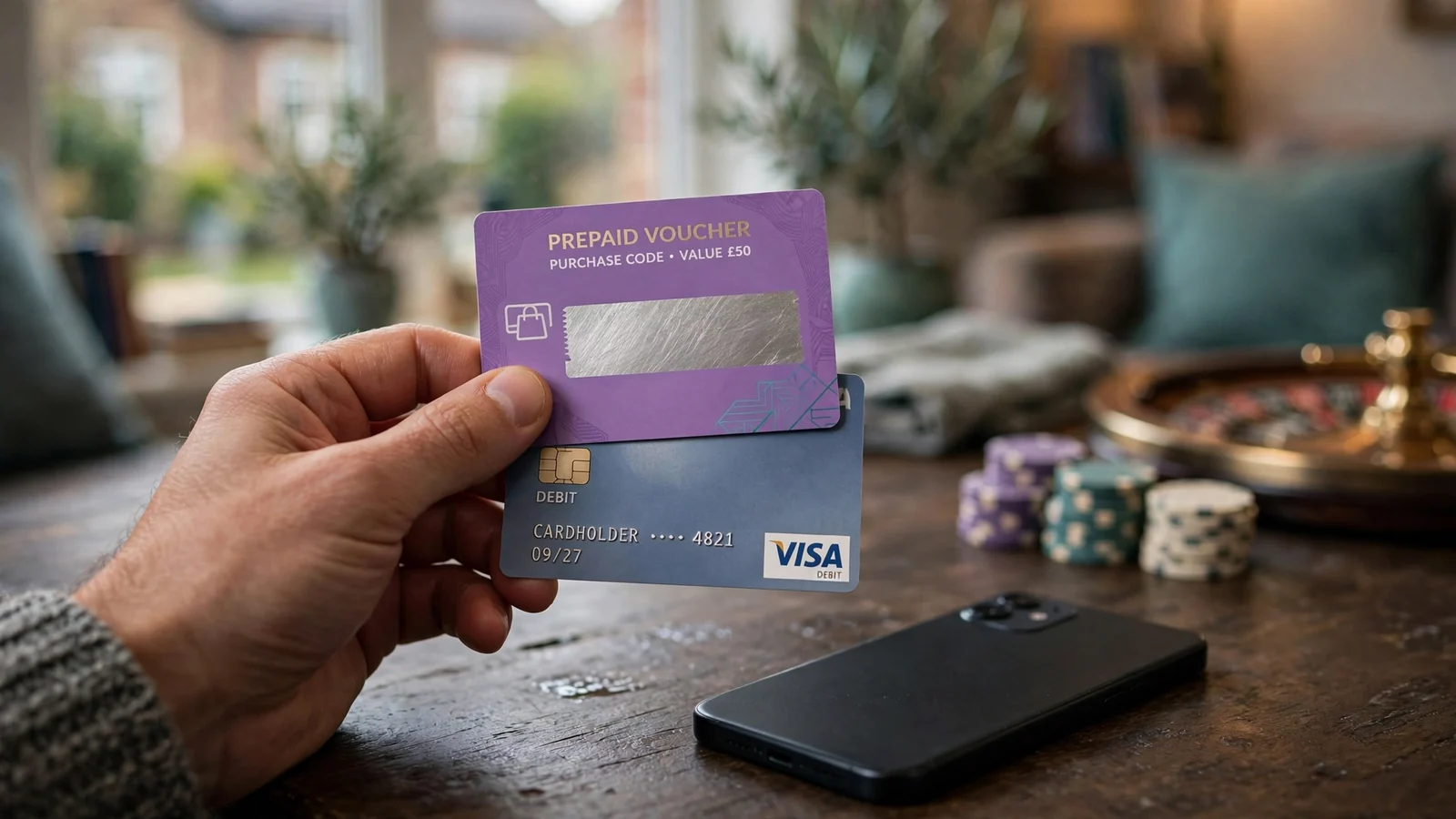

If speed matters, finish the account checks before requesting a withdrawal and use a route the cashier actually supports for payouts. I would not rank casinos by payment speed without account-specific evidence. Faster on paper is not necessarily faster for you.
Before depositing at a newly found casino
A new casino can look polished and still be unfamiliar territory. Before you put money in, I’d pause at the account controls rather than letting the cashier set the pace. That matters whether you arrived looking for an eCheque option or found the site another way; a payment method appearing on a page is no reason to rush.
For customers in Great Britain, UKGC rules require remote gambling licensees to prompt new customers to set a financial limit before their first deposit. They must also make account-level limit controls accessible. Treat that prompt as part of setting up the account, not an irritating box to click through. Choose a limit you can live with, and check where the controls are so you can review them later.
I used to think I could sort that out after I had tried a site. That is backwards: once you are caught up in the moment, a limit is easier to overlook. Set it before depositing, and don’t raise it just to get around a boundary you chose for yourself. If the controls are hard to find, stop and get clarification before adding funds.
There is one more basic check on a newly discovered site: confirm its operating licence on the UK Gambling Commission’s public register before depositing. A familiar-looking brand or a payment logo is not a substitute for that check.
No payment route makes the decision risk-free. The useful test is whether you understand the account controls and can set them before money moves. If you are unsure, leave the cashier closed for now. A few minutes spent checking is better than trying to fix an avoidable mistake afterwards.
What is the fastest withdrawal method for UK casinos?
PayPal, open banking and debit cards linked to fast payout systems are generally among the quickest options. Your account should be fully verified, and the casino’s approval process also affects the wait.
Do UK casino withdrawals require verification?
Yes, verification may be required, particularly before a first withdrawal. UK casinos commonly return funds to the original payment source, and using a payment route in your own name can help avoid ownership-related delays.
Can I deposit in GBP?
Yes, GBP is supported, but check that your account is set to GBP before depositing to avoid currency conversion.
What is the current minimum deposit?
The minimum deposit usually starts at £10–£20, depending on the payment method.
Which payment methods are accepted in Great Britain?
UK casinos commonly offer Visa and Mastercard debit cards, while other options can include bank transfer, e-wallets and, at some sites, cryptocurrencies. Check the cashier for the methods available to your account; a general payment listing does not confirm that eCheque is offered.
Are Visa and Mastercard deposits definitely debit cards?
No. UK-licensed casinos accept debit cards, and credit-card gambling is prohibited, but a Visa or Mastercard logo does not guarantee that every card product will work. Check that your card is a debit card and confirm eligibility in the cashier.
Is Skrill available?
Yes, Skrill is available at some UK-friendly casino sites, but it may not be offered by every casino and can be excluded from promotions. Check the cashier for availability.
Which method has the lowest fees?
There is no universally cheapest method. Compare any casino and provider charges, bank or issuer fees, currency conversion spread and network costs for the amount you plan to transfer.
Created by the ”Tenobet Casino 2” editorial team.