
Curacao casino licence in the UK: what to know
 Available in GB
A Curacao licence identifies a claimed jurisdiction, but does not establish UK Gambling Commission oversight or how a casino handles payments and disputes.
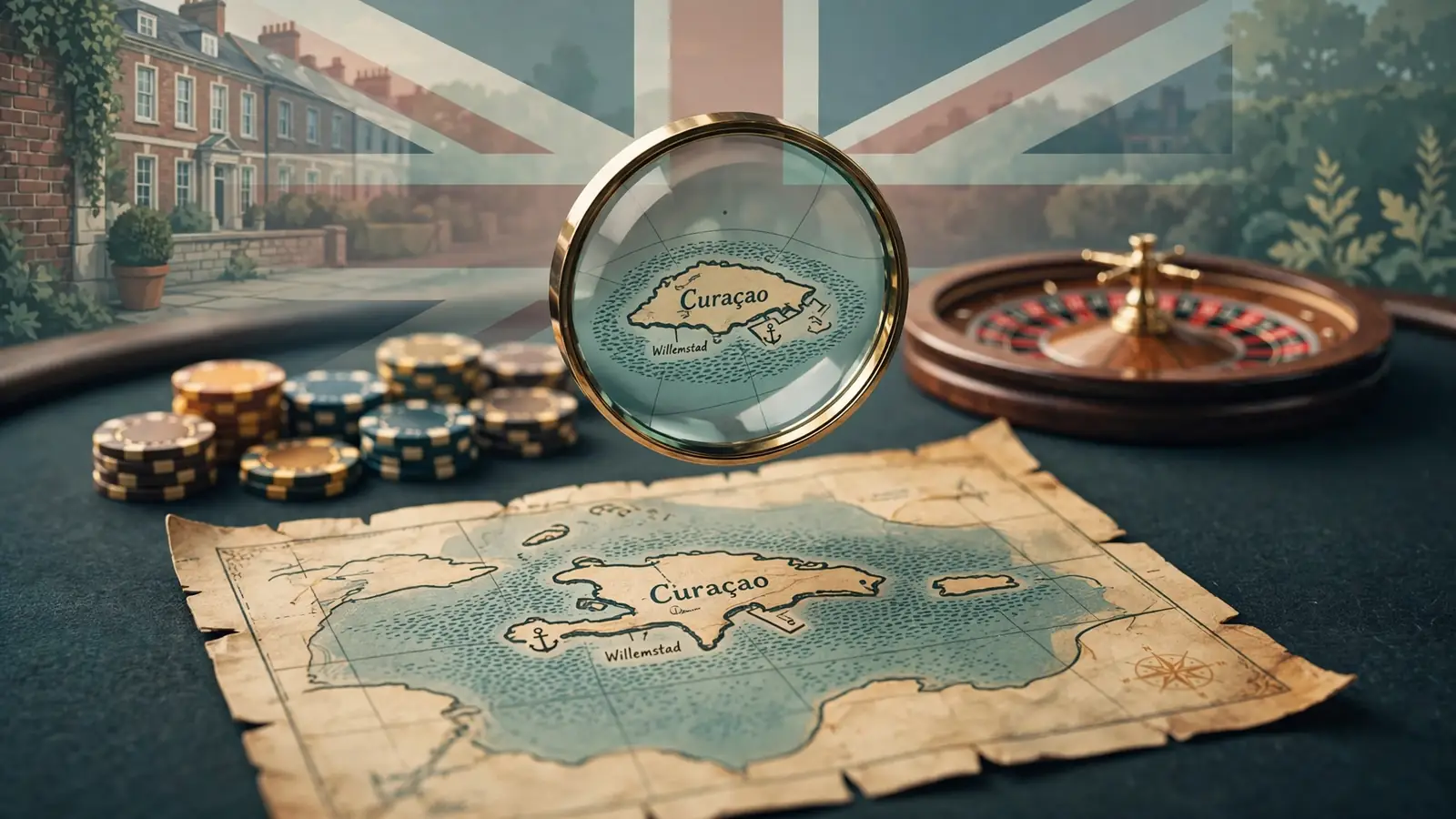
Table of Contents
- What “Curacao Casino” Tells You—and What It Doesn’t
- The UK Legal Line: Operators, Not Players
- Curacao Casino Lists: What You Can—and Can’t—Verify
- Can a Curacao Casino Accept UK Players?
- Not on GamStop: What That Means for You
- Bonuses and Slots: Read the Terms Before You Play
- A Licence Is Not the Same as UK Regulation
- Crypto Payments and the UK Credit-Card Ban
- Skrill, Neteller and Withdrawals: Depositing Isn’t Cashing Out
- Are These Casinos Legit—and What Happens If Things Go Wrong?
What “Curacao Casino” Tells You—and What It Doesn’t
“Curacao casino” sounds like a clear category. It gives you a place name, and that can make a site feel easier to understand than it really is. But the label tells you far less than it might appear to at first glance.
A non-UK-regulated casino is an online gambling site operating without oversight from the UK Gambling Commission. Such sites are typically licensed in jurisdictions including Curacao, Malta, Gibraltar or Anjouan. That is the useful starting point: Curacao is one jurisdiction among several associated with non-UK-regulated casinos. It is not another way of saying “offshore casino”, and the names of different jurisdictions should not be treated as if they all mean the same thing.
I used to see a place name beside a licence claim and take it as a tidy answer. It wasn’t. It identified the jurisdiction being claimed, but it didn’t tell me everything I wanted to know about the operator or what using the site would be like. The label is a pointer, not a full description.
A location, not a verdict
When someone says “Curacao online casino”, they may mean a casino site presenting itself as licensed in Curacao. That phrase alone doesn’t establish that the site is well run, that its terms will suit you, or that every part of its operation has been checked. Nor does it establish that the site has a licence from the UK Gambling Commission. Those are different claims, and the wording should not blur them.
The same caution applies to phrases such as “online casino Curacao” or “Curacao casino online”. They can make the jurisdiction sound like a feature of the product, almost like a guarantee of a particular kind of experience. It is more accurate to read the wording as a claim about licensing location. Nothing more should be smuggled into it.
That distinction matters because non-UK-regulated casinos can be associated with more than one jurisdiction. A site described as non-UK-regulated might be licensed in Curacao, but it might instead be associated with Malta, Gibraltar or Anjouan. Those places are not interchangeable labels. Naming one does not tell you the rules or arrangements of another.

What the label leaves unanswered
If you are looking at a Curacao online casino, the word “Curacao” does not, by itself, answer whether the operator is trustworthy or whether the site is right for you. It doesn’t tell you how the site will handle your account, what terms apply, or what your experience will be if something goes wrong. Those questions need more than a jurisdiction name.
That’s where the word “licensed” can do too much work. In advertising, it can sound like a broad seal of approval. In practice, the claim is narrower: it points to a claimed connection with a licensing jurisdiction. It should not be stretched into a promise that the site offers the same oversight or protections as a UK-regulated operator.
I’ve made the mistake of treating a confident label as though it settled the awkward bits. It doesn’t. A name on a page can help you understand how a site presents itself, but it cannot carry every conclusion you might want to draw from it.
Don’t bundle jurisdictions together
It is tempting to talk about “Curacao casinos” as one uniform group, or to use “offshore” as if it named a single licensing system. Neither shortcut is very helpful. Non-UK-regulated casinos may be licensed across several jurisdictions, and each jurisdiction name needs to be understood on its own terms.

So when you come across Curacao casinos online, keep the claim small and precise: the site is presenting itself as connected to Curacao licensing. Do not automatically transfer assumptions about Malta, Gibraltar or Anjouan to it, or the other way round. One place name cannot stand in for all the others.
That is also why a “best Curacao online casino” label should not settle the decision for you. “Best” is a judgement, not something proved by naming a jurisdiction. The Curacao reference may help identify the kind of licensing claim being made, but it does not establish that the site is best for your needs.
The practical takeaway is simple. Treat “Curacao casino” as a starting clue, not a complete explanation. It tells you which jurisdiction the wording points towards; it does not, on its own, tell you what protections apply, how the operator behaves, or what you should expect as a customer. Keep those questions separate. A label is only a label.
A Label is a Label
Treat “Curacao casino” as a starting clue, not a complete explanation of protections or operator behavior.
The UK Legal Line: Operators, Not Players
The useful distinction is who UK gambling law is aimed at. The Gambling Act 2005 puts the main obligation on the operator supplying gambling services to people in the British market: that operator needs a licence from the UK Gambling Commission, wherever its business is based. A company does not get around that requirement simply by running its site from Curaçao.
That is the operator’s side of the line. It is not the same as saying that a person who visits a Curacao casino has committed a criminal offence. UK law does not explicitly prohibit British citizens from using gambling services licensed in another country, and players who gamble on an unlicensed site do not commit a criminal offence under UK law.
I used to squash those two points into one: “not licensed here” sounded like “illegal for me to click”. That is not the distinction the law makes. The licensing duty falls on businesses serving Great Britain; it does not automatically turn a player’s use of an overseas service into a crime.
There is still an important qualification. The fact that the law does not explicitly prohibit a British citizen from using a service licensed elsewhere does not give that operator permission to serve Great Britain without a UK Gambling Commission licence. Nor does it make the site a UK-regulated casino. A Curacao casino licence and a UK Gambling Commission licence are different things, and the first does not satisfy the operator’s British licensing obligation.
So when you see a claim about Curacao casinos UK, separate two questions. What licence does the business say it holds? And is it authorised to provide gambling services to customers in Great Britain? Those questions concern the operator. They should not be collapsed into a claim that the player is breaking the law simply by using the site.
The boundary is about the market an operator serves, not just the address on its paperwork. If it serves customers in Great Britain, its base of operation does not remove the requirement for a UK Gambling Commission licence. That applies whether the company describes itself as an international casino, promotes a Curacao casino licence, or offers Bitcoin casinos licensed in Curacao. The label does not change who carries the licensing obligation.
This can sound like a small legal distinction, but it changes how you read the risk. “The player is not committing a criminal offence” is not a seal of approval, a promise that a casino will honour its terms, or confirmation that the operator is properly authorised for Britain. It says something narrower about the player’s legal position. The operator’s duty remains separate.
I would keep that line in view when reading bold claims about a casino being “legal” for UK players. Ask what the word means in that sentence. It might refer to a licence issued somewhere else; it does not establish that the operator holds the licence required to serve Great Britain. And it does not make those two regulatory systems interchangeable.
Different responsibilities. Different questions. Don’t blur them.
Curacao Casino Lists: What You Can—and Can’t—Verify
If you’re researching Curaçao-licensed casinos for the UK, check the licensing and availability details carefully before choosing a site. This list gives you one stated practical detail for each operator: its payout speed.
Payout speed: 1-3 business days x3bet lists a payout speed of 1–3 business days. You can use that as one detail to consider when reviewing the operator.
Payout speed: 1-3 business days NightWin lists a payout speed of 1–3 business days. Keep that timing in mind as you assess whether the operator suits your needs.
Payout speed: 1-3 business days Amunbet lists a payout speed of 1–3 business days. This gives you a stated timeframe to factor into your review.
Payout speed: 1-3 business days WinBeast lists a payout speed of 1–3 business days. You can consider this stated timing when looking into the operator.
Payout speed: 1-3 business days Jetsetspins lists a payout speed of 1–3 business days. Treat it as one practical detail to check alongside the information you verify about the operator.
Payout speed: 1-3 business days Chanze lists a payout speed of 1–3 business days. This provides you with a stated payout timeframe to consider.
Payout speed: 1-3 business days EvoSpin lists a payout speed of 1–3 business days. You can factor this stated timing into your assessment.
Payout speed: 1-3 business days SpinFormula lists a payout speed of 1–3 business days. This is the available practical detail to bear in mind when reviewing the operator.
Payout speed: 1-3 business days Dieselwin lists a payout speed of 1–3 business days. You can use this stated timeframe as part of your research.
Payout speed: 1-3 business days Revery Play lists a payout speed of 1–3 business days. Consider this stated timing as one detail when deciding what to investigate further.
A ready-made list saves time. It also makes a messy question look settled: these casinos are listed, so they must all hold the same kind of licence and meet the same standard. That leap is where I’d slow down.
A non-UK-regulated casino is a site operating without oversight from the UK Gambling Commission. Such casinos may be licensed in different jurisdictions, including Malta, Curacao, Gibraltar or Anjouan. Those places are not interchangeable labels for one shared regulator or one uniform set of rules. A page grouping them together may be useful for browsing, but the heading alone tells you little about what has actually been checked.
Even a directory labelled “Curacao licensed casinos” can leave basic questions unanswered. Does it identify the company behind each site, or only give you a brand name? Does it say what licence it means, and whether that information relates to the operator you would actually be dealing with? Is the entry current, or has it simply stayed on the page because nobody removed it? A list that cannot answer those questions is a starting point, not proof.
Attention: A directory listing or a polished review does not verify a site’s licensing status or guarantee that the operator is trustworthy.
The same goes for casino reviews. A polished review can describe a site’s games, payments and welcome offer, but that does not automatically verify its licensing status. “Curacao licensed” may be presented as a reassuring badge; what matters is whether the claim is tied to the actual operator and can be checked. Marketing language is easy to copy. Verification takes more than repeating it.
I’m wary of lists that bundle very different claims into a single green tick. “Safe” can mean anything from a site loading without trouble to a player having meaningful protection if a dispute arises. Those are not the same thing. A Curacao licence label, by itself, does not answer every question a player might mean when asking whether a casino is safe.
Searches for Curacao casinos with Paysafecard or a particular slot have the same limitation. A directory may mention a payment option or game, but that is not a guarantee it is available to every visitor or still offered by the operator. Availability can change. Treat those details as claims to confirm directly, not as a permanent feature of a list.

I also wouldn’t treat a long list as a recommendation. More names do not mean more checking. A short directory with clear, specific information may be easier to assess than a sprawling page that gives every entry the same confident stamp.
Before relying on a listing, look for the operator’s exact identity and a clear explanation of what the licensing claim refers to. Compare that with the casino’s own terms and licensing information, rather than relying on a logo or a review summary alone. If the details are vague or inconsistent, that uncertainty is part of the picture. Don’t fill it in with optimism.
A directory can help you find names. It cannot make those names equivalent, or turn a label into independent assurance. Useful distinction.
Can a Curacao Casino Accept UK Players?
A website can load in Britain, display a sign-up form and take you through registration. That tells you it is accessible; it does not tell you that its operator is authorised to serve customers here. I’ve learned not to treat a working page as proof that everything behind it is in order.
Accessibility is not authorization; being able to load a site or open an account in Britain does not mean the operator is authorized to serve the UK market.
For operators, the line is straightforward: a company serving customers in Great Britain needs a UK Gambling Commission licence, wherever it is based. A Curacao licence does not replace that requirement. So if a casino based or licensed in Curacao is taking British customers without the relevant UK licence, being able to open its site does not make that operation authorised.
That distinction is easy to miss when the wording on a casino’s homepage sounds official. “Accepting UK players” means, at most, that the site appears willing or able to register people from the UK. It does not establish that the operator has permission to offer gambling to customers in Great Britain. A payment button, a British flag in a menu or a UK-facing promotion proves no more than what is visible on the screen.
I’ve made the mistake of reading availability as approval. They are different things.
Searches for Curacao casinos accepting UK players often lead to pages that describe access as a feature. But that framing skips the important point: availability is not the same as authorisation. Whether a Curacao online casino accepts a registration from a British address cannot, by itself, answer whether its operator is permitted to serve Great Britain. The same applies if the site promotes itself as a Curacao casino for UK players or offers a crypto option.
A Curacao crypto casino is still a gambling operator, not a special exception because deposits involve digital currency. The payment method does not change the UK licensing requirement. If a site is accessible and offers crypto, neither fact tells you that the operator holds the licence needed to serve customers in Great Britain.
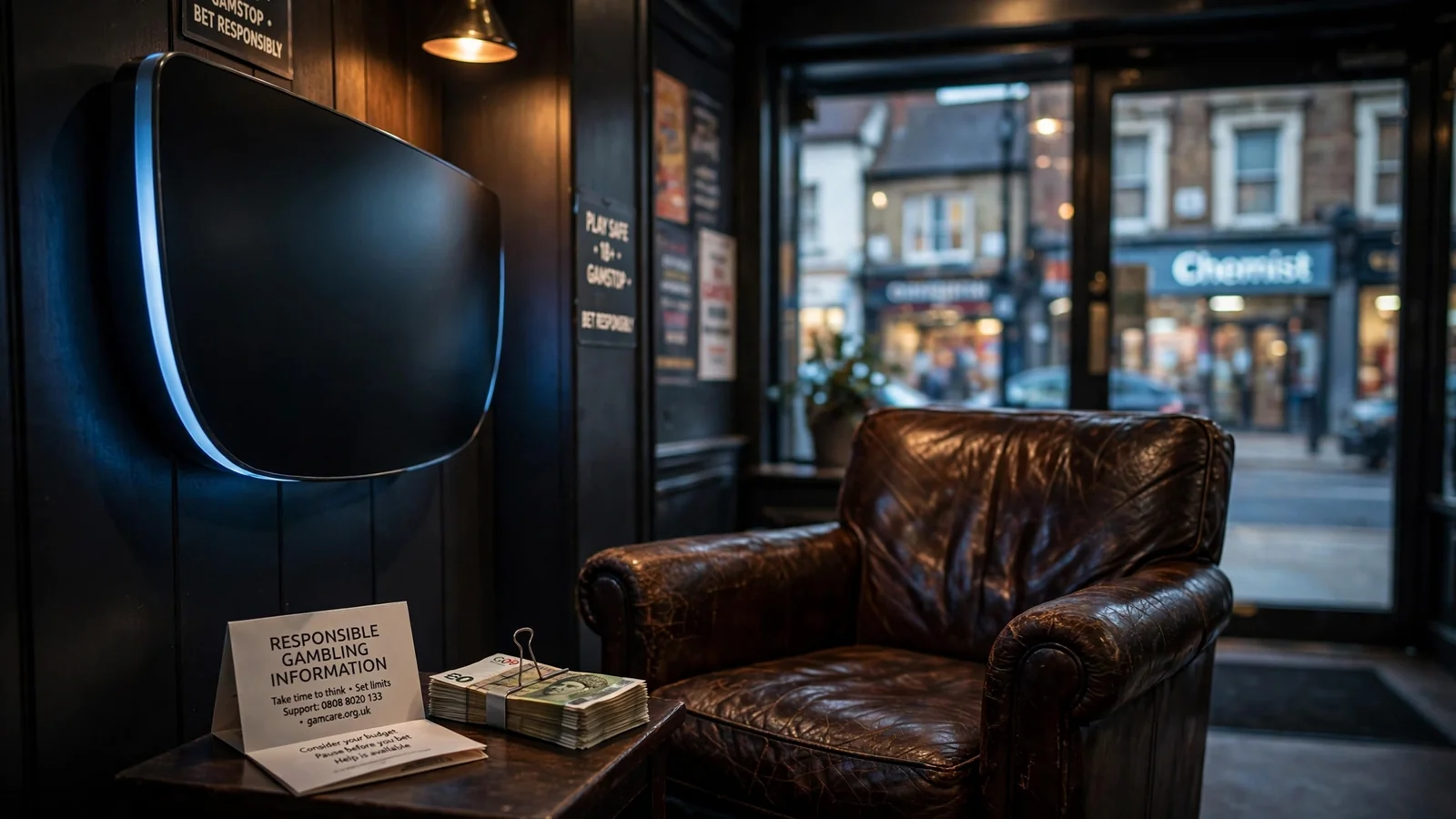
There is also a difference between the operator’s position and yours. UK law does not make an individual player a criminal simply for gambling on an unlicensed site. That does not turn the site into a UK-authorised casino, and it does not give you the protections that come with a UK-licensed operator. The practical risk is yours to weigh, even when the legal obligation to hold the licence falls on the business.
Before registering, separate three questions: can you reach the site, will it let you open an account, and is its operator authorised to serve Great Britain? The first two are about access. The last is about permission. Don’t let a “yes” to one stand in for the others.
If a casino advertises itself as one of the Curacao casinos that accept UK players, read that as a claim about access—not evidence of UK authorisation. A site can be present, responsive and ready to take a registration while still sitting outside the UK regulatory system. That is the part worth checking before you put money in.
Not on GamStop: What That Means for You
“Not on GamStop” sounds like a small account-setting difference. It isn’t. GamStop is the UK Gambling Commission’s self-exclusion scheme; casinos outside it do not take part in that scheme. So if you have excluded yourself through GamStop, that exclusion does not automatically cover a separate non-UK-regulated casino.
That distinction matters if you searched for Curacao casinos not on GamStop in the hope of finding somewhere you can still register. A site’s connection to Curaçao does not make it part of GamStop, and the scheme does not regulate casinos or certify their safety. The phrase describes a gap in coverage, not a sign that a site has passed a separate test.
Self-Exclusion Risk
Using a casino not on GamStop to bypass a self-exclusion is a risk to those who have excluded themselves because gambling became difficult to control.
I used to treat “available” as a useful green light. It only meant I could get to the registration page. It said nothing about whether my self-exclusion would carry across, or whether the same safeguards applied. Easy to confuse the two.
What self-exclusion can—and cannot—do
A GamStop self-exclusion is meant to prevent access to participating gambling businesses. A casino that is outside the scheme will not be covered by that exclusion. That does not mean GamStop has failed; it means the exclusion has a defined reach, and a separate site may sit beyond it.
This can catch you out if you have excluded yourself because gambling has become difficult to control. Searching for Curacao online casinos without GamStop may look like a way around a barrier, but that barrier may be doing useful work when an urge hits. I would not treat the ability to open another account as proof that playing there is a sensible or harmless choice.
If you have chosen to self-exclude, pause before trying to find a site that is not included. Consider contacting someone you trust or a support service instead of making a quick decision in the middle of an urge. A different website does not remove the reason you set the exclusion in the first place.
The protection gap is broader than GamStop
The issue is not only whether an exclusion applies. Non-UK-regulated casinos may have weaker responsible-gambling and data-protection standards than operators overseen by the UK Gambling Commission. That can mean fewer dependable safeguards around gambling behaviour and personal information. The specific arrangements can differ from one operator to another, so the label alone cannot tell you what controls a particular site offers.
When you play at an offshore casino, you also give up access to the UK’s Financial Ombudsman Service and to the mandatory responsible-gambling tools required in the UK-regulated system. Those are meaningful losses. A page may display buttons or settings that look familiar, but their presence does not make them equivalent to UK-required protections or guarantee how they will work if you need them.
I learned not to judge safeguards by how polished the account page looks. A “safer play” label is just wording until you know what the operator actually provides and whether you can use it when you need to stop. And if you are already trying to avoid gambling, checking menus and terms can become another route back into the site. That is the trap.
Don’t read “not on GamStop” as a recommendation
The phrase is often used as a selling point. In practice, it tells you that the casino is outside the UK scheme, not that it is a good option for someone seeking more control. A Curacao casino welcome bonus or a no-deposit offer does not change that protection gap. An attractive promotion cannot extend a self-exclusion or replace responsible-gambling tools.
Nor should you assume that every Curacao casino has identical safeguards. The relevant question is not whether a site calls itself “outside GamStop” or claims to be exempt. It is what protections it actually offers, how it handles your data, and whether you can rely on those measures. A claim on a casino’s own page is not independent confirmation.
If self-exclusion is part of your plan, do not use a site’s availability as a reason to undo that plan. Casinos not on GamStop are outside the UKGC scheme, and the UK protections that go with that system do not follow you there. That is the point worth remembering.
- Check specific operator protections
- Consider the reason for your self-exclusion
- Contact support services during an urge
- Treat “not on GamStop” as a recommendation
- Use availability as a reason to undo a plan
- Assume all Curacao casinos have identical safeguards
Bonuses and Slots: Read the Terms Before You Play
A bonus can look like extra money until you read what unlocks it. I’ve made that mistake: I saw the headline, deposited, then discovered the offer had its own rules before I could withdraw anything. With Curacao casino bonuses, the label alone tells you nothing about how an individual promotion works.
Check what the wagering requirement applies to. A specialist review reports offshore offers with requirements of 35 times or more, but that is not a rule for every casino or promotion. Another reported condition is 40 times; depending on the offer, that could be calculated against the bonus and deposit together, the bonus alone, or the bonus and free spins. Those are materially different calculations. “40x” without a clear base is not enough to judge the deal.
Free spins have their own small print. A specialist review reports wagering requirements of 30–50 times the winnings, alongside withdrawal caps of £5–£50. Treat those figures as terms reported for offers, not a promise about every promotion. Find out whether the spins expire, which games qualify, whether winnings are capped and whether the bonus must be accepted before you play. If the conditions are unclear, I’d leave the offer alone. No bonus is worth guessing.
The same goes for Curacao slots. A game title in a promotion does not establish that every site offers it, or that it contributes fully towards wagering. Book of Dead and Starburst are names you may encounter in slot discussions; neither name tells you what a particular casino has available or how its bonus rules treat that game. Read the promotion’s game contribution terms rather than assuming every spin counts equally.

There is also a UK distinction worth keeping in view. At UK-regulated sites, online slot autoplay is banned, and each spin must last at least 2.5 seconds. Those requirements describe play under British regulation; don’t assume a non-UK-regulated site follows the same rules.
Before opting in, look for the exact calculation, eligible games, expiry conditions, withdrawal cap and any steps required to release winnings. Then compare the possible cash-out with what you would need to stake. I’ve learned to ignore “free” until I can explain the conditions in plain English. If I can’t, it isn’t a deal I understand. That’s the test.
A Licence Is Not the Same as UK Regulation
A gambling licence answers a narrower question than many people think: which authority, if any, oversees the operator? It does not automatically mean the site is regulated for every country where someone can open a webpage.
That distinction matters with a Curacao gambling licence. A site may describe itself as licensed in Curaçao, but that credential is not a UK Gambling Commission licence. Operators providing online gambling to customers in Great Britain need authorisation from the UKGC, wherever the business is based. A licence issued elsewhere does not take the place of that requirement.
I used to treat the word “licensed” as a general safety stamp. It isn’t. The issuing jurisdiction matters, and so does the market the operator is serving. A Curacao gaming licence and UKGC oversight are different things, with different regulators behind them. Seeing the name Curaçao, or the phrase “Curacao eGaming casinos”, tells you nothing by itself about whether UK rules apply to that operator.
An Anjouan licence is separate from a Curacao licence and does not provide the same regulatory framework or guarantee that player funds are kept separate from operator money.
So, is a Curacao casino legal in the UK? The useful distinction is between a licence from Curaçao and permission to serve the British market. The former does not establish the latter. If an operator is taking customers in Great Britain, it needs the relevant UKGC licence; a foreign credential alone does not meet that requirement.
Anjouan is a separate example, not another name for Curaçao and not a guide to Curaçao’s rules. An Anjouan casino licence does not give an operator permission to operate in the UK. Anjouan-licensed casinos also are not required to connect to GAMSTOP or offer an independent dispute-resolution route comparable to services approved by the UKGC. Those points concern Anjouan specifically; they should not be copied across to Curaçao without evidence.
The same caution applies to Curacao casino ratings. A rating may describe what a reviewer thinks of a site, but it is not a regulator’s decision and cannot turn a foreign licence into UKGC oversight. I now look at the licensing claim and the UK authorisation question separately. Less guesswork.
Crypto Payments and the UK Credit-Card Ban
A Curacao casino that accepts crypto may look like a way to pay without using a bank card. That is one practical difference people notice, but the payment option does not tell you who regulates the operator or what protections apply. “Crypto-friendly” describes a payment route, not a stamp of approval.
Non-UK-regulated casinos may take credit cards, e-wallets, bank transfers and cryptocurrencies, sometimes using alternative payment processors. The methods shown at the cashier can vary, so don’t assume every option will be available to you. And a familiar logo or a polished payment page is not proof that a site is safe.

The UK bans credit-card-funded gambling. Paying with cryptocurrency can bypass that restriction because the transaction is not charged to a credit card. That does not make it a safer way to gamble, or change the operator’s obligations when serving customers in Great Britain. It changes the payment path. Nothing more.
I would be wary of treating crypto as a clever workaround with no downside. The value of a cryptocurrency can change, and sending funds to the wrong address or using the wrong network may be difficult to reverse. Those are features of crypto payments, not guarantees about how any particular casino handles them. Before transferring anything, make sure you understand what asset and network the cashier requires, and what happens if a payment is delayed or sent incorrectly.
A search for Curacao-licensed crypto casinos can turn up sites that advertise both a jurisdiction and digital-asset payments. Neither label, on its own, answers the important questions: whether the operator is authorised to serve you in Great Britain, which company is taking the payment, and what rules govern the transaction. Don’t let the convenience of a wallet make those checks feel optional.
There’s also a useful distinction between using crypto and borrowing to gamble. Crypto may avoid a credit-card transaction, but it does not remove the financial risk of losing the funds you send. If you are choosing a payment method because a card issuer would otherwise stop the deposit, pause before looking for another route. That warning applies whatever the cashier accepts.
The payment button is not the whole story. Read the cashier’s instructions carefully, and don’t send funds until the terms and destination make sense to you.
Payment and Withdrawal Check
- Verify if the deposit method is available for withdrawals
- Check the operator’s stated processing time for payouts
- Review the terms for any daily, weekly, or monthly withdrawal caps
- Confirm the required asset and network for crypto transfers
Skrill, Neteller and Withdrawals: Depositing Isn’t Cashing Out
Seeing Skrill or Neteller on a deposit page does not tell you whether either wallet can receive your withdrawal. The same goes for Trustly, a bank transfer or another payment option: a method displayed for paying in may not be offered when you cash out. Check the withdrawal cashier and the terms before depositing, rather than assuming the route works both ways.
I learned to separate those two steps the hard way. A familiar logo can make a payment feel straightforward, but the important detail is what happens after you request a payout. Look for any conditions on using the same method for deposits and withdrawals, whether another route is required, and what identity checks may apply. Keep a copy of the relevant terms; payment pages can change.
Timing is not predictable from the payment brand alone. Published estimates conflict: some describe withdrawals as taking from 24 hours to 5 business days, while other accounts say a payout can take three or four weeks. For a non-UK-regulated casino, there is no UK regulatory clock to enforce a stated withdrawal timetable. Treat a displayed estimate as an estimate, not a promise.
Limits can matter just as much as speed. A specialist review has reported that some non-UK-regulated casinos set daily, weekly or monthly withdrawal caps, meaning a large win may have to be paid in instalments. That is not a rule you can assume applies everywhere, so check the individual casino’s terms for limits and whether they differ by payment method.
Before you deposit, I’d check three things: whether your intended method is available for withdrawals, how long the operator says processing takes, and whether a cap could split a payout. Also look for what happens if a withdrawal is delayed or the operator asks for further checks. If those details are hard to find, that uncertainty is part of the decision.
Skrill, Neteller and Trustly are names worth checking in the cashier, not guarantees of a particular payout route. “Easy withdrawals” is only a label until the actual conditions are clear.

Are These Casinos Legit—and What Happens If Things Go Wrong?
“Legit” can mean a few different things. A site may genuinely operate under a licence issued outside the UK, but that does not make it UK-regulated or give you the protections attached to a UK Gambling Commission licence. I used to treat a licence badge as a verdict. It isn’t. It tells you something about the operator’s claimed regulatory framework, not whether every problem will be put right.
For a non-UK-regulated casino, responsible-gambling and data-protection rules may be less stringent than those applying to a UKGC-licensed operator. If a dispute develops, you should not expect to use the UK regulator’s complaints process. The practical question is not just whether a site looks genuine, but what independent route exists if the operator rejects your complaint or stops trading.
Those points should not be blurred into a claim about every Curacao-licensed site: the protections and complaint arrangements depend on the relevant jurisdiction and operator. A Curacao licence, by itself, does not establish that a casino is safe or that you will have an effective remedy if something goes wrong.
Anjouan is a separate example, not a description of Curacao. Under the Anjouan framework, player funds are not guaranteed to be kept separate from the operator’s money. If an Anjouan-licensed operator fails, players are unsecured creditors. The Anjouan authority does not take up, mediate or decide player complaints, either. That leaves a thin safety net.
Before depositing, I’d look beyond the word “licensed”: identify which jurisdiction issued the licence, read the operator’s complaint procedure and consider what would happen if the business failed. Those checks cannot guarantee an outcome, but they can stop a badge doing all the thinking for you.
My blunt test is simple: can you explain who would hear your complaint, and what protection you would actually have? If not, treat the uncertainty as part of the risk—not as a minor detail.
Are non-UK-regulated casinos legal for UK players to use?
UK law does not explicitly prohibit you from using a gambling service licensed in another country, and players do not commit a criminal offence by gambling on an unlicensed site. However, operators serving customers in Great Britain need a UK Gambling Commission licence.
Are sites that are not on GamStop legal for players in the UK to access?
You are not explicitly prohibited by UK law from using an overseas gambling service, and players do not commit a criminal offence by gambling on an unlicensed site. Operators serving Great Britain still require a UK Gambling Commission licence.
Are gaming sites not on GamStop permitted for UK players?
UK law does not explicitly prohibit you from using an overseas gambling service. Sites not on GamStop are outside the UK Gambling Commission’s self-exclusion scheme, and operators serving Great Britain still need a UK Gambling Commission licence.
What payment methods work best at non-UK-regulated casino sites?
You may find credit cards, e-wallets, bank transfers and cryptocurrencies, often handled through alternative processors. Some sites also accept deposits charged to your mobile phone bill or taken from a prepaid balance.
What Are Non UK Regulated Casinos?
They are online gambling sites that operate without oversight from the UK Gambling Commission. They may be licensed in jurisdictions such as Curacao, Malta, Gibraltar or Anjouan.
Prepared by the Tenobet Casino 2 editorial staff.