Malta MGA-Licensed Online Casinos in the UK
 Available in GB
An MGA licence identifies Maltese regulatory permission, but it does not authorise an operator to serve consumers in Great Britain.

Table of Contents
- An MGA Licence Is Not a UK Gambling Commission Licence
- What “Best” Means When the Licence Is the First Check
- How to Check What a Malta Casino Site Is Actually Licensed For
- MGA Casinos and GamStop: What “Not on GamStop” Means
- Real-Money Play: The UK Licence Question Comes First
- Can a Malta Casino Accept Players from Great Britain?
- Casino Bonuses: Read the Wagering Terms Before You Count the Cash
- What an MGA Licence Does—and Does Not—Tell You
- A New Casino Is Still a Licence Check, Not a Fresh Start
- Malta-Based Is a Location, Not Permission to Serve Great Britain
An MGA Licence Is Not a UK Gambling Commission Licence
A Malta Gaming Authority licence and a UK Gambling Commission licence are not two names for the same permission. They come from different regulators, and the distinction matters if you are in Great Britain and looking at an online casino connected with Malta.
The UK Gambling Commission licenses and oversees gambling in Great Britain. An operator that provides remote gambling facilities to consumers here must hold a UKGC licence, wherever the operator itself is based. That means a Malta connection does not replace the UK requirement. A Malta-issued licence is not a UKGC licence.
It sounds obvious when put plainly. It is less obvious on a casino page, where a licence badge, a Malta address and a polished description can sit close together and blur into one reassuring impression. I have made that mistake myself: seeing a formal-looking detail and letting it answer a different question from the one I needed answered. A regulator’s name is not decoration. It tells you who issued that particular permission.

Two regulators, two jurisdictions
The Malta Gaming Authority, or MGA, is Malta’s gambling regulator. The UK Gambling Commission is the regulator for Great Britain. So when a site says it is licensed by the MGA, that tells you which regulator it is pointing to. It does not, by itself, establish that the operator holds the separate permission required to provide remote gambling to customers in Great Britain.
The key distinction is not whether Malta is a real place, or whether the regulator named on a badge exists. It is whether the operator has the authority relevant to the market it is serving. If you are in Great Britain, the relevant operating licence is the UKGC licence. A Malta licence cannot be read as a substitute simply because the site is accessible or uses familiar language about British players.
That is the point I now try to keep in view: “licensed” is not a complete answer until you know who licensed the operator and what market you are asking about. The word can sound like a universal stamp of approval. It is not.


What the Malta label does not settle
A casino may describe itself as Malta-licensed, or refer to an online casino licence from Malta. Those phrases may describe a connection to the MGA, but they do not settle whether the operator is permitted to serve Great Britain. Likewise, the fact that the company operates from Malta does not alter the requirement for a UKGC licence when it provides remote gambling facilities to consumers in Great Britain.
There is a difference between an operator having a licence somewhere and holding the licence required here. It is easy to slide from the first statement to the second without noticing. I used to read a regulator’s name as if it settled the whole question. It only identifies the regulator being cited.
That distinction is especially important because the rule is not based on the operator’s physical address. The UKGC requirement applies to operators providing remote gambling facilities to consumers in Great Britain regardless of where those operators are located. A company cannot make the UK requirement disappear by placing its office, website administration or other operations abroad.

The UK baseline
For customers in Great Britain, the baseline is straightforward: remote gambling must be offered under a UKGC licence. It is illegal for an operator to offer gambling services to UK consumers without that licence. A licence from Malta does not turn an operator into a UKGC-licensed operator, and the two labels should not be treated as interchangeable.
This is not a claim that every detail of a Malta licence is meaningless. It is simply a boundary around what the label tells you. It identifies a regulator and a licensing connection; it does not answer the separate question of whether the operator has permission to offer remote gambling in Great Britain.
When I see “MGA licensed” now, I take it as a description, not a conclusion. The UK question remains separate. If the site is serving customers in Great Britain, the relevant permission is a UKGC licence. No amount of Malta wording changes that.
What “Best” Means When the Licence Is the First Check
When you’re assessing online casinos for the UK, licensing and payment details both matter. Use this list as a starting point and check each operator’s current terms before you choose.
Payout speed: 1-3 business days x3bet lists a payout speed of 1–3 business days, giving you a stated timeframe to consider.
Payout speed: 1-3 business days NightWin lists payouts as taking 1–3 business days. That is the available payment detail to keep in mind.
Payout speed: 1-3 business days Amunbet states a payout speed of 1–3 business days, which gives you a clear timeframe to review.
Payout speed: 1-3 business days WinBeast lists a 1–3 business day payout speed. Consider this stated timeframe when reviewing the operator.
Payout speed: 1-3 business days Jetsetspins gives a payout speed of 1–3 business days, providing a specific payment detail for your assessment.
Payout speed: 1-3 business days Chanze lists payouts at 1–3 business days. This is the available detail about its payout speed.
Payout speed: 1-3 business days EvoSpin states that payouts take 1–3 business days, a timeframe you can factor into your review.
Payout speed: 1-3 business days SpinFormula lists a payout speed of 1–3 business days. Check the operator’s terms for any further details.
Payout speed: 1-3 business days Dieselwin gives a stated payout speed of 1–3 business days, offering you a timeframe to consider.
Payout speed: 1-3 business days Revery Play lists payouts as taking 1–3 business days. No other operator details are provided here.
I used to treat “best” as a useful shortcut. A polished page, a confident ranking and a welcome bonus that looked generous could make a casino feel checked already. They hadn’t. “Best” is a sales label; it tells you what the page wants you to think, not whether the operator is properly set up to serve you in Great Britain.
If you are comparing Malta-based casinos, or looking through an MGA casino list, put that label to one side at first. The practical question is whether the operator holds a UKGC licence for the service it offers to customers here. A Malta connection or an MGA badge is not a substitute. The UKGC oversees gambling in Great Britain, and operators providing remote gambling facilities to people there need the relevant UKGC licence, wherever the business is based.
That is the threshold, not a medal. If a site cannot meet it, I would not call it one of the best casinos for a British player, no matter how slick the games look or how often its name appears in rankings. I would not use an MGA list as a shortlist for Great Britain without checking that separate point. Better to have fewer tabs open.
An MGA licence is not a substitute for a UKGC licence; if you are in Great Britain, the operator must hold a UKGC licence regardless of its Malta connection.
What the licence changes in practice
The value of a UKGC licence is not just that a regulator’s name appears in small print. It brings requirements that affect the way a licensed operator handles money, games, complaints and safer-gambling tools.
Player funds must be kept apart from the operator’s business funds. That separation is intended to protect customer money if the casino becomes insolvent. It is not a promise that every dispute will end in your favour, and it is not a reason to ignore the operator’s terms. But it is a concrete protection, not an advertising adjective.
Games offered by UKGC licensees must be tested and certified by approved testing houses. That gives you a regulatory standard behind the games, rather than asking you to take a casino’s own assurance on trust. It does not tell you whether a game will suit you or whether you will win. I learned the hard way that those are very different questions.

There is also a route for complaints. A UKGC-licensed operator must work with an approved Alternative Dispute Resolution provider. If something goes wrong, you can raise it with the operator and use the approved route if the complaint is not resolved. Knowing that a formal process exists is more useful than a page promising “world-class support”. Still, keep your messages and records. A process is only useful if you can explain what happened.
The licence also comes with requirements for tools that can help you manage play: deposit and loss limits, session-time reminders, GamStop participation and reality checks. Those tools are not a badge of personal control; you still have to use them. But they are part of the standard a UKGC-licensed operator must meet, rather than optional extras dressed up as care.
A more useful meaning of “best”
When I see “best Malta online casinos” in a headline, I now translate it into a set of checks rather than a verdict. Is the operator licensed by the UKGC to provide the service to Great Britain? Are the player-fund arrangements, complaint route and safer-gambling controls clear? Does the site explain its rules plainly, or does it bury the useful parts under promotional language?
- Establish that the operator is licensed by the UKGC for Great Britain
- Check for clear player-fund arrangements and complaint routes
- Verify that safer-gambling controls are transparent
- Treat “best” as a verdict rather than a sales label
- Rely on an MGA badge as a substitute for UKGC permission
- Let eye-catching bonuses distract you from regulatory protections
Only after those basics would I compare things that are actually preferences, such as the games available or how the site works on a phone. A casino can be attractive and still fail the first check. A bonus can be eye-catching and still tell you nothing about the protections behind the account. “Best bonus” and “best casino” are not the same claim.
This also changes how I read rankings for the best MGA casinos. A list may describe operators connected with Malta, but that alone does not tell a British reader whether the operator has the UKGC licence required to serve Great Britain. Nor does a high position in a ranking establish that the protections attached to a UKGC licence apply. Don’t let the list do the checking for you.
So my standard is deliberately less exciting than the adverts: first establish that the operator is licensed for the British market, then consider whether its protections and terms suit you. If it fails that first test, I stop comparing its welcome offer, game range or “top pick” status. No clever ranking can repair the missing piece.
How to Check What a Malta Casino Site Is Actually Licensed For
A Malta address, Maltese branding or an MGA badge can look reassuring. I used to treat a badge as if it answered the whole question. It doesn’t. The useful check is what the operator’s licence covers, and whether the site is authorised to serve customers in Great Britain.
Start with the wording on the site’s licensing page and footer. Look for the name of the legal operator, the regulator it says issued the licence, and any licence reference it provides. Then compare those details with information published by the regulator itself. A logo on a casino page is only a claim made by the casino; it is not independent confirmation.
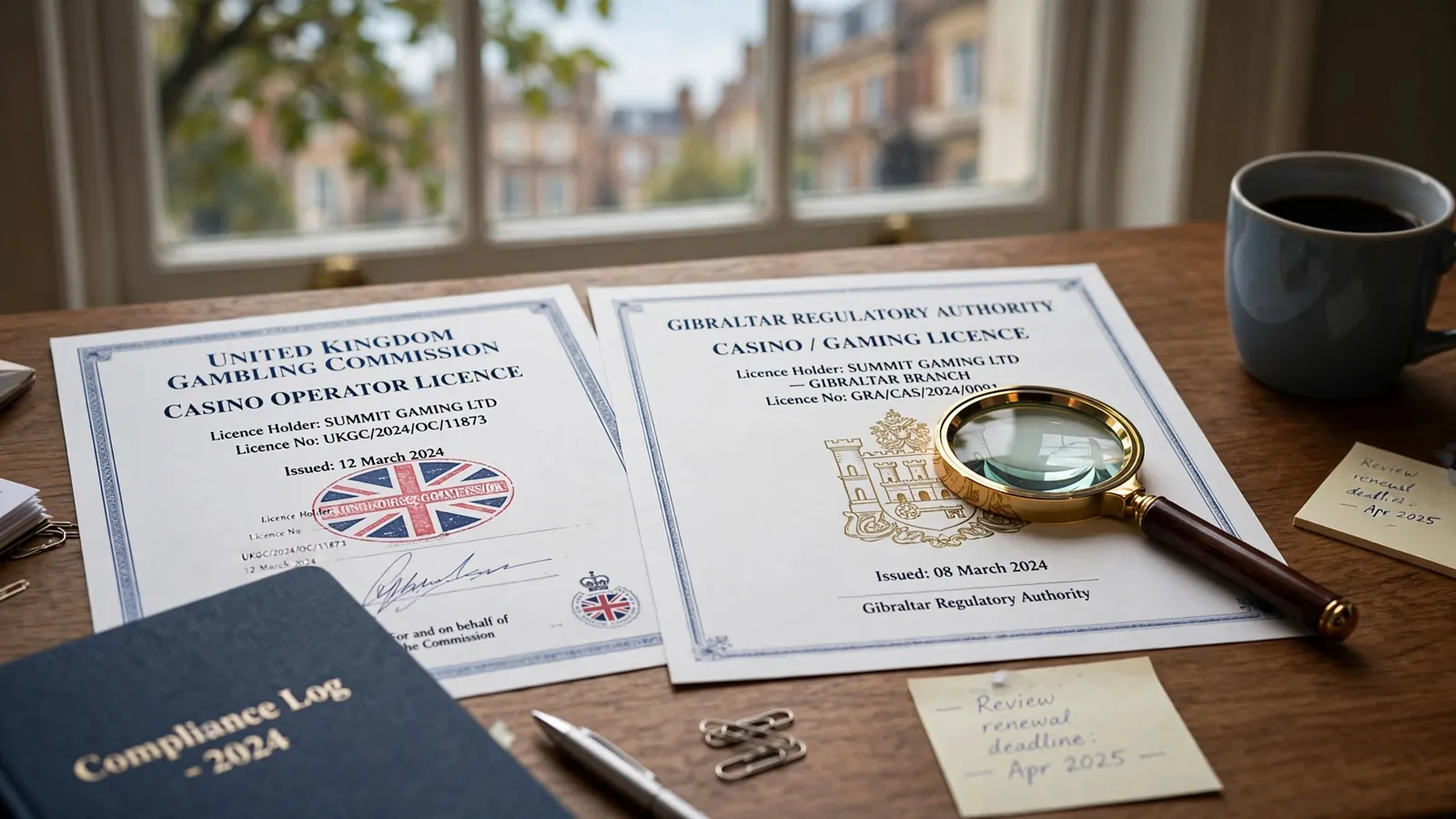
Pay attention to the operator’s identity, not just the brand name. A site can present itself as a Malta casino while its terms identify a different company as the operator. If those names do not line up, or the licence details are hard to find, pause and work out who would actually be responsible for your account. I would not put money in while that remains unclear.
Then check the scope of the claim. “Licensed in Malta” says something about the regulator named by the operator; it does not, by itself, establish permission to provide remote gambling to people in Great Britain. Operators serving consumers here must hold a UK Gambling Commission licence, wherever their business is physically based. So a page describing Malta online casino sites, or a badge suggesting MGA oversight, cannot substitute for checking whether the operator has the relevant UKGC licence.
Be wary of wording that blurs those two things. “International licence,” “regulated casino” and “MGA casino” may sound broad, but they do not tell you that the site is authorised for the British market. Look for a clear statement about the UKGC licence and check it rather than relying on the site’s own description. If the details point only to an overseas regulator, do not read that as UKGC approval.
The same care applies when a page promotes Malta casino bonuses or online slots. An offer, game catalogue or polished welcome page tells you nothing about the operator’s authority to serve you in Great Britain. Keep the licence check separate from the appeal of the promotion. I’ve made the mistake of letting a tempting offer distract me from the small print. Bad order.
How to Check Licences
Look for the legal name of the operator and the regulator cited in the site’s footer or licensing page.
Compare the licence reference and operator identity with the official information published by the regulator itself.
Ensure the operator holds a UKGC licence specifically to provide remote gambling facilities to consumers in Great Britain.
One limitation matters if something goes wrong: the UKGC does not approve licences issued by offshore regulators, has no reciprocal agreements with them, and does not handle complaints about operators licensed outside the UK. That makes it especially important not to assume a Malta licence gives you access to the British regulator’s complaint route.
If a site’s company identity, regulator details or UKGC status cannot be established clearly, treat that as a reason to stop—not as a puzzle you need to solve by depositing. A trustworthy-looking page is still just a page until its claims check out.
MGA Casinos and GamStop: What “Not on GamStop” Means
“Not on GamStop” describes whether a gambling site participates in the UK’s national self-exclusion scheme. It is not a bonus feature or a sign that a site is safer. When I see the phrase attached to a Malta or MGA casino, I read it as a warning to check what self-exclusion would—and would not—cover.
GamStop allows you to exclude yourself from all UKGC-licensed gambling sites for a chosen period: six months, one year or five years. UKGC-licensed operators are required to take part. Once you have registered, the scheme applies across those licensed sites, rather than only at the casino where you signed up.
A Malta-based site, or one that displays an MGA licence, is not automatically part of that system. Offshore casinos do not participate in GamStop. So if a site is outside the UKGC scheme, a GamStop exclusion will not block your access to it. That is the practical meaning behind phrases such as “MGA casinos not on GamStop” or “Malta casinos outside GamStop”: the key question is whether the operator participates in the UK scheme, not whether its website has a Maltese connection.

I used to read “not on GamStop” as a small technical detail. It isn’t. If you have enrolled to stop yourself gambling, a site outside the scheme can leave a route open that you may have been trying to close. The exclusion does not travel with you to every casino on the internet. That’s the catch.
It also means that searching for Malta online casinos without GamStop is not a way to find an alternative form of the same protection. A non-participating site does not become covered just because it is licensed elsewhere or uses similar language about responsible gambling. GamStop’s reach is tied to UKGC-licensed operators.
If you are already self-excluded, do not treat an offshore site’s availability as a reason to test the boundary. The scheme is intended to help you avoid gambling across participating operators; going elsewhere can undermine the barrier you chose. If you are considering self-exclusion, check the scheme’s terms directly and make the choice before gambling becomes harder to control.
The wording on a casino page can blur these distinctions. “MGA licensed” and “on GamStop” answer different questions. One refers to a regulator; the other to participation in a particular self-exclusion scheme. A site may promote the first while making clear it is outside the second. Read both claims separately.
So, when someone says a Malta casino is “not on GamStop”, the useful takeaway is narrow: GamStop will not exclude you from that site if it is outside the scheme. UKGC-licensed operators must participate; offshore casinos do not. Don’t mistake access for protection.
GamStop Warning
Offshore and MGA-licensed casinos that are not UKGC-licensed do not participate in GamStop, meaning your self-exclusion will not block access to these sites.
Real-Money Play: The UK Licence Question Comes First
I used to think a casino’s address told me most of what I needed to know. If the site appeared to be based in Malta, that sounded official enough. It wasn’t the right question. For real-money gambling, the key issue is whether the operator has permission to serve customers where they are playing.
In England, Scotland and Wales, an online operator taking real-money play must hold an operating licence from the UK Gambling Commission. That requirement follows the service into the market: it still applies if the company is based in Malta or runs its website from somewhere else. A Malta address does not change the rule.
That matters when you come across an MGA casino or a site describing itself as a Malta online casino. The wording may tell you something about the company’s location or its relationship with a regulator in Malta. By itself, it does not establish that the operator can lawfully offer real-money gambling to customers in Great Britain. Those are separate questions. I’ve made the mistake of treating a reassuring badge as the answer. It isn’t.
The same principle applies whether the site is called a Malta online casino, an online casino in Malta, or anything else. The name and location do not create an exception to the UK requirement. An operator providing remote gambling facilities to consumers in Great Britain needs the relevant UKGC licence, wherever its premises are. Without it, the operator is not authorised to offer gambling services to UK consumers.

That is the point I now put before the games, the welcome offer, or the polished claims on the homepage. “International” can sound like a useful credential; it does not answer whether the operator is licensed for British customers. Nor does the fact that a website loads or lets someone register turn its real-money service into an authorised one. Access and permission are not the same thing.
The rule is about the operator’s conduct, not a verdict on someone who has encountered the site. It is the business offering the gambling service to consumers that must hold the UKGC licence. So when a Malta-based site promotes real-money play, its location cannot stand in for the required authority to serve customers in England, Scotland or Wales.
Keep the question plain: is this operator licensed by the UK Gambling Commission to provide remote gambling in Great Britain? If the answer rests only on a Malta connection or an MGA label, that does not establish the required UK permission. I wish I’d understood that before letting impressive-looking language do the thinking for me.
The licence question comes first. Everything else can wait.
Can a Malta Casino Accept Players from Great Britain?
A Malta address can make a casino sound close to home, but it does not decide whether the operator may serve you in Great Britain. I used to treat the country named in a site’s footer as a useful shortcut. It isn’t. What matters is whether the operator is authorised to offer gambling to people where they are playing.
Jurisdiction Note
The Gambling Act 2005 applies to England, Scotland, and Wales; Northern Ireland has a separate regulatory regime.
For customers in England, Scotland and Wales, remote gambling operators need a UKGC licence, wherever the business is physically based. So a Malta-based site saying it accepts British players is not, by that claim alone, showing that it can lawfully offer real-money gambling in Great Britain. A friendly welcome message or a page aimed at UK visitors is not a substitute for the relevant authorisation.
That distinction gets lost in phrases such as “MGA casino for UK players”. The wording may describe a site’s own marketing, or simply where its licence comes from. It does not establish that the site is permitted to serve customers in Great Britain. I’d treat those as separate questions: where is the operator based, and what authorisation covers the service offered to you? Two different answers. Don’t merge them.
Great Britain is not the whole UK
The Gambling Act 2005 applies to England, Scotland and Wales. Northern Ireland has a separate regulatory regime, and the UK Gambling Commission does not regulate remote gambling there in the same way. That means a statement about the UKGC’s jurisdiction in Great Britain should not be casually stretched to cover Northern Ireland.
If you live in Northern Ireland, do not assume that a rule or licence description written for Great Britain answers your position. Check the applicable local requirements. The distinction is about regulation, not geography on a marketing page.
Age and location still matter
A UKGC-licensed operator must check that you are at least 18 before you can deposit or play. A sign-up form that lets you start filling in details is not the same thing as being cleared to gamble; age verification is a condition of access.
There is also a location condition attached to no-deposit offers: you must be physically in Great Britain to claim one. Your home address, nationality or the casino’s Malta base does not replace that condition. If you are travelling, don’t assume you can claim an offer just because you usually live in Britain.

I once skimmed the promotional wording and focused on the “free” part. That was the wrong place to start. First establish whether the offer is available to you where you are, and whether the operator is authorised for Great Britain. The word “free” does not make the underlying service exempt from the rules. Short version: check your location.
Casino Bonuses: Read the Wagering Terms Before You Count the Cash
A Malta casino bonus can look like money in your balance, but that does not mean you can withdraw it. The wagering requirement sets how much you must stake on eligible games before bonus funds, or winnings linked to them, become withdrawable. I used to focus on the headline amount and skim past that part. Costly habit.
Here is the arithmetic in a specific example cited by a specialist affiliate review: a £20 bonus with a 35x wagering requirement calls for £700 in qualifying bets before it converts to withdrawable cash. That calculation explains the term; it is not evidence that a particular Malta online casino bonus is available, or that the offer is suitable for you. In the UK market, promotions are subject to a 10x cap on wagering requirements, so a 35x promotion would not meet that limit.
The headline multiple is only one line to check. Look at which games count, how much each bet contributes, and whether the requirement applies to the bonus or another stated amount. Slots commonly count the full stake towards wagering, while table games may count 10% or 20%; some count nothing. If a game contributes only 10%, a £10 bet adds £1 towards the requirement. The balance can move much more slowly than the spin-by-spin total suggests.
Example of Wagering Requirements
A £20 bonus with a 35x wagering requirement requires £700 in qualifying bets before funds become withdrawable. Note that in the UK market, promotions are subject to a 10x cap on wagering requirements.
A Malta casino no-deposit bonus still has terms. “No deposit” describes the entry condition, not whether winnings are immediately withdrawable or whether play is unrestricted. Read the eligibility, game-contribution and withdrawal conditions before treating any displayed bonus balance as cash. The same applies to an MGA casino bonus or a promotion advertised alongside bitcoin payments: the payment method does not change the wagering maths.
I now check the terms before I count a bonus as part of my bankroll. If the rules are hard to find, unclear about qualifying games, or inconsistent with the offer’s headline, I don’t build a plan around it. A bonus can add play; it is not cash in hand.
What an MGA Licence Does—and Does Not—Tell You
When I see a Malta Gaming Authority (MGA) badge, I try to read it narrowly. It tells me something about the operator’s licensing, but it is not a general promise that every part of the player experience is protected in the way it would be under the UK system.
There is a concrete safeguard behind the label: MGA licensees must keep player funds in segregated accounts at an approved financial institution. That separation matters if you are trying to understand how customer money is held. It is not the same as saying that funds are guaranteed, or that every dispute will be resolved in your favour. I would not stretch the claim beyond what it actually says.

That distinction gets lost on pages promoting Malta Gaming Authority online casinos. A licence badge can look like a seal of approval for the whole site; in practice, it identifies a regulator and a licensing relationship. It does not, by itself, tell you what recourse you have from the UK, or whether the operator is accountable to the UK Gambling Commission.
The UKGC does not approve licences issued offshore, has no reciprocal arrangements with offshore regulators, and will not take complaints about operators licensed outside the UK. So if a complaint concerns an MGA-licensed operator, you should not assume the Commission will step in because the site displays an MGA casino licence. Different regulator. Different route.
I once treated a foreign regulator’s logo as if it meant “the UK will sort it out if anything goes wrong”. That was a bad shortcut. The MGA’s fund-separation requirement is useful to know, but it does not create a UKGC complaint route or make the regulators interchangeable.
This is also why a Malta Gaming Authority casino list is not, on its own, a useful answer to whether a particular site gives you the protections you expect. A list can identify names; it cannot make an offshore licence a UK approval. Nor does a payment option or a “free spins” banner change what the licence tells you. Separate the claims: who regulates the operator, how funds are held, and who will handle a complaint. The badge answers only part of that.
MGA Licence Limits
- MGA licensees must keep player funds in segregated accounts
- An MGA licence does not provide a UKGC complaint route
- The UKGC does not have reciprocal agreements with offshore regulators
- A Malta licence is a description of a relationship, not a UK approval
A New Casino Is Still a Licence Check, Not a Fresh Start
A new site can make everything feel reset: fresh design, a launch offer, a name you have not seen before. I used to treat that novelty as a reason to look closer at the games and payments. It is not a reason to relax the first check. Whether a casino has just opened or has been around for years, a Malta connection or an MGA badge does not change the standard for serving customers in Great Britain.
The relevant question is whether the operator has a UK Gambling Commission licence for providing remote gambling to people in Great Britain. That requirement applies regardless of where the operator is based or how recently its site launched. A new Malta casino is not exempt because it is new, and a familiar-looking site is not exempt because its branding feels established. The age of the website tells you nothing about that permission.

I would separate the launch pitch from the operator’s status. “New” describes how recently a site appeared; it does not describe what authority it holds or who it may serve. Likewise, a polished page, a payment option, or a claim of being an MGA casino cannot stand in for the UKGC licence required to offer remote gambling to Great Britain consumers. Don’t let the shiny bit answer the wrong question.
There is also a basic age check to keep in mind. The Gambling Commission requires operators to confirm that a customer is at least 18 before allowing them to deposit or play. If a new site invites you to start wagering before that check, treat the invitation as a warning, not a shortcut.
I know the temptation: a newly launched casino can feel like a chance to get in early, before everyone has an opinion about it. But early access is not a protection, and a launch date is not evidence of legitimacy. I would not deposit simply because the site is new, nor assume that a claimed Malta or MGA connection makes it suitable for players in Britain. The same licensing question comes first, every time.

That does not mean every newcomer is automatically the same. It means novelty is not a substitute for the operating permission that matters to your location. A new brand, a new interface, and a new offer may all be worth examining later. First establish whether the operator is authorised to serve Great Britain. Fresh start? Same check.
Malta-Based Is a Location, Not Permission to Serve Great Britain
“Based in Malta” tells you about an operator’s location, not whether it has permission to offer remote gambling to people in Great Britain. I used to read a polished address or a Malta reference as a kind of reassurance. It isn’t. Geography and authority are separate things.
A company may run its business from Malta and still need the relevant UKGC licence if it provides remote gambling facilities to consumers in Great Britain. The requirement does not disappear because the operator, its staff or its servers are elsewhere. That is the point worth keeping in view when a site describes itself as a Malta-based online casino.

The wording can sound more meaningful than it is. “Malta-based” is not a statement that the operator may serve British customers, and it does not answer that question on its own. Nor does a payment logo. If you are comparing Mastercard or paysafecard options on a casino site connected with Malta, those methods tell you how the site says you can pay—not whether it is authorised to offer gambling here. The same applies to a badge, an address or a line in the footer.
There are practical reasons a business might locate itself in Malta, but the location alone cannot tell you its legal position in Great Britain. I now treat it as background, not a green light. Small distinction. Big one.
So when you see “Malta-based,” translate it narrowly: the operator claims a connection to that place. Do not stretch the phrase into permission to accept British customers. For that, the deciding issue is whether the operator holds the UKGC licence required to provide remote gambling facilities to people in Great Britain, wherever the business is physically based. A Malta address cannot substitute for it.
Can I still play at non-UKGC casinos if I’m based in the UK?
If you are in England, Scotland or Wales, operators offering you remote gambling must hold a UKGC licence; a Malta or other offshore licence is not a substitute. Northern Ireland has a separate regulatory regime.
How can you check whether an online casino is legal?
Check whether the operator holds a UKGC licence to offer remote gambling in Great Britain. A Malta licence or an overseas address does not meet that requirement.
Are no-deposit spin offers legal in Great Britain?
You must be physically located in Great Britain to claim a no-deposit offer, and the operator offering real-money gambling to customers there must hold a UKGC licence.
What tools do UK operators have to provide?
UKGC-licensed operators must offer deposit and loss limits, session limits, time-outs, self-exclusion through GamStop, and reality checks or session time reminders.
What happens if an offshore casino refuses to pay my winnings?
The UK Gambling Commission does not handle complaints about operators licensed outside the UK. For a UKGC-licensed operator, complaints must first go to its approved ADR provider, and then to the Commission if unresolved.
Published by the Tenobet Casino 2 team.