Cardano ADA Casino Comparison in the UK
 Available in GB
A clear look at the licence gap, the limits of available evidence and what to check when assessing casinos that claim to accept ADA.
Table of Contents
- The UK rules that make a Cardano casino comparison tricky
- What the available evidence can—and can’t—say about ADA casinos
- Offshore sites: the licence gap matters more than the label
- “Best” is no use if the casino doesn’t take ADA
- Crypto casinos and the limits of the BCH comparison
- “Top” sites: compare what can actually be verified
- Finding a casino that accepts Cardano in the UK
- No-KYC claims and the privacy trade-off
- Deposits, confirmations and getting a withdrawal out
- Bonuses and casino games: what the evidence supports
The UK rules that make a Cardano casino comparison tricky
The first thing I would separate is the currency question from the licence question. Cardano, or ADA, is a cryptocurrency. UK-licensed operators are prohibited from accepting cryptocurrency, so an online casino cannot both hold a UK operating licence and take ADA as a gambling payment. That is the key point for anyone looking for a Cardano casino in Great Britain: a site’s claim that it accepts crypto does not make it a UK-licensed casino.
The Gambling Commission oversees gambling in the UK, including online casinos. In Great Britain, it is the regulator for commercial gambling. Its reach is not limited to operators with offices or servers here: remote gambling offered to consumers in Great Britain falls within its remit regardless of where the key equipment is located. A company cannot avoid the requirement for a UK licence simply by running its systems elsewhere.
That framework also helps untangle what “UK casino” can mean in an advert. A site may be accessible to someone in Britain, use pounds in its account display, or describe itself as serving UK players. None of those details changes whether its operator holds the relevant UK operating licence. And a crypto payment option does not override the rule that licensed operators cannot accept cryptocurrency.
I have learned not to treat a tidy-looking comparison table as proof of anything. “UK-friendly” can sound reassuring, but it is not the same as “licensed by the UK Gambling Commission”. The licence is the part that matters when you are deciding whether a casino is operating under the British framework. Check the operator’s licence number against the Commission’s public register before depositing; a badge or a line of promotional copy is not a substitute.
The Commission issues operating licences to businesses and personal licences to individuals who operate within Great Britain. For a player, that distinction is worth understanding without getting buried in licensing jargon: the business running a casino needs the relevant permission, and people carrying out certain roles in the operation may also need personal licences. Seeing that a company has some kind of licence is not enough by itself. What matters here is whether it holds the UK operating licence required to offer remote gambling to Great Britain consumers.

That is why “Cardano online casino UK” is a tricky phrase rather than a straightforward category. If a casino accepts ADA, it is accepting cryptocurrency; if it is a UK-licensed operator, it is subject to the UK restriction on accepting cryptocurrency. Those two descriptions cannot be combined into a claim that the site is a UK-licensed casino accepting ADA. A site might still use UK-facing language, but that does not establish its regulatory status.
There is a second distinction that can get lost in the same wording. A casino being available to visit from Britain is not the same as being authorised to offer gambling to British customers. The Commission’s jurisdiction over remote gambling is tied to the consumers being served, not just the physical location of the equipment. So “the site is based overseas” does not, on its own, settle the licensing question.
I would also be cautious about a recommendation labelled “best Cardano casino” if the wording leaves the licence unclear. “Best” is an opinion; the licence status is something that can be checked. No glossy comparison can make that contradiction disappear.
This is not a technical judgement about Cardano itself. It is a regulatory one. The rule applies to cryptocurrency acceptance by UK-licensed operators; it does not depend on whether a particular coin is familiar, whether the payment is described as a wallet transfer, or whether the casino promotes other features. Changing the label from “crypto” to “digital currency” would not turn ADA into an acceptable payment method for a UK-licensed casino.
For a comparison aimed at British players, the licence and the payment claim therefore need to be read together. A site claiming both UK licensing and ADA deposits is making claims that do not fit the current restriction. I would not rely on the UK wording alone, and I would not assume that a casino is licensed just because it accepts customers from Britain. Check the register, then assess the payment claim against the rule. That is the cleanest way to avoid mixing up access, marketing and authorisation.
Licensing Warning
UK-licensed operators are prohibited from accepting cryptocurrency; any site claiming to be both UK-licensed and accepting ADA is making contradictory claims.
What the available evidence can—and can’t—say about ADA casinos
Cardano and Bitcoin Cash are different cryptocurrencies, not two names for the same payment option. That sounds obvious, but casino comparisons can blur the distinction: a site described as accepting crypto may support one coin and not another, and a payment method listed for BCH tells you nothing by itself about whether ADA is accepted.
The UK Gambling Commission’s public register gives a specific result for Bitcoin Cash: its remote-casino entries do not identify BCH as a deposit method. In practical terms, there is no UK-licensed casino currently taking Bitcoin Cash directly as payment. That is a useful, narrow finding. It is not a finding about Cardano.
I would be wary of turning that BCH result into either a promise or a blanket claim about ADA. It does not prove that a Cardano casino is available to UK players, but it also does not prove that no site anywhere accepts ADA. The distinction matters when a page or an advert uses broad wording such as “crypto casino” and leaves the actual coin unclear. The label is not the payment method.
For a meaningful Cardano comparison, the question is whether an operator expressly supports ADA for the relevant action: depositing, holding a balance, wagering, or withdrawing. Those are not interchangeable claims. A casino might mention a coin in a general list while its cashier does not offer it, or it might accept a currency for deposits without supporting withdrawals in that currency. Without an ADA-specific confirmation, a BCH listing cannot fill the gap.

That is the main limit of comparing these currencies. A payment register entry for Bitcoin Cash can tell you something about BCH at the listed operators. It cannot be used as a proxy for Cardano’s availability, processing, fees, or withdrawal arrangements. Those details depend on the coin and the operator’s own payment setup. I have learned not to treat a crypto logo on a page as proof that the cashier will do what I expect. A logo is cheap.
If you are checking a site that claims to accept ADA, look for Cardano or ADA named explicitly in its cashier and payment terms. Check whether the stated option covers deposits and withdrawals, and whether the balance is actually held in ADA rather than converted. If the wording only says “cryptocurrency”, ask the operator which currencies it supports before sending anything. The specific answer matters more than a broad category label.
There is a second trap: evidence about a coin’s general use at casinos can be mistaken for evidence about UK-facing services. Those are separate questions. A site may promote a crypto payment method without that establishing its status or availability for someone in Great Britain. Keeping the payment claim precise avoids making one fact carry more weight than it can.
So, when you see a comparison framed around Cardano, separate what is stated about ADA from what is known about BCH. The BCH position is clear for UK-licensed casinos: it is not listed as a deposit method on the Commission’s remote-casino register, and no UK-licensed casino currently accepts it directly. That tells you where BCH stands in that specific setting. It does not verify an ADA casino, and it should not be presented as proof that Cardano works the same way. Different coin, different claim.
- Look for Cardano or ADA explicitly named in the cashier
- Check if the option covers both deposits and withdrawals
- Verify the operator’s licence on the Commission’s public register
- Treat a general “crypto” label as proof of ADA support
- Use a Bitcoin Cash (BCH) listing as a proxy for Cardano
- Assume a crypto logo ensures the cashier will function as expected
Offshore sites: the licence gap matters more than the label
A casino can call itself “crypto-friendly” and still leave the most important question unanswered: who regulates it for British customers? A specialist affiliate review described the Bitcoin Cash casinos it covered as operating under a Curaçao or comparable offshore licence. That is a statement about the casinos in that review, not proof that every offshore operator has the same status, and not evidence that any of them accepts Cardano.
The distinction matters if you are looking at Cardano casino sites in the UK. A BCH site’s payment options do not establish anything about ADA, and an offshore licence is not a UK Gambling Commission licence. The label on a homepage can sound official; it does not give you the UKGC regulatory safety net.
For operators offering remote gambling to people in Great Britain, a licence from the Commission is required even if the business or its equipment is based elsewhere. Offshore casinos sit outside that system. The UK does not criminalise an individual for gambling with one, but that does not make an unlicensed casino a legal UK-facing operator. Those are two different points. Easy to mix up.

The practical difference shows up when something goes wrong. At a UKGC-licensed casino, you can use its internal complaints process and, if the matter remains unresolved, seek an approved alternative dispute resolution service. With an offshore casino that lacks a Commission licence, you do not have UKGC dispute resolution or access to that UK complaints route. You are left dealing with the operator under its own terms and whatever arrangements apply where it is licensed. That is a thinner safety net.
There is also no GAMSTOP integration. A BCH casino operating without a Commission licence will not be part of the UK self-exclusion scheme, so registering with GAMSTOP will not block access to that site. That can matter more than the coin on the deposit page. If you rely on self-exclusion to create distance from gambling, an offshore account may not respect the boundary you set through the UK system.

I have learned not to treat “offshore” as a reassuring synonym for “international”. It tells you where the operator sits relative to UK regulation; it does not tell you how fairly it handles a complaint, whether its licence is current, or whether it accepts ADA. Before depositing, check the operator against the Commission’s public register rather than trusting a badge or a licence claim on the site.
So if you are comparing ADA casino sites, keep the questions separate: is Cardano actually accepted, and does the operator hold the licence needed to serve Great Britain? A positive answer to one would not answer the other.
A foreign licence may be relevant to an operator’s own jurisdiction, but it does not replace UK protections for a British player. No UKGC route. No GAMSTOP link. Those are real differences, not small print.
“Best” is no use if the casino doesn’t take ADA
When comparing Cardano (ADA) casino options in the UK for 2026, payout timing is one practical detail to check. Use these verdicts as a starting point, and verify ADA support and current terms directly before you choose.
Payout speed: 1-3 business days x3bet lists a payout speed of 1–3 business days. Check whether its current terms support ADA withdrawals.
Payout speed: 1-3 business days NightWin lists a payout speed of 1–3 business days. Confirm ADA availability and the applicable withdrawal terms before using it.
Payout speed: 1-3 business days Amunbet lists a payout speed of 1–3 business days. Check directly whether ADA is supported and what conditions apply.
Payout speed: 1-3 business days WinBeast lists a payout speed of 1–3 business days. Verify current ADA support and withdrawal conditions before you decide.
Payout speed: 1-3 business days Jetsetspins lists a payout speed of 1–3 business days. Check its current terms to confirm whether ADA withdrawals are available.
Payout speed: 1-3 business days Chanze lists a payout speed of 1–3 business days. Confirm directly whether ADA is supported and review the applicable terms.
Payout speed: 1-3 business days EvoSpin lists a payout speed of 1–3 business days. Check current ADA availability and withdrawal terms before choosing it.
Payout speed: 1-3 business days SpinFormula lists a payout speed of 1–3 business days. Verify whether its current payment options include ADA.
Payout speed: 1-3 business days Dieselwin lists a payout speed of 1–3 business days. Check directly whether ADA withdrawals are supported and what terms apply.
Payout speed: 1-3 business days Revery Play lists a payout speed of 1–3 business days. Confirm current ADA support and withdrawal conditions before you use it.
A casino can have polished pages, familiar games and a tempting welcome offer, yet still be the wrong choice if its cashier does not accept Cardano. I’ve learned to put the payment method before the sales pitch. Otherwise, “best” is just a label: it tells you nothing about whether you can deposit the currency you intend to use.
For an ADA comparison, start with the cashier’s actual payment options. Look for Cardano or ADA by name, then read the payment terms rather than relying on a general claim that a site supports crypto. A broad crypto label is not the same as confirmation that Cardano is accepted. Nor does a casino accepting one cryptocurrency establish that it accepts another.
That distinction matters in the UK. That tells you something about BCH and licensed operators, not that ADA is accepted by a particular casino—or that a BCH payment option can be used for Cardano. Different currency, different claim.
Direct ADA support is distinct from routes involving third-party exchanges, wallet transfers, or conversion to other coins.
I would also separate direct ADA support from any route that involves exchanging or converting assets. Those are not interchangeable descriptions. If a site says it accepts Cardano, check whether the cashier actually names ADA and whether the terms explain what happens to the payment. Don’t assume that a third-party exchange, a wallet transfer or another coin’s deposit option amounts to a Cardano deposit facility.
What a comparison should actually compare
Once a site has clearly identified ADA as an accepted currency, you can compare its relevant terms. Before that point, a ranking is mostly decoration. I’d check the deposit instructions, the stated currency and any conditions attached to the payment method. If those details are unclear, the site has not given you enough to make a useful comparison.
Keep the payment question separate from claims about bonuses or games. A casino may advertise a promotion, but that does not show that the promotion is available to someone depositing in ADA. The payment terms and bonus terms need to line up; otherwise, the headline offer may not apply to the way you plan to play. The same goes for game availability: a site’s general catalogue does not establish which games, if any, are available under a specific currency arrangement.

A specialist review describes a list of BCH casinos as operating under Curacao or a similar offshore licence. That is a report about the sites on that list, not a general description of every crypto casino, and it does not identify Cardano casinos. It also cannot turn a BCH payment finding into evidence of ADA support. Keep the labels attached to the evidence.
I wouldn’t treat “crypto casino” as a payment method. It is a broad category, not a promise that a cashier supports every coin. A useful comparison names the currency the operator accepts and gives you terms you can check. If it only says “crypto,” the practical question remains unanswered.
This is where I used to get caught by the headline. I’d see a coin mentioned somewhere on a site and mentally upgrade that to “deposit supported”. It isn’t enough. Find the payment option in the cashier and read the instructions for that exact asset. If Cardano is not named there, don’t treat Bitcoin Cash support—or a general crypto claim—as a substitute.
Verifying ADA Support
Find the payment options in the casino’s cashier and look for Cardano or ADA specifically named.
Review the instructions for that exact asset to confirm it is supported for both deposits and withdrawals.
Check the operator against the UK Gambling Commission’s public register to determine their regulatory status.
Don’t rank a payment method that isn’t confirmed
The phrase “best Cardano casino” sounds as if there must be a settled shortlist. But a meaningful shortlist depends on first establishing which operators accept ADA, and then comparing like with like. A BCH comparison can help you understand BCH-specific claims; it cannot supply a list of Cardano operators or show that their terms match.
So I’d use “best” only after the basic payment check. Confirm ADA explicitly, read the terms for that currency, and then compare the things that matter to you. If the site’s wording is vague, pause there. No ranking fixes an unclear cashier.
That is a less exciting way to choose. It is also the difference between comparing an actual Cardano deposit casino and comparing a promise that may refer to another currency.
Crypto casinos and the limits of the BCH comparison
“Crypto casino” can sound like one payment experience with a different coin name. It isn’t. A comparison involving Bitcoin Cash tells you something about Bitcoin Cash; it does not tell you what a Cardano payment would cost, how quickly it would be handled, or whether a casino would support it.
The specific BCH comparison is with Bitcoin: Bitcoin Cash transactions are usually cheaper and faster, a difference linked to BCH’s 32MB block size limit. That gives you a relative point of reference for those two currencies. It is not a blanket promise about every transaction, and it says nothing by itself about ADA.

That distinction matters when a site uses broad wording such as “crypto accepted”. I’ve learned not to treat that as a payment list. A casino might support some digital currencies without supporting others, and a general crypto label does not establish that Cardano is among them. The useful detail is whether ADA is explicitly named in the cashier’s payment options and terms.
The same goes for claims about speed and cost. A statement that BCH is faster or cheaper than Bitcoin cannot be carried over to Cardano just because both are cryptocurrencies. Those are separate networks and payment arrangements. Unless the casino gives clear ADA-specific information, you cannot safely use BCH as a stand-in for what an ADA deposit or transfer would be like.
I used to see a familiar crypto logo and assume the rest would be straightforward. That shortcut is how you end up comparing the wrong thing. Check the currency name, not just the category; check that the payment route is available for the account you intend to use; and read the casino’s own terms for any conditions attached to that route. If the wording only says “crypto”, ask what that means before sending funds.
There is also a difference between a coin’s network characteristics and a casino’s payment setup. A network comparison does not establish which currencies the operator accepts or how the operator handles them. Keep those questions separate. Less guesswork.
So a BCH-versus-Bitcoin comparison can be useful when you are assessing those currencies against each other. It cannot make a Cardano crypto casino claim reliable, nor can it tell you what an ADA transfer would involve. For crypto casinos accepting Cardano, the relevant comparison has to be about Cardano itself, stated plainly by the casino—not inferred from another coin.
Attention Network characteristics of one cryptocurrency, such as Bitcoin Cash’s speed or cost, cannot be used to infer the performance or availability of Cardano.
“Top” sites: compare what can actually be verified
A “top” label sounds like a verdict. I’ve learned to treat it as a claim that needs evidence, not as proof that a casino accepts Cardano or is suitable for you. If I can’t confirm which operators actually take ADA, ranking them would dress guesswork up as advice.
For a meaningful comparison, the first check is simple: does the casino explicitly list Cardano as a deposit method? A crypto badge or a general promise to accept digital currencies does not settle that. Nor does a page about another coin. The payment option needs to be named, and its terms need to make clear whether you can use ADA for the transaction you have in mind.
Then I’d check what the site says about the whole payment route. Is ADA accepted for deposits only, or can it also be used when withdrawing? Are there conditions attached to using it? Those details matter more than a bright “top crypto casino” banner. If the terms are vague, I would not fill the gaps with assumptions.
The same goes for comparisons between operators. A proper ranking needs something consistent to compare: confirmed Cardano support, clear payment terms and information that can be checked against the operator’s own pages. Without that, a numbered list creates a false sense of precision. It tells you who supposedly wins while leaving the basic question—whether you can pay in ADA—unanswered.

I’ve fallen for polished labels before. “Best” often means a page has been arranged to look decisive, not that every claim has been tested. A specialist affiliate review has reported that every casino in its own list operates under a Curacao or similar offshore licence. That describes the list covered by that review; it is not proof about every casino, and it does not establish that any listed operator accepts Cardano.
So I would not give a site a place among the leading Cardano casinos on the strength of a crypto label, a mention of another coin or somebody else’s ranking. Those may point you towards a question to check. They are not the answer.
My practical test is less exciting than a league table: find ADA named in the payment terms, confirm what the operator says about using it, and make sure the claim refers to the site you are actually considering. If those points cannot be established, there is no solid basis for calling it a leading Cardano casino site. No podium for guesses.
Finding a casino that accepts Cardano in the UK
When I look for a casino that takes Cardano, I start with a plain distinction: a site accepting some kind of cryptocurrency is not the same as a UK casino accepting ADA. The coin matters, and so does the operator’s status. A broad “crypto accepted” badge does not tell you that Cardano is supported, or that the site is licensed to serve customers in Great Britain.
For UK-licensed operators, the position is clear: they are prohibited from accepting cryptocurrency. That rules out ADA as a direct casino payment method at a UK-licensed casino. It is not a question of whether Cardano is faster, cheaper or more practical than another coin. The restriction applies to cryptocurrency acceptance, not just to one particular network.
Main Conclusion
UK-licensed casinos cannot accept ADA, and general “crypto” claims are not a substitute for explicit Cardano support.
I’ve learned not to treat a payment logo as proof of a usable route. A casino might mention crypto somewhere on its site, but that alone does not establish which currencies it accepts, whether ADA can be deposited directly, or whether the offer is available to people in the UK. Those are separate checks. If the terms do not name Cardano or ADA as an accepted payment method, I would not count it as an ADA casino.
The same caution applies when you see Bitcoin Cash mentioned. No UK-licensed casino currently accepts BCH as a direct payment method. That does not prove anything about whether an offshore site accepts Cardano; it only tells you that BCH acceptance is not a route into the UK-licensed market. One coin cannot stand in for another.
That’s the bit the “crypto casino” label glosses over. It can group together different assets and operators with very different terms. If your specific aim is to pay with ADA, you need explicit confirmation of Cardano support, rather than a general claim that a site takes crypto. And if your aim is to use a UK-licensed casino, the cryptocurrency restriction is the deciding point.
I would also avoid reading a list of casinos accepting ADA as a list of UK-licensed options. The wording may describe payment support somewhere, but it does not tell you that the operator holds the licence needed to serve Great Britain. Those claims should not be blended.
So the direct answer is narrow: UK-licensed casinos cannot accept ADA, and the BCH position does not change that or verify a Cardano option elsewhere. “Accepts crypto” is not enough. Check the named currency and the operator’s status separately before treating any site as a real choice.
No-KYC claims and the privacy trade-off
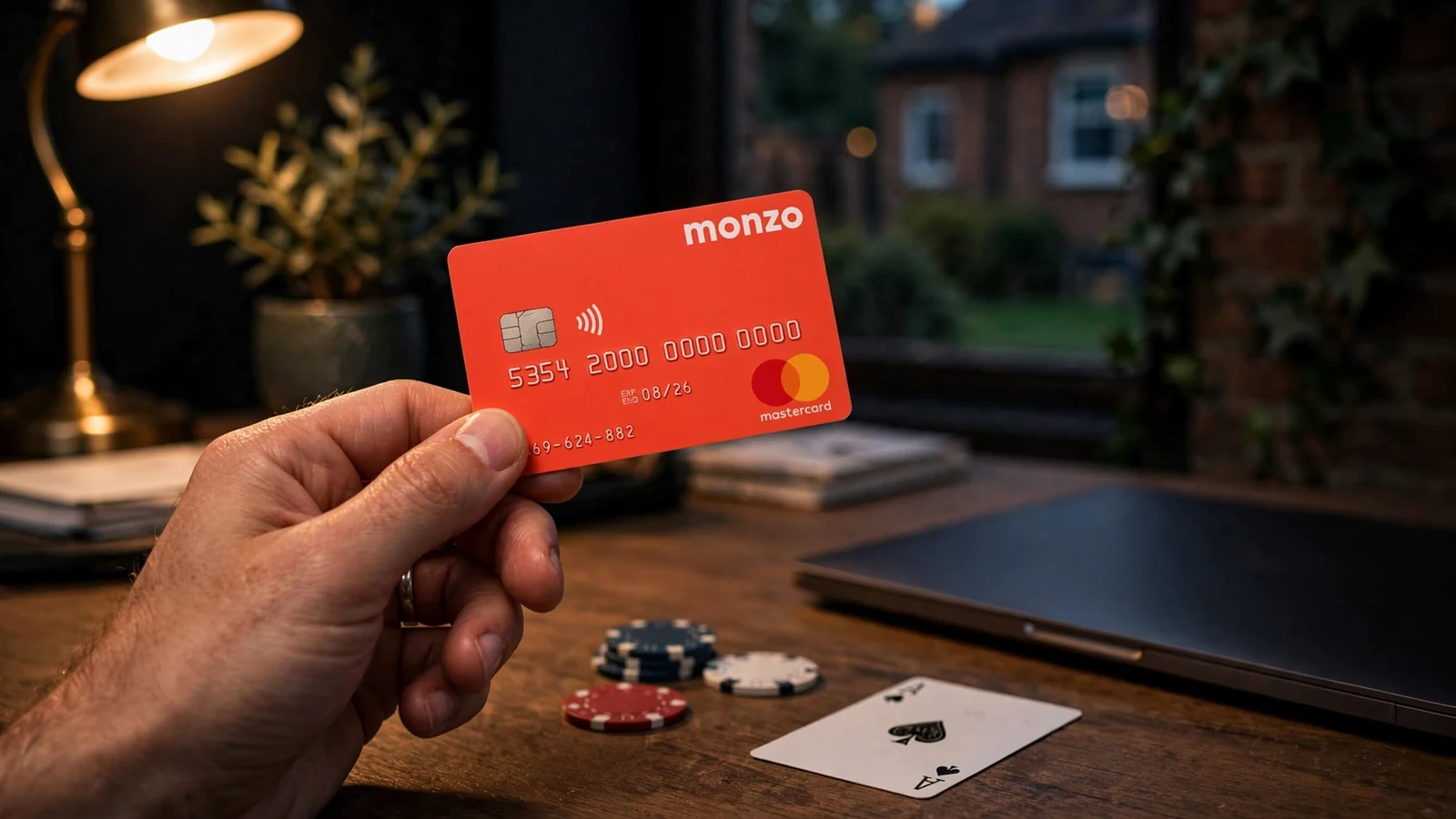
“No-KYC” sounds like a promise of anonymity. I’d treat it as a description of an account-opening process, not proof that nobody can connect your activity to you.
A specialist review of offshore Bitcoin Cash casinos reported that most of the sites it covered let people register with an email address and password, without the traditional identity checks at sign-up. It also described wallet-based deposits and minimal checks. That is a report about BCH casinos, not a dependable rule for every operator, and it does not establish that any Cardano casino—or any no-KYC ADA casino—works the same way.
There’s another catch: skipping an identity form does not make a payment private. Bitcoin Cash transactions are recorded on a public blockchain. Chain-analysis firms can often link a deposit to a known exchange, which may connect the transaction to an identifiable account. So “no-KYC” at the casino end and anonymity across the whole payment trail are two different things.
I used to read “no verification” as “no one can see me”. That was too neat. A public transaction can leave a trail even when the account itself was opened with very little information. The same privacy conclusion cannot simply be carried over to ADA, either: BCH’s public-ledger findings describe BCH, not Cardano’s payment process or a casino’s checks for Cardano deposits.
If a casino advertises no-KYC Cardano play, look for precise terms about account checks and what information the operator may request, rather than relying on the label. But don’t treat a BCH casino’s registration method as evidence about ADA, and don’t confuse limited checks at sign-up with an untraceable transaction. Different claims. Different risks.
The No-KYC Privacy Trade-off
While some offshore sites allow registration with only an email and password, this does not guarantee anonymity. Because Bitcoin Cash and other cryptocurrencies use public blockchains, chain-analysis firms can often link transactions to identifiable accounts.
Deposits, confirmations and getting a withdrawal out
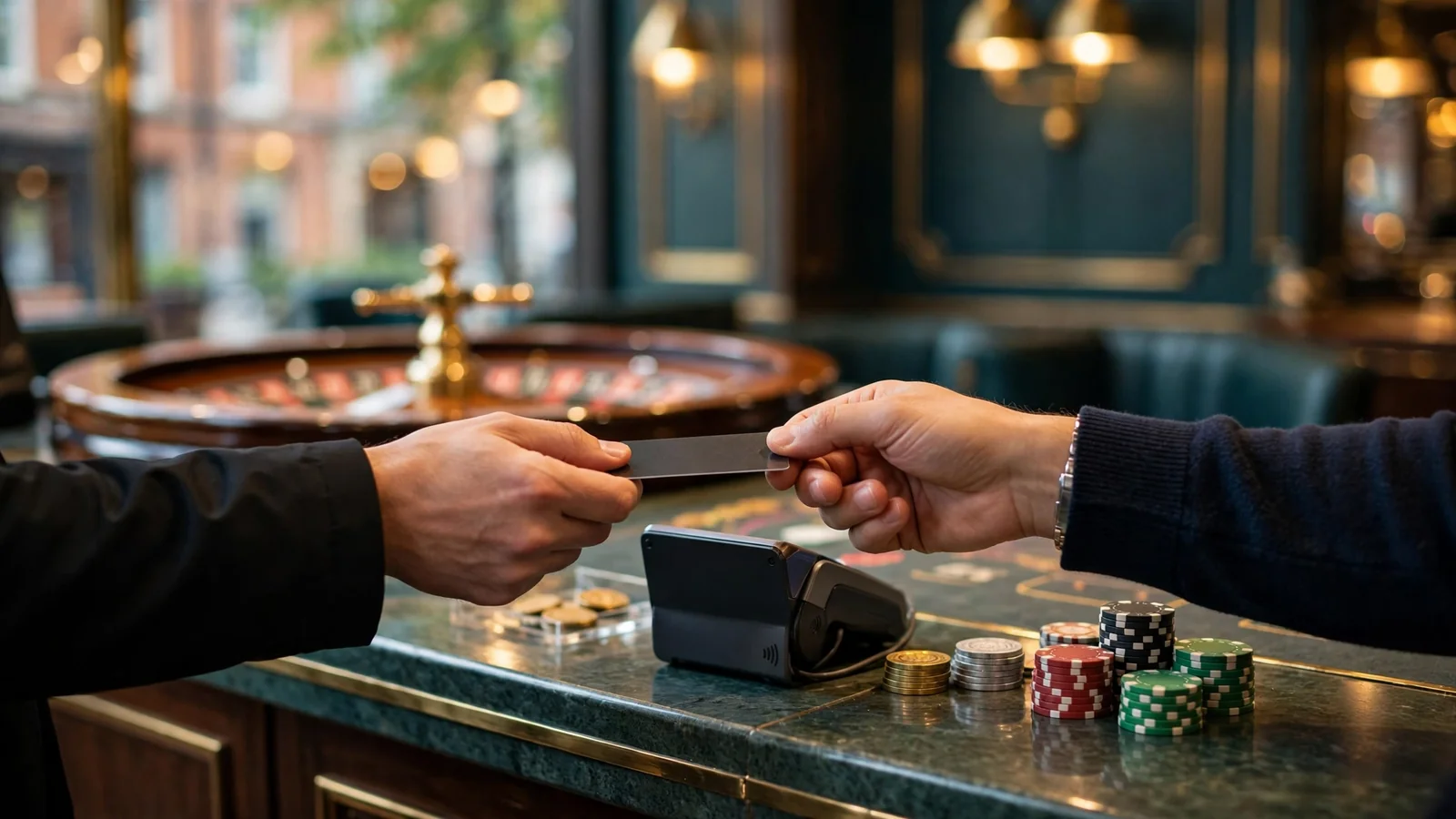
A deposit and a withdrawal are two different clocks. With Bitcoin Cash, a specialist review describes casino deposits as being credited after one on-chain confirmation, which it puts at around 10 minutes. That is a reported BCH payment pattern, not a promise that every cashier will credit funds on that schedule. The casino’s own processing rules still matter.
The same review reports that BC.Game and Stake processed BCH cashout requests within 10 minutes, often in less than five. I’d treat that as a record of what the review observed, not a standing guarantee. A fast result on one request does not tell you what will happen if the operator checks your account, the payment details need attention, or the withdrawal falls under a different rule.
There is another wrinkle: the review says several casinos may hold withdrawals above a stated threshold for a “management review”. The thresholds it reports run from 0.5 BCH to the equivalent of 2 BCH. That could add a manual step before a payment is released, so a short cashout time should not be read as applying to every amount.
None of those figures tells you how a Cardano payment would be confirmed or paid out. BCH and ADA are different currencies, and a reported BCH confirmation time cannot be carried across to a Cardano deposit. Nor do the BCH cashout reports establish that a casino accepts ADA in the first place. If you are looking for Cardano casino payouts, or hoping to play slots using ADA, check that the cashier explicitly supports Cardano and read the withdrawal terms for that currency. Don’t infer it from a BCH option.
I used to see “fast payout” and imagine the whole journey was fast. It may describe only one observed stage: a casino approving a request, or a transaction appearing on-chain. Those are not necessarily the same event, and the BCH reports don’t settle the timing for Cardano withdrawals. Keep the currency and the stage clear. Otherwise, you’re comparing unlike things.
Bonuses and casino games: what the evidence supports
A bonus can look generous until you read the conditions attached to it. A specialist review of Bitcoin Cash (BCH) casinos described welcome offers as deposit matches in the 100%–200% range, with wagering requirements of 20x–50x the bonus. Those figures describe the offers covered by that review, not a standing promise from every BCH casino, and they say nothing about Cardano deposits.
The same review characterised no-deposit bonuses at BCH casinos as less common than at traditional UK sites. Where they appeared, it said, they carried high wagering requirements and a low maximum cashout. That is the sort of small print I used to skip when the headline offer looked tempting. Costly mistake.
For UK-licensed operators, the rules are different: since 19 December 2025, wagering requirements on bonuses have been capped at 10x. That rule does not turn an offshore BCH offer into a UK-licensed promotion, nor does it establish a bonus for someone depositing ADA. The currency accepted, whether a deposit qualifies, which games count towards wagering, and any cashout cap all need to be stated in the specific offer’s terms.
The same caution applies to games. A casino’s general game catalogue does not, by itself, show that you can play casino games with Cardano: payment support and game access are separate conditions. Before treating any promotion as an ADA offer, check that its terms explicitly cover Cardano deposits and explain how wagering and withdrawals work. A BCH bonus is not an ADA bonus by implication.
So I would not use a headline match to decide whether a site offers Cardano casino games. Without clear ADA terms, the offer tells you only what it says about its own eligible deposits—not that you can claim it or play the advertised games using ADA. No free money.
Can I legally deposit Bitcoin Cash at UK casinos?
No—not at a UK Gambling Commission-licensed casino, because licensed operators are prohibited from accepting cryptocurrency.
Can I legally gamble with Bitcoin Cash in the UK?
The UK does not criminalise individuals for gambling with offshore operators. That does not mean the operator is authorised by the Gambling Commission to serve customers in Great Britain.
Is Bitcoin Cash gambling legal in the UK?
The UK does not criminalise individuals for gambling with offshore operators, but UK-licensed casinos cannot accept Bitcoin Cash.
Is a casino accepting Bitcoin Cash automatically unlicensed for British players?
It cannot be UK Gambling Commission-licensed while accepting Bitcoin Cash, as UK-licensed operators cannot accept cryptocurrency. It may hold an offshore licence, which is not a UK operating licence.
How does funding an account with Bitcoin Cash differ from a standard UK bank transfer?
Bitcoin Cash funding uses wallet-to-wallet transactions on a public blockchain rather than a bank transfer. Deposits typically receive one on-chain confirmation, usually taking around 10 minutes, and transactions can often be traced by chain analysis firms.
Does any Gambling Commission-licensed casino currently accept Bitcoin Cash deposits?
No. No UK-licensed casino currently accepts Bitcoin Cash as a direct payment method.
What happens to identity verification at a Bitcoin Cash casino operating outside UK licensing?
Identity checks are often minimal: many offshore BCH casinos let you create an account with only an email address and password. This can differ from traditional KYC checks.
Published by the Tenobet Casino 2 team.