Offshore casino sites for UK players: risks and checks
 Available in GB
An offshore operator accepts British customers without a UK Gambling Commission licence, affecting safeguards, payments and recourse.

Table of Contents
- What “Offshore” Means for UK Players
- Access, Legal Risk and the Safeguards You Won’t Get
- How to Read an Offshore Casino List Without Treating It as an Endorsement
- The Business Connections Behind the “Offshore” Label
- Deposits and Withdrawals: The Bit You Find Out About Late
- Games, Security and What a Licence Does—and Doesn’t—Tell You
- Bonus Offers: Do the Wagering Maths Before You Deposit
- Crypto Withdrawals: Fast Can Still Mean Risky
- No-KYC Claims and What Verification Can Look Like
- If You’re Looking for an Alternative, Check the Self-Exclusion Consequences First
What “Offshore” Means for UK Players
In the UK gambling context, “offshore casino” is a description of an operator’s relationship with British customers, not simply a statement about where its website is hosted. It means an online gambling business accepts customers from Britain without holding a licence from the UK Gambling Commission (UKGC). The operator may be based abroad, but the decisive point is that it is offering gambling to British customers without the UK licence required for that activity.
That distinction can get lost in the wording. A site might call itself international, describe its licence as foreign, or use a brand that sounds familiar. None of those labels changes whether it holds a UKGC licence. “Offshore” is not a special category of UK permission. It tells you that the operator is outside the UKGC’s regulatory system.
I find it useful to separate two questions: what the operator is allowed to do, and what the player is doing. They are not the same question, and mixing them up makes the legal position sound more confusing than it is.
When you review offshore casino sites for 2026, payout timing is one practical detail to consider. Use the listed processing estimate as a starting point when deciding what matters to you.
Payout speed: 1-3 business days x3bet lists a payout speed of 1–3 business days, giving you a stated timeframe to consider.
Payout speed: 1-3 business days NightWin lists a payout speed of 1–3 business days, so you have a stated estimate for payouts.
Payout speed: 1-3 business days Amunbet lists a payout speed of 1–3 business days, a useful timing detail for you to weigh.
Payout speed: 1-3 business days WinBeast lists a payout speed of 1–3 business days, providing you with a stated payout estimate.
Payout speed: 1-3 business days Jetsetspins lists a payout speed of 1–3 business days, which gives you a basic indication of timing.
Payout speed: 1-3 business days Chanze lists a payout speed of 1–3 business days, offering you a stated timeframe to take into account.
Payout speed: 1-3 business days EvoSpin lists a payout speed of 1–3 business days, giving you a clear estimate to consider.
Payout speed: 1-3 business days SpinFormula lists a payout speed of 1–3 business days, providing you with a stated timing detail.
Payout speed: 1-3 business days Dieselwin lists a payout speed of 1–3 business days, a practical estimate for you to bear in mind.
Payout speed: 1-3 business days Revery Play lists a payout speed of 1–3 business days, giving you a stated timeframe for payouts.
The operator’s position
For real-money online gambling offered to customers in England, Scotland and Wales, the operator must hold a Gambling Commission licence. That requirement applies even if the business is located elsewhere. So an overseas company does not avoid the UK rule merely by running its website from another country.
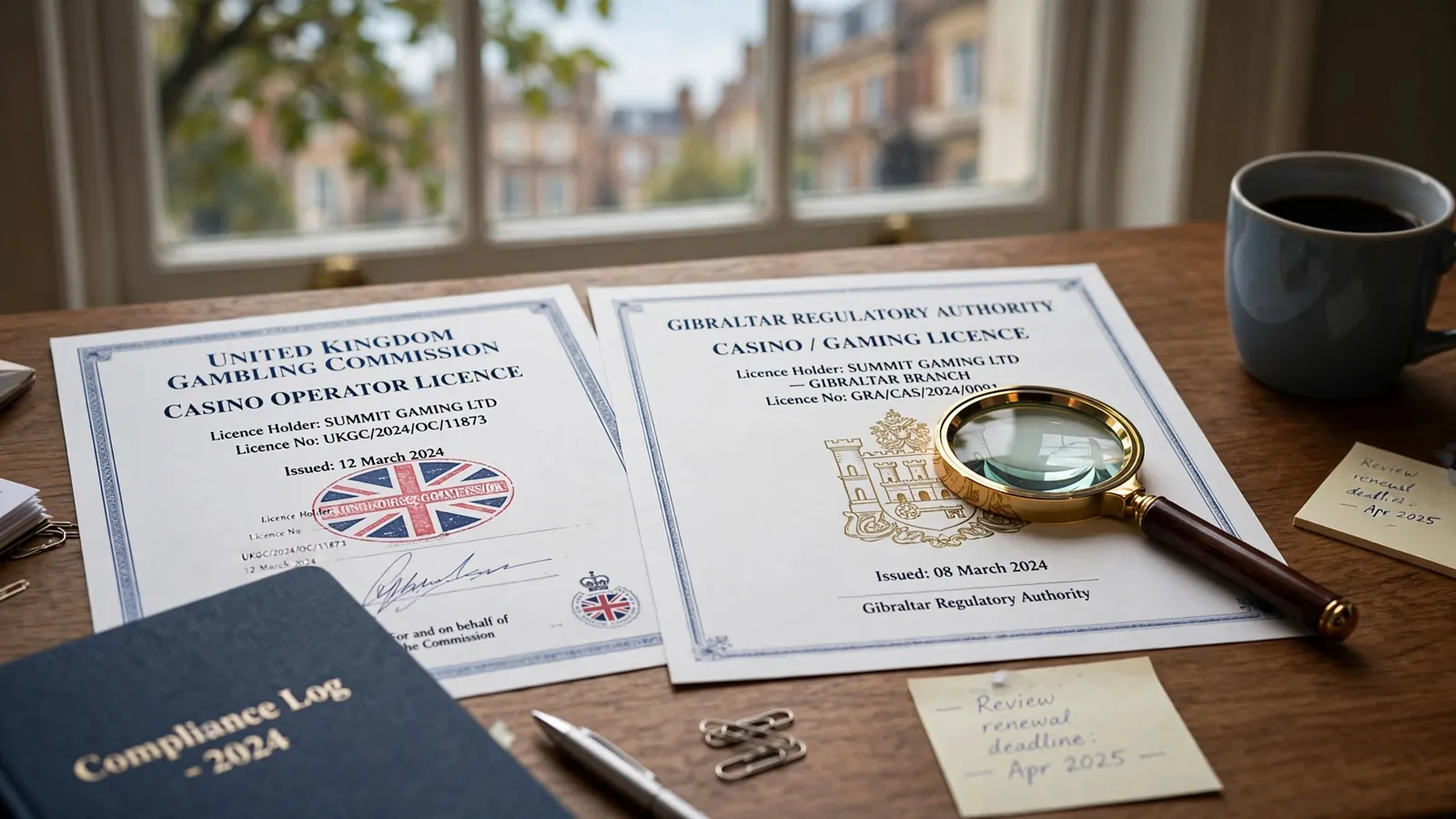
If a site accepts British customers without that licence, it is not a UK-licensed casino. More importantly, it is the operator that is acting outside the rules for offering gambling services in those parts of the UK. A foreign licence, if the operator has one, is not a substitute for a UKGC licence. The two are issued under different systems and do not have the same effect.
This is why phrases such as “licensed casino” need context. A licence from another jurisdiction may say something about the operator’s status there, but it does not make the site authorised to offer gambling to customers in Britain. I used to read the word “licensed” as if it settled the question. It doesn’t. The question is: licensed by whom, and for which market?
The player’s position
That does not mean a British player is committing an offence simply by placing a bet with an overseas operator. There is no UK law that makes it illegal for an individual to bet with a casino licensed outside the UK. The legal distinction is between a business offering gambling to British customers without the required UKGC licence and a person choosing to place a bet.
That difference matters. Calling a site “illegal” without saying who the word applies to can wrongly suggest that the player is breaking the law. The operator’s position and the customer’s position should be described separately. A site may be operating without the permission it needs to serve the British market; that does not, by itself, make the player’s act of betting a criminal offence.

There is a related point about geography. In ordinary conversation, people may use “UK” to mean all four nations, but the Gambling Act 2005 applies to England, Scotland and Wales, not Northern Ireland. The specific operator rule described here concerns offering services in England, Scotland and Wales. It is worth being precise rather than stretching one legal statement across the whole United Kingdom.
What the label does—and does not—tell you
“Offshore” does not tell you whether a site is reputable, what its terms are, or how it handles a customer relationship. It is a regulatory description, not a quality mark. Nor does the label itself prove that an operator has a licence elsewhere. Some people use “offshore casino” as shorthand for a foreign-licensed site, but the defining point for this UK discussion is the absence of a UKGC licence alongside acceptance of British customers.
That is also why a page or advertisement calling a site one of the “best” offshore casinos does not change its legal status. Ranking language is marketing language; it is not regulatory approval. I learned to stop treating confident labels as answers. A polished site and an impressive-sounding description do not turn a foreign authorisation into permission to serve the British market.
So, when you see references to offshore casino sites for UK players, read the phrase carefully. It means sites that accept British customers but are not licensed by the UK Gambling Commission. The operator’s lack of a UKGC licence is the central fact; the player’s act of betting is a separate legal matter. Keep those two points apart, and the terminology becomes much less slippery.
One plain distinction.
Access, Legal Risk and the Safeguards You Won’t Get
A site loading on your phone can feel like proof that it is open for business in Britain. It proves much less than that. Some casinos licensed outside the UK are meant to prevent British visitors from accessing them. A report by gambling.com says that some do not enforce this block, and that users may get around it with a basic VPN. That is a report about access, not a guarantee that any particular site will accept you, keep your account open or pay you.

I would not treat a working registration page as a green light. An operator’s website can be technically reachable while still lacking permission to provide gambling services to customers in Great Britain. The rules apply to the operator: offering gambling facilities to British customers without a UK Gambling Commission licence is illegal, as is advertising those services in the UK. That is the key distinction. The legal risk described here falls on the operator, not on a player simply for placing a bet with an overseas casino. A British player is not committing a criminal offence just by playing there.
That distinction is easy to miss when the site looks polished. I have learned not to confuse “it let me sign up” with “someone here is supervising what happens next”. Offshore casinos are not regulated by the UKGC. That means the regulator’s requirements and enforcement do not apply to them in the way they apply to UK-licensed operators. They do not provide UKGC-mandated affordability checks, either. Those checks can feel intrusive when you are trying to get on with things, but their absence is not a customer benefit without a downside. It means a UK safeguard is missing.

There is no equivalent protection package to assume in its place. If you have a dispute, you cannot simply expect the same UK regulatory route or standards that apply at a licensed British site. The exact process depends on the operator and the rules it says govern it; a foreign licence does not turn that into UKGC oversight. I used to read a licence badge as if it answered every question. It doesn’t. Different regulator, different reach.
The more uncomfortable risk is what can happen when the operator controls the account and the money. gambling.com has reported cases in which unlicensed sites refused to pay customers’ winnings, leaving those customers without legal recourse. That is not a claim that every offshore casino behaves this way. It is a warning about the position you may be in if a dispute arises: a site can be accessible from Britain without giving you the same practical protections you would have at a UK-licensed operator. A friendly chat window or a confident promise on a homepage does not change who has authority over the business.
This is why “best” is a slippery word in this area. A smooth sign-up, a broad-looking lobby or a page that accepts British details can tell you something about the site’s presentation. None of those things establishes that it is legally entitled to serve UK customers, or that you will have a dependable route to resolve a complaint. Nor does being able to reach a site settle whether it will continue to accept your account. Access is not oversight. Not even close.
Financial Risk
Unlicensed sites may refuse to pay winnings, leaving customers without legal recourse or the protections provided by the UKGC.
If you are weighing an offshore casino against a UK-licensed one, the difference is not just a badge in a footer. UK-licensed operators are within the UKGC framework; offshore operators are not. That affects the safeguards you can expect, including affordability checks and the regulator’s ability to act under its own rules. A foreign licence may matter in the place that issued it, but it is not a substitute for a UKGC licence when the question is whether the operator may legally offer gambling to customers here.
I would keep two questions separate: “Can I open the site?” and “What protection applies if something goes wrong?” The first may have a simple technical answer. The second is where the gap becomes real. A site that does not block a British visitor has not thereby made itself a UK-regulated casino, and a player’s ability to access it does not erase the operator’s legal obligations.
That is the risk in plain terms: the operator may be breaking British rules by serving customers here, while the player is not criminally liable merely for playing. But a player can still be left with fewer safeguards and a harder dispute if the operator refuses to honour a withdrawal. No neat shortcut around that.
How to Read an Offshore Casino List Without Treating It as an Endorsement
An offshore casino list can look reassuring at first glance. A name, a licence label and a confident verdict sit neatly together, as if the research has already been done for you. I’ve learned not to read that layout as a recommendation. It tells you what the listing says about a site; it does not, by itself, prove that the site is safe or right for you.
The key distinction is the regulator behind the licence. Offshore casinos are licensed outside the UK and are not regulated by the UK Gambling Commission. An offshore casino licence is therefore not a UKGC licence, even if the listing describes the operator as licensed, legitimate or reputable. Those words may describe the listing’s assessment, but they do not change which regulator oversees the operator.
That is worth keeping in view when you see “legit” in a heading or badge. It can sound like a broad stamp of approval. In practice, you need to ask what the word is meant to establish: that a licence is claimed, that an operator’s details have been checked, or simply that the site appears in the list? Those are different things. A label without a clear explanation leaves you guessing.
I also look for what the listing does not establish. A list alone cannot show that a particular casino is suitable for your circumstances, or that you would be comfortable with the protections it provides. Offshore operators do not offer UKGC-mandated affordability checks. That matters even if a page presents the casino in polished language and gives its licence prominent placement.
A ranking is not a regulator’s decision. Nor does the order of names necessarily mean that the first entry is safer or more suitable than the next. If the page does not explain how it reached its verdict, treat the ranking as the publisher’s judgement, not an independent guarantee. I’ve been caught out by presentation before: tidy tables make uncertainty look settled.
- Check the specific regulator behind the licence
- Treat rankings as the publisher’s judgement
- Separate explicit claims from your own inferences
- Treat “legit” badges as independent guarantees
- Assume the first entry in a list is the safest
- Assume a polished layout proves a site is safe
When reading a list of offshore casinos, separate the claims into two piles. One pile is what the page explicitly says, such as the operator’s stated offshore licensing status. The other is what you might be tempted to infer: that the site has been independently cleared, that every relevant detail has been checked, or that it will suit you. Don’t let the second pile grow without evidence.
The same applies to badges, short reviews and phrases such as “trusted choice”. They may help you understand how the listing presents a casino, but they are not proof of UKGC oversight. If a page does not make the distinction between offshore licensing and UK regulation clear, that is a reason to read its claims more cautiously—not a reason to fill in the gaps yourself.
I now treat these pages as starting points, not verdicts. A licence label can tell you the category an operator claims to belong to; it cannot turn an offshore site into a UK-licensed one, and a list cannot settle whether you should use it. Keep the wording in proportion to what it actually establishes. Less shine, more scrutiny.
The Business Connections Behind the “Offshore” Label
A casino brand can look like a single business from the outside: a name on a website, a set of games, a cashier and some terms. But the company behind the brand may have commercial relationships that change how you should read its claims. I used to treat the name on the homepage as the whole story. It isn’t always.

The Santeda–SIS arrangement is a useful example because the connection was not simply a supplier providing a service for a fee. Under their contract, SIS received a share of revenue generated by losing bets made through Santeda’s brands. That is a specific financial interest in the activity taking place at those casinos.
That detail matters, but it needs to be read carefully. It does not, by itself, prove that a game was unfair, that a player was treated improperly, or that either company broke a rule. It does tell you that the relationship involved more than a neutral-sounding business link. When a company’s income is connected to losses across another company’s casino brands, I want to know what the arrangement is and who benefits from it.
“Partnership” is a soft word. The money trail is harder to wave away.
This is why I pay attention to the operator and the businesses around it, rather than assuming that a familiar casino brand tells me who is actually involved. A brand can be the public face; contracts can show where commercial incentives sit. For a player, that context is not proof of a problem, but it is a reason not to treat a polished site or a confident description of its business as the full picture.
Santeda’s licence is another part of that picture, with a clear boundary. Its Curaçao licence does not authorise it to conduct casino operations in the UK or the US. That distinction is easy to blur when a site displays a foreign licence and presents it as a broad stamp of approval. A licence has a jurisdiction and a scope; it is not a universal permission slip.

I would keep those two points separate when looking at an offshore casino site. The commercial arrangement tells you something about the incentives between companies. The licence tells you something about where the operator is authorised to work. Neither fact answers every question about how a particular account will be handled, and neither should be stretched into a claim about the fairness of every game or the conduct of every brand.
The useful habit is to look past the label. Who operates the brand? What documented business relationships sit behind it? What does the licence actually allow? If the available information gives a concrete answer, use that answer—not the warmer impression created by words such as “trusted partner” or “global licence”. If it does not explain the commercial relationship, don’t fill in the blanks yourself.
I find that less exciting than a tidy list of “best” offshore casinos, but it is more honest. Corporate ties do not tell you which site to choose. They can tell you why the brand’s own presentation is only one part of the story. A relationship connected to losing-bet revenue deserves to be described plainly, while the evidence still has limits. That’s the line I try not to cross: notice the incentive, but don’t pretend it proves more than it does.
Deposits and Withdrawals: The Bit You Find Out About Late
The payment logos on a cashier page tell you how money might get in. They don’t tell you how quickly you can get it back, what the operator may ask for first, or whether your chosen route works both ways. I’ve learned not to treat “instant” as a description of the whole journey.

With casinos that hold an offshore licence, deposit methods can include e-wallets and bank transfers, but the options depend on the individual site. Check the cashier before you commit: a method shown for deposits may not be available for withdrawals. Also read the payment terms, not just the buttons. The route, currency and account details can affect how a transaction is handled.
For withdrawals, the processing clock and the transfer clock may be different. A specialist review reports that Skrill and Neteller payments at many foreign casinos clear within 24 hours, with some processed in less than 12. Those are reported timings, not a promise about the site you are considering. The operator may need to review a request before sending it, and your payment provider or bank may then take additional time.
Bank transfers can be slower. One specialist review describes them as the slowest route, often taking five to seven business days, with some casinos adding an operator-side delay before the bank timeline even begins. That distinction matters: “processing” can mean the casino has approved the withdrawal, not that the money has reached your account. Read the wording carefully.
I used to skim the cashier, see a familiar logo and assume the cash-out would follow the same path in reverse. That was a poor shortcut. Check the minimum and maximum withdrawal rules, any pending period, and whether the casino requires you to withdraw through the same method used to deposit. The rules are not consistent across operators. A specialist review notes that limits, waiting periods and verification procedures differ considerably, so don’t transfer one site’s experience to another.
Before depositing, look for the withdrawal policy and find the exact steps for submitting a request. Check whether the stated time starts when you click withdraw or only after the operator approves it. Keep a record of the payment method and any confirmation messages. If the terms are vague, that uncertainty is part of the decision, not a detail to sort out later.
Cashier Review
- Check if deposit methods are also available for withdrawals
- Read the full payment terms for currency and account details
- Verify minimum and maximum withdrawal limits
- Identify any pending periods or operator-side delays
- Confirm the exact steps required to submit a withdrawal request
One boundary is worth keeping clear: a foreign licence does not make the casino UK Gambling Commission-regulated. These operators do not provide UKGC-mandated affordability checks or the same protections as UK-licensed sites. A smooth-looking cashier is not evidence of equivalent oversight.
So, when comparing offshore casino deposit and withdrawal methods, compare the whole route: what goes in, what can come out, who handles each stage, and what conditions apply. A quick deposit is the easy part. The cash-out rules are where I’d slow down.
Games, Security and What a Licence Does—and Doesn’t—Tell You
When I look at the games page on an offshore casino, I try not to let a polished lobby do the thinking for me. A wide choice of titles may answer what you can play, but it tells you little about who operates the site, what rules apply to it or what happens if there is a dispute. Those are separate questions.
Security claims need the same careful reading. Specialist reviews of non-GamStop casinos describe platforms using encryption to protect personal and financial information. That can be a useful measure against data being intercepted, but it is not a guarantee that every part of a site is secure, or that your money is protected if the operator mishandles a transaction. “Secure” is a claim about a particular feature, not a verdict on the whole business.
I used to see a padlock and assume I could relax. That was too easy. A site can encrypt a connection and still be outside the UK system of oversight. Encryption does not make an offshore operator UK Gambling Commission (UKGC)-regulated, and it does not give you the protections attached to a UKGC licence.

The word “regulated” also needs a second look. A specialist review may report that a particular casino holds a licence from an overseas authority. That can indicate that the operator is subject to that authority’s rules, but it is not the same as holding a UKGC licence. Offshore casinos are not regulated by the UKGC and do not provide UKGC-mandated affordability checks. A foreign licence cannot fill that gap by another name.
So, are offshore casinos legal? The distinction matters: operators offering gambling to customers in Great Britain need a UKGC licence, while a British player does not face a criminal penalty simply for playing at a foreign casino. That does not turn the site into a UK-licensed service. It means the operator’s position and the player’s position are different.
There isn’t a reliable shortcut to labelling a site “safe” from its games catalogue, security badge or foreign licence. I’d treat each as one limited piece of information, then look at who is responsible for the service and which regulator, if any, has authority over it. A confident logo is still just a logo.
The same caution applies if you are searching for chargeback information. A payment dispute is not a substitute for UKGC oversight, and seeing the word “chargeback” on a page does not establish what a bank or payment provider will decide in your case. Don’t treat it as a guaranteed way to recover funds.
That’s the less exciting part of browsing offshore-based casinos: the games may be visible straight away, while the limits of the security and licensing claims take more effort to untangle. I separate the entertainment on screen from the rules behind the operator. They are not the same thing.
Regulatory Distinction
Encryption and foreign licences do not make an operator UK Gambling Commission-regulated, nor do they provide UKGC-mandated affordability checks.
Bonus Offers: Do the Wagering Maths Before You Deposit
A large headline can make a bonus look like extra cash. I’ve learnt to look past the headline and find the conditions that decide whether any of it can actually be withdrawn.
A specialist casino review describes deposit matches, free-spin packages, no-deposit bonuses and cashback as common formats at foreign casinos serving British players. A no-deposit bonus may sound like the easiest one to try, but the label tells you nothing about its withdrawal conditions. The same goes for free spins: check what happens to any winnings, not just how many spins are advertised.
The key term is often the wagering requirement: the qualifying bets you must place before bonus funds become withdrawable. A specialist review illustrates the arithmetic with a 100% match on a £100 deposit and a 35x requirement. On those terms, the qualifying bets add up to £3,500 before the bonus funds convert into cash you can withdraw.
That is the bit I used to skim. A “100% match” sounds generous; the £3,500 is the real workload. And it is not money you receive back simply for placing those bets. You are putting your own balance at risk while trying to meet the condition.
Read the full terms before accepting anything. Check which bets qualify, whether the requirement applies to the bonus or another amount, and what restrictions apply to withdrawals. The operator’s wording controls the calculation, so do not assume two offers with the same headline work alike. If the rules are unclear, the headline is not enough to make a sound decision.
Specialist reviews have also reported that foreign casinos may advertise larger welcome packages because they are not bound by UK Gambling Commission restrictions on bonus terms and promotional language. That does not make the offer better value. These casinos are not UKGC-regulated, and they do not provide UKGC-mandated affordability checks.
I’d treat “no deposit” as a description of how an offer starts, not proof that it is free of strings. Work out the required qualifying bets first, then decide whether the conditions make sense for you. The maths comes first.
Crypto Withdrawals: Fast Can Still Mean Risky
The appeal of crypto at an offshore casino is easy to understand: a specialist review reports that crypto withdrawals can clear in under an hour, faster than fiat methods. That is a reported speed advantage, not a promise about your own withdrawal. A casino still has to process the request, and the time it takes can depend on its own procedures.
The catch is that fast money is not necessarily stable money. A crypto balance can change in value while you are waiting, moving funds or deciding when to convert them. The amount shown in a casino account is not the same thing as a guaranteed amount in pounds. If the price moves before you exchange the crypto, the sterling value you end up with may be higher or lower.
I used to focus on the clock and treat a quick withdrawal as a clean win. That misses the part that matters: what the funds are worth when they reach you, and when you can actually turn them into money you can spend. Speed is only one piece.
Before choosing a crypto route, check what the operator says about withdrawals and think through where the funds will go after they leave the account. Make sure you understand the wallet and conversion steps involved. Don’t treat a short processing time as proof that the whole process is simple or risk-free.
There is another distinction worth keeping clear: using cryptocurrency does not change the operator’s regulatory status. Offshore casinos are not regulated by the UK Gambling Commission, and they do not provide UKGC-mandated affordability checks. A quick transaction cannot stand in for those protections.

So when an offshore casino promotes crypto as “instant”, read that as a claim about possible processing speed—not certainty about timing, value or the final amount in pounds. I’d weigh the volatility before the convenience. Fast, but not fixed.
No-KYC Claims and What Verification Can Look Like
“No KYC” sounds like a promise that you can open an account and never prove who you are. I would read it more narrowly: it is a claim about the operator’s current sign-up process, not a guarantee that checks cannot arise later. If you are deciding whether to use a site, look for what its own terms say about identity checks and withdrawals.
Verification means providing the identification the operator requires. The timing and procedure are not uniform across offshore casinos: a specialist review notes that verification procedures, pending periods and withdrawal limits can differ considerably between operators. That variation matters. A smooth registration does not tell you what may be required when you later ask to withdraw, and a “no KYC” label does not settle the question.
I used to treat a short sign-up form as proof that the account would stay friction-free. That was a shaky assumption. Read the withdrawal rules before depositing, and check whether the operator explains what happens if it asks you to verify your details. If the wording is vague, you have less clarity about how an account could be handled when a check is raised. That uncertainty is part of the decision.
The UK comparison is straightforward: UK Gambling Commission-licensed operators must verify a player’s identity before processing withdrawals. Offshore casinos are not regulated by the UKGC, so that UK requirement does not apply to them in the same way. They also do not provide UKGC-mandated affordability checks. A foreign licence or a no-KYC claim does not change either point.
So, how do offshore casinos work when verification is concerned? The answer depends on the operator’s stated procedures, not the phrase on a banner. Check the terms, keep a copy of what they say, and do not assume that a lack of checks at registration means no checks will ever follow. Read the small print.
If You’re Looking for an Alternative, Check the Self-Exclusion Consequences First
If you joined GamStop, the block applies across UK Gambling Commission-licensed gambling sites. Looking for another UK-licensed casino will not get around it: those operators are covered by the scheme.
A foreign site is different in one important, troubling way. Casinos outside the UKGC’s remit are not part of GamStop, so the exclusion does not automatically block access to them. One specialist review reported that a self-excluded player could register with a foreign casino and deposit quickly. That describes an access route, not a safe or suitable alternative.
I’d treat that distinction as a reason to pause, not as a workaround. A foreign casino accepting British customers without a UKGC licence is not regulated by the Commission. It also does not provide UKGC-mandated affordability checks or the same safeguards as a UK-licensed operator. If you used self-exclusion because gambling was getting hard to control, removing that barrier can leave you exposed to the very risk you were trying to manage.
The phrase “alternative casino” can make the choice sound like a simple change of venue. It isn’t. You would be moving outside the protections attached to the UK system, while GamStop would still exclude you from licensed sites. That matters more than whether a foreign site lets you open an account.
I wouldn’t use an offshore internet casino to defeat an active exclusion. If the urge to gamble is pushing you towards one, step away from the sign-up page and speak to someone you trust or a gambling support service instead. The block is there for a reason. Keep it in place.
Do foreign casinos offer better game selections than UKGC-licensed sites?
Foreign casinos may offer larger bonuses, but that does not establish that their game selection is better.
Is it legal for UK residents to use casino sites that operate outside the UK’s licensing framework?
Yes. A British player does not commit a criminal offence simply by betting with an overseas casino, although an operator offering gambling to customers in England, Scotland or Wales needs a UKGC licence.
Can I play at a casino licensed outside the UK?
Yes, playing at an overseas-licensed casino is not illegal for a British player. However, a foreign licence does not authorise the operator to offer gambling to customers in England, Scotland or Wales.
Are winnings from foreign casinos taxable in the UK?
No. Gambling winnings are not subject to UK income tax, whether the casino is UKGC-licensed or not.
What does wagering requirement actually mean in practice?
It is the amount you must bet before bonus funds can be withdrawn. For example, a 35x requirement on a £20 bonus means £700 in qualifying bets.
Can I use cryptocurrency at foreign casinos from the UK?
Yes. Foreign casinos may offer crypto for deposits, and crypto withdrawals can clear in under an hour; the value may fluctuate.
What is the fastest way to withdraw from an online casino in the UK?
E-wallets are generally the fastest option in the UK market, with most operators processing withdrawals within 24 hours. At foreign casinos, crypto withdrawals may clear in under an hour.
Prepared by the Tenobet Casino 2 editorial staff.