
Best Offshore Casinos for UK Players: What to Know
 Available in GB
A guide to licensing, bonus terms, crypto payments and safeguards at sites that accept customers in Britain.

Table of Contents
- What “offshore” means for UK players
- How to assess a site when there are no names to trust
- Crypto deposits and withdrawals: speed comes with a catch
- No-deposit bonuses: read the wagering maths first
- Free spins are only one part of the offer
- Before you sign up as a UK player, check the safeguards
- “Accepting UK players” does not mean UK-authorised
- Bitcoin payments: check the value as well as the speed
- Payouts: timing, delays and the risk of not being paid
- Offshore licences and the interests behind them
What “offshore” means for UK players
“Offshore” sounds as if it describes a place on a map. For a British player, it is more useful to treat it as a licensing distinction. A foreign casino is an online gambling operator that accepts customers in Britain without a licence from the UK Gambling Commission (UKGC). It may be based abroad and hold a licence from another authority, but that does not make it UK-authorised.
That difference matters more than the word on a homepage. A site can call itself international, list an overseas licence and accept pounds, yet still sit outside the UKGC system. “Licensed” is not a complete answer. You need to know who issued the licence and whether the operator holds the one required to serve customers in Great Britain.
The legal position is easy to muddle because the rules apply differently to the operator and the person placing a bet. Under the Gambling Act 2005, operators offering remote gambling to customers in England, Scotland and Wales must hold a UKGC licence. An operator without one cannot legally offer gambling facilities to customers there or advertise its services in the UK.
Choosing an offshore casino as a UK player calls for careful consideration of the information available. Use this list as a starting point and check the details that matter to you before deciding.
Payout speed: 1-3 business days x3bet lists a payout speed of 1–3 business days. You can use this as one factor when considering the operator.
Payout speed: 1-3 business days NightWin lists a payout speed of 1–3 business days. You can use this as one factor when considering the operator.
Payout speed: 1-3 business days Amunbet lists a payout speed of 1–3 business days. You can use this as one factor when considering the operator.
Payout speed: 1-3 business days WinBeast lists a payout speed of 1–3 business days. You can use this as one factor when considering the operator.
Payout speed: 1-3 business days Jetsetspins lists a payout speed of 1–3 business days. You can use this as one factor when considering the operator.
Payout speed: 1-3 business days Chanze lists a payout speed of 1–3 business days. You can use this as one factor when considering the operator.
Payout speed: 1-3 business days EvoSpin lists a payout speed of 1–3 business days. You can use this as one factor when considering the operator.
Payout speed: 1-3 business days SpinFormula lists a payout speed of 1–3 business days. You can use this as one factor when considering the operator.
Payout speed: 1-3 business days Dieselwin lists a payout speed of 1–3 business days. You can use this as one factor when considering the operator.
Payout speed: 1-3 business days Revery Play lists a payout speed of 1–3 business days. You can use this as one factor when considering the operator.
That is the operator’s problem, not a criminal offence committed by the player. There is no UK law that makes it illegal for an individual to place a bet with an overseas operator, and a British player does not face a criminal penalty simply for playing at a casino licensed outside the UK. I find that distinction useful because “illegal casino” is often used as if it automatically describes the customer’s conduct too. It doesn’t.
But don’t stretch that point into reassurance. The fact that a player is not committing a crime by placing a bet does not turn the operator into a lawful UK casino. Nor does it mean that the site has the same status as one regulated here. If you are looking at an offshore casino online, the basic question is not just whether you can open its pages; it is whether the operator is authorised to provide gambling to British customers. Those are different things.
There is a geographical wrinkle. The Gambling Act 2005 governs England, Wales and Scotland, but not Northern Ireland. So when people casually say “UK rules”, they can blur a distinction in the law. The core point for a player in Great Britain remains clear: remote operators serving that market need a UKGC licence. A foreign address or a licence issued elsewhere does not replace it.

This is why “online offshore casinos in the UK” can be an awkward phrase. It might mean casinos based abroad that accept British customers, or simply offshore sites a British visitor has found online. Either way, being reachable is not the same as being authorised. A site’s willingness to take a registration or a deposit says nothing by itself about whether it is permitted to serve the market.
I used to read an overseas licence badge as a kind of all-purpose stamp of approval. It isn’t. It may tell you something about the operator’s position in the place that issued it; it does not grant permission to offer gambling in Britain. The reverse is also worth keeping straight: the absence of a UKGC licence does not, by itself, make the player a criminal. Two separate questions. Easy to tangle.
The same distinction applies if you are comparing online casinos that advertise real-money play. A foreign operator can be licensed abroad and still fall outside the UK system. A UKGC licence, by contrast, is the relevant authorisation for an operator serving customers in Great Britain. Don’t let the word “offshore” make those categories seem interchangeable, and don’t mistake a site’s own description for proof of its legal status.
None of this is a recommendation to use an offshore casino, and the fact that a player is not criminally liable is not a safety certificate. It is simply a clearer way to read the legal boundary: British players are not prohibited from betting with an overseas operator, while that operator may be breaking the law by offering the service in England, Scotland or Wales without the required UKGC licence.
Attention: While players are not committing a crime by betting with an overseas operator, the operator may be breaking the law by offering services in England, Scotland, or Wales without a UKGC licence.
So when someone asks for the best online offshore casinos for UK players, the phrase contains a tension. “For UK players” may describe who a site accepts; it does not mean the site is authorised in the UK. Keep the player’s legal position separate from the operator’s obligations. That is the starting point. The rest needs its own scrutiny.
How to assess a site when there are no names to trust
When I look at an offshore casino site, I try not to confuse a polished page with a trustworthy operator. A neat logo, live chat button and “secure” badge are easy to display. They may tell you something about how the site presents itself; they do not, by themselves, tell you who is responsible if a dispute starts.
Start with the operator’s identity. Look for the company name behind the casino, its registered address and the legal terms that explain which company provides the service. Then compare those details across the site: do the footer, terms and privacy notice name the same business? If the operator is hard to identify, or the documents seem to describe a different company, I would treat that as a reason to pause rather than fill in the gaps with optimism.
A licence needs the same careful reading. A licence badge is a claim, not proof of UK authorisation. Follow it to the regulator’s own records, if available, and check whether the named company and the site match. Even if the licence is genuine, it is not a UK Gambling Commission licence. Offshore casinos are outside the UKGC system, so a foreign licence does not give you UKGC oversight or make the site equivalent to a UK-licensed casino. That distinction matters more than how official the badge looks.

Some specialist reviews describe non-GamStop casinos as using encryption to protect personal and financial information, and as holding licences from other authorities. Those statements are starting points for checking, not guarantees about a particular site. Encryption can help protect information as it moves between your device and a website. It cannot establish that the operator will handle a complaint fairly, honour its terms or remain available if something goes wrong. Security is one question. Accountability is another.
I also read the terms as if I might need to rely on them later, not as if I were already excited to play. Look for clear explanations of account rules, verification, complaints and the operator’s power to restrict or close an account. Watch for broad wording that gives the casino discretion without explaining how it will be used. If key conditions are scattered, contradictory or written so vaguely that you cannot tell what they mean, that is useful information in itself.
The same goes for privacy and security pages. A statement about encryption is more meaningful when the site identifies what information it collects, why it needs it and how it says it protects it. Check that the page belongs to the same operator named in the terms. A padlock in the browser is not a verdict on the business; it only indicates a secure connection to the site you are visiting.
I used to read “licensed” as if it meant “sorted”. It doesn’t. The word only helps once you know who issued the licence, which company it covers and what protections that regulator actually provides. A casino can have a legitimate offshore licence and still sit beyond the UKGC’s reach. Offshore operators also do not provide UKGC-mandated affordability checks. That is not a small footnote to a security claim; it is a real difference in oversight.
- Verify consistent company details across the site
- Check licences independently via regulator records
- Read full terms for clear account and complaint rules
- Ensure the privacy page belongs to the named operator
- Trust a site based on a polished logo or secure badge
- Assume a foreign licence provides UKGC-level oversight
- Rely on a browser padlock as a verdict on the business
- Mistake a “licensed” claim for a safety certificate
So I would not build an offshore casino list by counting badges or sorting sites by how often they call themselves “trusted”. I would look for consistent company details, a licence that can be checked independently, readable terms and a privacy explanation that says more than “your data is safe”. None of those checks can turn an offshore site into a UK-authorised one, and none can remove the risks of dealing with an operator outside the UK system. They can help you separate verifiable details from reassuring language.
No badge does that for you.
Crypto deposits and withdrawals: speed comes with a catch
Crypto can look like the neat answer when a casino offers it as a deposit method: choose the payment option, send funds and avoid waiting for a bank transfer. But the word “fast” only describes part of the transaction. With a crypto offshore casino, the value of what you receive can move while the payment is being processed or sitting in your wallet.
A specialist review of offshore casino payments reports that some crypto withdrawals clear in under an hour, faster than fiat withdrawals. Treat that as a reported possibility, not a promise from every operator. A casino may still need to process the request, and its own terms determine what happens before funds are sent. A quick transfer can be useful; it does not tell you whether the amount will hold its value.

That is the catch I would put beside any speed claim. Crypto prices change, so the same number of coins can be worth more or less in pounds at different moments. If your balance is shown in crypto, the sterling value you have in mind when requesting a withdrawal may not match the value when you receive or convert it. The transfer itself may be prompt and the result still disappointing.
There are two separate questions to keep in view: how quickly the payment moves, and what the payment is worth when you can use it. I used to treat speed as the whole story. It isn’t. A fast arrival is not the same as a predictable cash outcome.
For deposits, a crypto option may suit someone who already holds crypto and understands how its value changes. If you would need to acquire it just to play, the extra step brings its own price movement into the decision. Don’t count a deposit as a fixed pound amount simply because you sent a particular amount of crypto. Check what the casino says it will credit, and how it displays balances, before making a choice.
For withdrawals, think about the point at which you measure the value: when the casino approves the request, when the transfer reaches your wallet, or when you convert it back to pounds. Those moments need not coincide. A changing exchange value can affect the amount you ultimately have available, even if the coin count does not change during the transfer.
I would also separate the payment method from the operator’s status. Offshore casinos are not regulated by the UK Gambling Commission, and they do not provide UKGC-mandated affordability checks. A crypto option does not change that. Nor does a rapid transaction establish that an operator is dependable; payment speed and oversight are different things.
Before depositing, read the cashier and withdrawal terms rather than relying on a banner promising instant crypto payments. Check which crypto assets are accepted, how the balance is presented, and whether the operator describes any processing or verification steps. If those details are unclear, the speed claim is not enough to make the offer straightforward.
Crypto can reduce waiting in some cases. It can also make the value harder to pin down. Both matter.
No-deposit bonuses: read the wagering maths first
A no-deposit bonus sounds like money you can claim without putting your own funds in. The catch is that the amount shown on the banner may not be the amount you can withdraw. Before I’d even consider an offshore casino bonus offer, I look for the wagering requirement and what it applies to. “Free” can still come with a long bill in bets.
A wagering requirement tells you how much you must stake before bonus funds, or winnings linked to them, become eligible for withdrawal. The key detail is the base: does the multiplier apply to the bonus alone, the bonus plus your deposit, or winnings from the bonus? Those rules can lead to very different totals. If the terms are unclear, I treat the headline figure as advertising, not usable cash.
A specialist review gives this illustration: a £20 bonus with a 35x wagering requirement calls for £700 in qualifying bets before cash-out. That is the turnover, not a prediction that you will lose £700; still, every qualifying stake carries risk, and the balance can run down before the requirement is met. I used to glance at the bonus amount and miss that distinction. Bad habit.

Deposit matches need the same calculation. A 100% match on a £100 deposit adds £100 in bonus funds, but with a 35x requirement on the bonus, the required turnover is £3,500 before those bonus funds convert to withdrawable cash, according to a specialist review’s worked example. A larger match can therefore mean a larger hurdle, not a better deal. Check whether the deposit itself is locked up, too.
When comparing an offshore casino welcome bonus with a no-deposit offer, read the full conditions rather than ranking them by the biggest number. Check which games count, whether some games contribute less or not at all, and whether there is a maximum cash-out attached to the bonus. Also look for expiry conditions and any stake cap while wagering. These details decide whether the requirement is achievable on the games you actually intend to play.
Foreign operators are not bound by the UK Gambling Commission’s rules on bonus terms, wagering requirements and promotional language. A specialist review describes foreign welcome packages as larger, but size alone tells you little about the value you can withdraw. The terms may be different from those you have seen at a UK-licensed casino, so don’t assume the familiar wording means familiar conditions.
For a no-deposit offer, check what you must do to claim it, whether identity details are required, and whether the bonus is cash or restricted bonus funds. Then trace the path from claim to withdrawal: qualifying stakes, eligible games, any cash-out cap, and the point at which funds become withdrawable. If the operator’s terms don’t answer those questions plainly, I’d pass. A banner is easy to read. The small print costs more.
Bonus Wagering
Determine if the multiplier applies only to the bonus, the bonus plus deposit, or the winnings.
Multiply the bonus amount by the wagering requirement (e.g., £20 bonus × 35x = £700 in required bets).
Review the maximum cash-out limits, game contributions, and expiry dates before claiming.
Free spins are only one part of the offer
Free spins get the biggest lettering because they are easy to picture: a batch of spins, a named slot, a bright banner. But they are only one kind of promotion you may come across at a foreign casino serving UK players. A specialist review of these sites describes the broader mix as including deposit matches, no-deposit bonuses and cashback as well.
I’ve learnt not to treat a free-spin count as a verdict. The number tells you how many spins are on offer, not whether the promotion suits you. Look at what games the spins apply to, what happens to any winnings, and whether the offer has conditions attached. The headline is the easy bit.
A deposit match is built around adding funds: the promotion increases the bonus balance linked to a deposit. A no-deposit offer does not require that same initial deposit, while cashback is framed around returning some value after play. Those formats work differently, so comparing them by the size of the banner alone is a dead end.
Free spins can still be a useful extra if you already wanted to try the game they cover. I’d read the terms before registering, rather than assuming the spins are interchangeable with cash or can be used on any slot. Check how the offer is activated and what restrictions apply to winnings. The wording matters.
There is another distinction worth keeping clear: a generous-looking promotion does not make a site a regulated offshore casino. “Regulated” can sound reassuring, but a licence from outside Britain does not turn an operator into one overseen by the UK Gambling Commission. Offshore casinos are not regulated by the UKGC, and they do not provide UKGC-mandated affordability checks. The bonus and the safeguards are separate questions.

When I compare promotions, I start with the type of offer, then read the conditions attached to it. A free-spin package may be more relevant to someone who wants to try a particular game; cashback may be more relevant to someone looking at a different kind of promotion. Neither label tells you the whole story, and neither is a reason to rush into an account.
The useful comparison is not “which banner looks biggest?” It is whether the offer fits what you actually want to play, and whether its terms make sense to you before you accept it. A promotion can be a small extra. It should not be the reason you overlook the rest of the decision.
Before you sign up as a UK player, check the safeguards
When I first looked at offshore casino sites for UK players, I focused on what they offered and barely asked what would happen if I needed help stopping. That was backwards. A welcome offer tells you little about the protections around your account.
Offshore casinos are licensed outside the UK and are not regulated by the UK Gambling Commission. That means they do not provide UKGC-mandated affordability checks. A site may describe its own security or safer-gambling tools, but those do not make it subject to UKGC rules or give you the same regulatory protections as a UK-licensed operator. “Responsible gambling” can sound reassuring. Check what it actually means on that site.
Safeguard Gap
Offshore casinos are not covered by GamStop, meaning self-exclusion through the scheme will not block access to these sites.
One practical difference is how controls work. UKGC-licensed operators must let a customer reduce a deposit limit immediately, while an increase is subject to a cooling-off period. Do not assume an offshore site follows that arrangement, or that a tool with a similar name works in the same way. Read the terms for the exact controls available and whether you can set them before depositing.
GamStop deserves particular attention. It covers UKGC-licensed operators, so registering for self-exclusion blocks access to every UK-licensed gambling site. Foreign casinos outside the UKGC’s remit are not covered by the scheme. That gap matters: self-exclusion is meant to create distance at a moment when distance can be hard to maintain.
A specialist review reports that someone who has self-excluded through GamStop may be able to register with a foreign casino quickly and deposit without the safeguards that would apply at a UK-licensed site. That is not a reason to treat offshore access as a workaround. If you chose self-exclusion because gambling had become difficult to control, looking for a site beyond its reach can undermine the barrier you put in place.
I know the temptation to tell yourself that one more account is a separate decision. It may feel that way in the moment. But the point of an exclusion is to make acting on an urge harder, not to find a different door.
If you have already self-excluded, pause before signing up anywhere outside GamStop. You can also use support services or blocking tools rather than relying on a casino’s own promises. The key distinction is simple: a site may accept your details, but that does not mean it offers UKGC oversight, affordability checks or GamStop protection. Check the safeguards before you put money in. Better yet, if you excluded yourself for a reason, give that decision room to work.
“Accepting UK players” does not mean UK-authorised
A site loading in your browser is not proof that it is allowed to serve you. I used to treat a working sign-up page as a kind of unofficial green light. It isn’t. Access and authorisation are separate things.
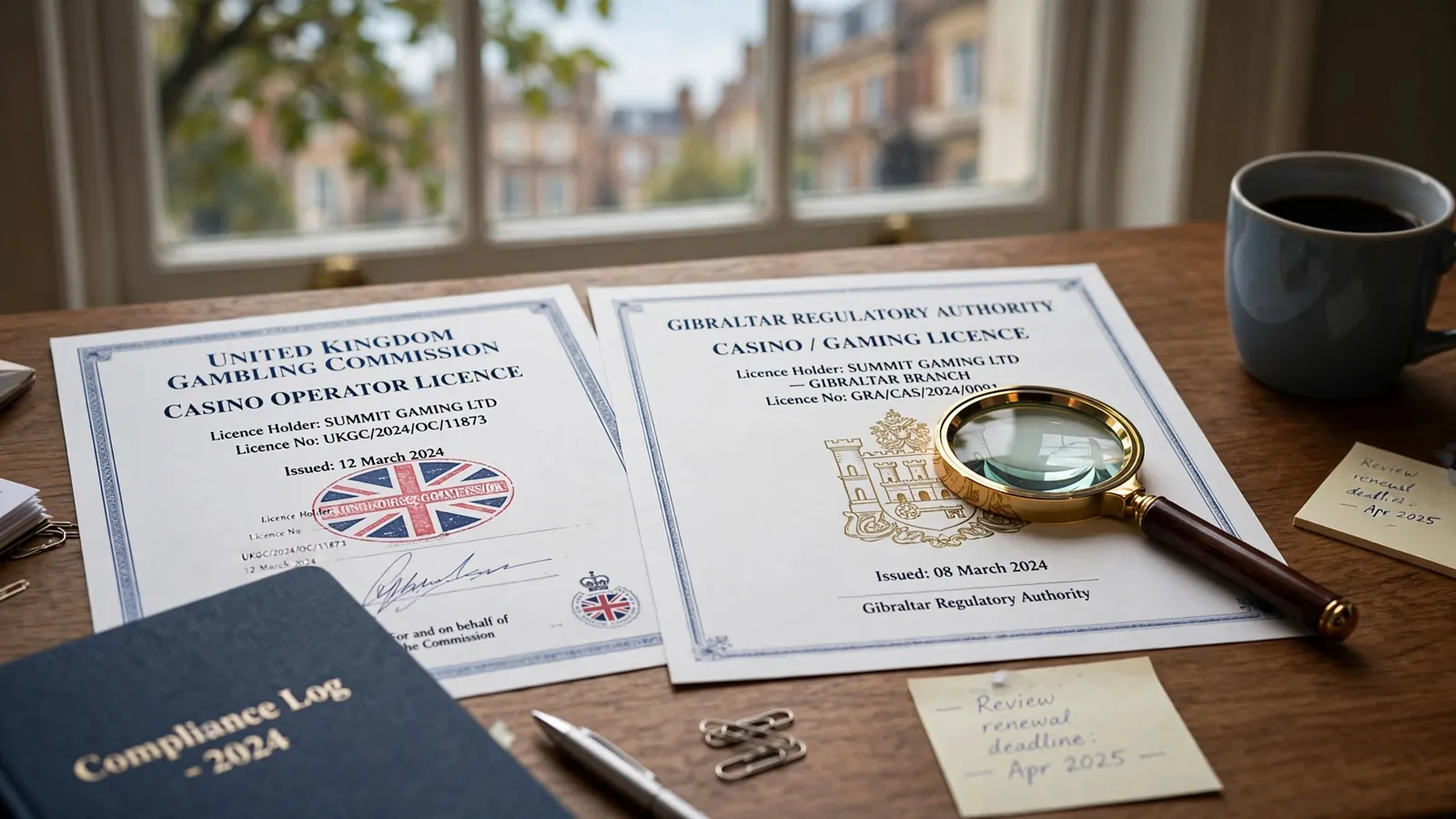
The legal line is about the operator: without a Gambling Commission licence, an online gambling site cannot legally offer its services in England, Scotland or Wales. A foreign site may still appear to accept a British customer, but that does not give it permission to operate in the British market. “Accepting UK players” describes what a site lets someone do; it does not describe its legal status.
There is another wrinkle. Some casinos licensed outside the UK are supposed to prevent British visitors from using their services. A report by gambling.com says some such sites do not enforce that restriction, and that a basic VPN can get around an access block. That is a report about the sites it covers, not a rule you can safely apply to every offshore casino.
A VPN can make a connection appear to come from somewhere else. It cannot turn an offshore gambling casino into a UK-authorised operator, or change the rules that apply to the operator. Nor does getting through a site’s location check mean that the site has officially approved your access. The distinction matters. A page that lets you register may simply have failed to stop you.

I’ve seen how tempting it is to focus on the practical question — can I open the site, create an account, make a deposit? — and leave the legal one for later. That reverses the order. A functioning website tells you about its technical availability, not its authority to take British customers.
The phrase “offshore casinos accepting UK players” can therefore mean several different things in practice: a site that deliberately takes British customers, one that has not properly blocked them, or one that appears accessible because a VPN has changed the apparent location. Those situations are not equivalent, and none makes the operator UK-licensed.
So don’t use access as a shortcut for checking authorisation. If a site is available from the UK, that alone does not establish that it may legally offer gambling here. Easy to confuse. Hard to undo.
Bitcoin payments: check the value as well as the speed
Bitcoin can make a withdrawal feel finished before the money has settled into anything you can spend. A specialist review of offshore casino payments reported that crypto withdrawals can clear in under an hour, faster than fiat methods. That is a reported timing, not a promise from every operator: the casino still has to process the request, and its own terms matter.
The catch is that Bitcoin’s price moves. If your balance is paid out in Bitcoin, the amount you eventually get in pounds can be different from what you expected when you requested the withdrawal. A quick transfer does not lock in a pound value. Speed and certainty are not the same thing.

I used to look at the transaction speed and treat it as the whole story. That missed the part that mattered: whether I was comfortable receiving Bitcoin, holding it, and converting it later. If you need a predictable amount in pounds, consider how a price change could affect you between withdrawal and conversion. If you are not already familiar with handling Bitcoin, a casino payout is a poor place to learn under pressure.
Before depositing at an offshore Bitcoin casino in the UK, read the payment terms closely. Check whether the balance and withdrawal are denominated in Bitcoin, what conversion method is used, and whether the operator can impose its own processing steps. Do not assume the value shown on the casino screen is the amount that will reach your bank after conversion. The details can differ by operator.
Also keep the regulatory distinction in view: offshore casinos are not regulated by the UK Gambling Commission, and they do not provide UKGC-mandated affordability checks. A Bitcoin option does not make a site safer or its payout more dependable. Nor does a fast crypto claim establish that the operator is a legitimate offshore casino for UK players.
Think of Bitcoin as a payment method with a moving value, not as a shortcut to guaranteed cash. If you cannot absorb a change in value, the apparent speed may not be worth it. Fast, but not fixed.
Bitcoin Volatility
Because Bitcoin prices change, the sterling value of a withdrawal can fluctuate between the time the casino approves the request and when you convert the coins to pounds.
Payouts: timing, delays and the risk of not being paid
When I compare offshore casino withdrawals, I separate the payment network’s speed from the time the operator takes to release the money. A payment method can look quick on paper and still leave you waiting while a withdrawal is reviewed or held as pending.
A specialist review of foreign casinos reports that Skrill and Neteller payments are often processed within a day, with many cleared in less than twelve hours. The same type of review describes crypto withdrawals as sometimes clearing in under an hour. Treat those as reported timings, not promises: the casino’s own processing step can affect when a payment is actually sent.
Bank transfers are described as the slower option in a specialist review, with the banking leg often taking five to seven business days. Some operators add a processing delay before the transfer even begins. So a displayed estimate may not mean the money will arrive by that point.

The details worth checking are not just the headline speed. Withdrawal limits, pending periods and identity checks differ considerably between operators, according to specialist reviews. Read the cashier terms before depositing, and check whether a pending withdrawal can be cancelled or changed. If the site asks for verification, that can add another stage before payment. Keep a record of the withdrawal request and any messages from support.
There is a more serious risk than delay. Gambling.com has reported cases in which unlicensed sites refused to pay customers’ winnings, leaving those customers without legal recourse. That is not the same as a payment taking longer than expected. An offshore casino is outside the UK Gambling Commission’s regulatory system, so a fast payment method does not give you the protections attached to a UKGC-licensed operator.
I used to focus on the advertised payout speed and barely read the withdrawal rules. That was the wrong order. Check the processing terms, verification requirements and payment route before you put money in; then judge a promised timeframe as an estimate, not a guarantee. A quick withdrawal is useful only if the operator actually honours it.

Offshore licences and the interests behind them
An offshore licence can tell you that an operator is licensed somewhere; it does not authorise that operator to offer gambling in the UK. A Curaçao licence, for instance, is not a substitute for permission from the UK Gambling Commission. Santeda’s Curaçao licence did not allow it to operate in either the UK or the US. That distinction matters even when a site presents its licence as proof that it is “regulated”: the word can sound reassuring while leaving out the country whose rules apply to you.
I’d treat the licence and the business behind a casino as separate questions. Who holds the licence? Which company runs the brands? And are there commercial arrangements that give other parties a stake in how the business performs? A licence badge alone cannot answer those questions. Nor does an offshore licence make the operator UKGC-regulated. Offshore casinos are not regulated by the UK Gambling Commission.
The Santeda and SIS arrangement shows why the wider connections deserve attention. Under their contract, SIS received a share of revenue from losing bets made through Santeda’s brands. That is more than a routine detail about who provides a service: it means SIS had a financial interest linked to losses on those brands. It does not, by itself, establish how any individual bet was handled or what any particular company knew. But it changes the picture from “this is just a casino with a foreign licence” to a closer look at who may benefit when customers lose.
That is the part I would not skip. A licence label describes one relationship: the operator and the licensing authority. It does not, on its own, tell you who owns the brands, who receives revenue, or what commercial incentives sit behind them. Those details can be harder to spot than a logo, but they matter when you are deciding how much trust to place in a site.
“Licensed” is not the whole story.
What should players check to assess whether an international casino is safe?
Check the operator’s company name and address against the terms and privacy notice, then verify that the licence and named company match the regulator’s records. A foreign licence does not provide UKGC oversight, and some unlicensed sites have refused to pay winnings.
Are foreign casinos safe for UK players to use?
Not necessarily. A foreign licence does not give a casino UKGC oversight, and customers at some unlicensed sites have been refused their winnings with no legal recourse.
Are gambling winnings subject to income tax in the United Kingdom?
No. Gambling winnings are not subject to UK income tax, whether the operator is UKGC-licensed or not.
Are bonuses at foreign casinos actually better than at UKGC-licensed sites?
Foreign casinos often advertise larger welcome offers, including deposit matches, free spins and cashback. A larger offer may come with substantial wagering requirements, so check the terms before accepting it.
Is it legal for UK residents to use casino sites that operate outside the UK’s licensing framework?
Yes, placing a bet with an overseas operator is not a criminal offence for a UK player. However, operators offering gambling to customers in England, Scotland and Wales must hold a UKGC licence.
Can I play at a casino licensed outside the UK?
Yes, playing at an overseas-licensed casino is not illegal for a British player. But a foreign licence does not authorise the operator to offer gambling in England, Scotland or Wales without a UKGC licence.
Are winnings from foreign casinos taxable in the UK?
No. UK gambling winnings are not subject to income tax, regardless of whether the casino is licensed in the UK or abroad.
Published by the Tenobet Casino 2 team.