
Foreign casinos for UK players: what to know
 Available in GB
These sites accept British customers without a UKGC licence, which changes the safeguards, payment process and terms to weigh.

Table of Contents
- What “Foreign Casino” Means in the UK
- Can You Play at One From the UK?
- The Risks You Give Up When You Leave UKGC Regulation
- The Commercial Ties Behind an Offshore Brand
- Why the Bonus Looks Bigger—and What It Can Cost
- GamStop Is Not a Safety Net Offshore
- Getting Your Money Out: Payments and Waiting Times
- Your Winnings and UK Tax
- A Fast Payout Is Not a Guaranteed Payout
- Do the Wagering Maths Before You Deposit
What “Foreign Casino” Means in the UK
When people in Britain talk about a foreign casino, they often mean a site based overseas. That can be part of the picture, but it is not the useful distinction on its own. In the UK market, the key point is whether the operator holds a licence from the UK Gambling Commission (UKGC) while accepting British customers.
A foreign casino, in this context, is an online gambling operator that accepts British customers without a UKGC licence. These operators are licensed offshore and sit outside the UKGC’s regulatory system. So “foreign” describes the operator’s position in relation to British regulation, not just the address of its headquarters.
That distinction caught me out when I first started comparing sites. I saw a familiar-looking website and assumed it belonged in the same category as casinos licensed here. The design, games and payment pages can make different operators seem much alike. But a polished site does not tell you which regulator, if any, oversees the operator in Britain. The licence is the dividing line.
If you’re considering a foreign casino as a UK player in 2026, payout timing is one practical detail to check. Use this list as a starting point and review each casino’s terms before deciding.
Payout speed: 1-3 business days x3bet lists a payout speed of 1–3 business days, giving you a stated timeframe to consider.
Payout speed: 1-3 business days NightWin lists a payout speed of 1–3 business days, giving you a stated timeframe to consider.
Payout speed: 1-3 business days Amunbet lists a payout speed of 1–3 business days, giving you a stated timeframe to consider.
Payout speed: 1-3 business days WinBeast lists a payout speed of 1–3 business days, giving you a stated timeframe to consider.
Payout speed: 1-3 business days Jetsetspins lists a payout speed of 1–3 business days, giving you a stated timeframe to consider.
Payout speed: 1-3 business days Chanze lists a payout speed of 1–3 business days, giving you a stated timeframe to consider.
Payout speed: 1-3 business days EvoSpin lists a payout speed of 1–3 business days, giving you a stated timeframe to consider.
Payout speed: 1-3 business days SpinFormula lists a payout speed of 1–3 business days, giving you a stated timeframe to consider.
Payout speed: 1-3 business days Dieselwin lists a payout speed of 1–3 business days, giving you a stated timeframe to consider.
Payout speed: 1-3 business days Revery Play lists a payout speed of 1–3 business days, giving you a stated timeframe to consider.
Location is not the whole story
A casino can be run from outside Britain and still need a UKGC licence if it offers gambling to customers in the British market. Conversely, a site does not become UK-regulated just because British players can see its pages or create an account. What matters for this definition is that it accepts British customers without holding the UKGC licence required to serve the market.
That is why I would not use “overseas website” and “foreign casino” as perfect synonyms. A company’s office, ownership or server location might be abroad, but those details alone do not establish its regulatory status. For a player trying to understand what sort of site they are looking at, the more direct question is whether the operator is licensed by the UKGC. If it is not, it is outside that regulator’s framework.
Nor does the word “licensed” by itself mean UK-licensed. Offshore casinos may hold a licence in another jurisdiction, but that does not make them UKGC-regulated. The two things are easy to blur together in promotional language. I’ve made that mistake: I treated the presence of a licence badge as if it answered every question about oversight. It doesn’t. You need to distinguish an offshore licence from a UK Gambling Commission licence.
What UKGC regulation means here
The UKGC is the regulator for licensed remote gambling operators serving customers in Great Britain. An offshore casino without its licence does not fall under the Commission’s regulatory system. That is the basic point behind the label, and it matters more than whether the site calls itself international, global or something else in its own branding.

It also means you should not read “foreign casino” as a quality rating. The label does not tell you that a site is better, worse, safer or more generous. It tells you that the operator is outside UKGC regulation. Individual offshore operators can differ from one another, but none becomes UKGC-regulated simply because it has an overseas licence or presents itself professionally.
There is a practical protection gap attached to that distinction. Offshore operators do not provide the UKGC-mandated affordability checks that apply within the UKGC system. That is worth keeping in mind even when a site looks straightforward to use. Familiar menus and a recognisable game lobby do not change which regulator has authority over the operator.
The same goes for online slots. A slot offered on a foreign site may look much like one you have seen elsewhere, but the game’s appearance does not tell you whether the casino itself is regulated by the UKGC. The operator’s licence status is the relevant detail. I now check that before treating two sites as comparable. It is a small check, but it stops me confusing the look of a casino with the rules it operates under.
In plain terms, “foreign casino” here means an offshore-licensed online gambling operator that accepts British customers without a UK Gambling Commission licence. The operator may have a licence elsewhere; it is still outside UKGC regulation. That’s the distinction to keep hold of.
Attention: A polished website design and professional appearance do not mean an operator is regulated by the UKGC. Always verify the licence status independently.
Can You Play at One From the UK?
There are two different questions hidden in “Can I play?” One is whether you, as a player, break the law by placing a bet with a casino licensed overseas. The other is whether that operator is allowed to offer gambling to customers in Great Britain. The answers are not the same.
For an individual, placing a bet with an overseas casino is not itself a criminal offence under UK law. There is no general prohibition on a British player choosing to use an operator licensed outside the UK. That does not make the operator’s position lawful, though. Remote gambling businesses offering their services to customers in England, Scotland or Wales must hold a licence from the UK Gambling Commission. Without one, an operator cannot legally provide gambling facilities to customers here or advertise its services in the UK.
That distinction is easy to miss when a site loads normally, shows games and accepts a registration. A working website proves that you can reach it; it does not prove that the operator is authorised to serve the British market. I used to treat “the site let me in” as a kind of unofficial green light. It isn’t. Technical access and permission to operate are separate things.
Access is not authorisation
Some casinos licensed outside the UK are supposed to prevent people in Britain from accessing their services. A report by gambling.com says that many such sites do not enforce that block, and that a basic VPN can also be used to get around access restrictions. That is a report about the situation described by that source, not a guarantee that a particular casino will accept British customers or keep doing so.

A site’s access settings can change. It may allow you to create an account but later restrict access, or it may refuse a registration based on your location. The fact that a page opens from your home connection does not settle whether the operator has a UKGC licence. Nor does a successful deposit, if the site accepts one, alter its regulatory status.
I have learned not to confuse a door being open with an invitation that carries proper authority. It is a small distinction with a large practical meaning.
What a VPN changes—and what it doesn’t
A VPN can make a connection appear to come from somewhere other than your actual location. If a casino uses location checks to block British visitors, that may affect whether its website is accessible. But changing the apparent location of your connection does not give the operator a Gambling Commission licence, and it does not change the rules that apply to an operator offering gambling to people in Great Britain.
In other words, a VPN is a technical tool, not a regulatory fix. If an operator is providing gambling facilities to British customers without the required licence, disguising the connection does not make that offer authorised. It also cannot turn an overseas licence into a UKGC licence.
That is why I would not use “it works with a VPN” as a test of whether a casino is suitable for someone in the UK. It only tells you something about access. It says nothing about whether the operator is permitted to serve the market.
While using a VPN may bypass technical access restrictions, it does not grant an operator a UKGC licence or change the regulatory rules applying to British customers.
The line is drawn around the operator
The Gambling Act’s relevant restriction is aimed at the business, not at making the player’s individual bet a criminal offence. An unlicensed operator must not offer gambling services to customers in England, Scotland and Wales or advertise those services in the UK. A British resident who places a bet with an overseas operator is not, on that account alone, committing a crime.
That is a legal distinction, not an endorsement. “The player is not prosecuted” does not mean “the operator is allowed to serve the player”, and it does not mean that every site reachable from Britain has permission to operate here. I would keep those statements separate, rather than letting a site’s availability answer both questions for me.
If you are checking a foreign casino that appears to accept British visitors, start by asking what its licence actually permits. An overseas licence is not a substitute for the UK Gambling Commission’s authority to serve customers in Great Britain. A site may be accessible, may accept a registration, or may even advertise itself to British users; none of those things changes the licensing requirement.
So, can a UK player access an overseas casino? Sometimes, according to the access arrangements the operator has in place. Is the player committing a crime merely by placing a bet there? No. Is an operator free to offer gambling in Great Britain just because a British customer can reach its site? Also no. The operator’s licence is the key dividing line. A website loading is not a licence.
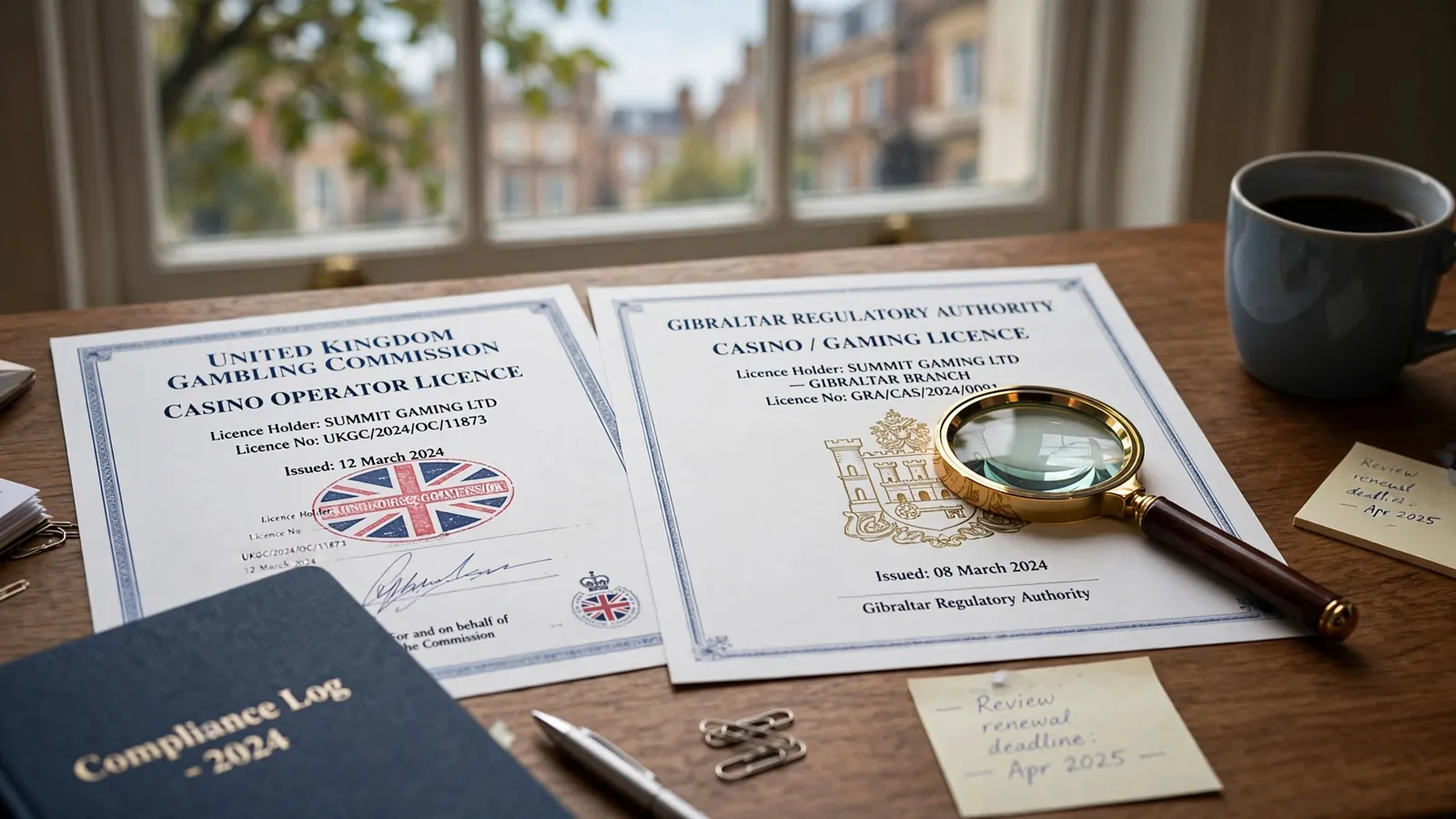
The Risks You Give Up When You Leave UKGC Regulation
The risk that tends to feel theoretical—until it becomes your problem—is not getting your winnings. Reports cited by gambling.com describe cases where an unlicensed site refused to pay a customer. In those cases, the customer was left without legal recourse. That is not a claim that every offshore casino will withhold money; it is a reminder that a large balance on a screen is not the same thing as money you can confidently recover.
I used to treat the balance as if it already belonged to me. It didn’t. Until a withdrawal reaches you, the operator still controls the account and the funds shown in it. With a UK Gambling Commission-licensed casino, there is a regulator overseeing the operator under UK rules. A casino outside that system is not regulated by the UKGC, so you do not have that same oversight to lean on if a dispute turns serious.
That difference changes how much trust you are being asked to place in the company. A site can have a polished design, familiar-looking games and a reassuring support chat; none of those things gives you the protections attached to a UKGC licence. If the operator decides to contest a win or simply refuses to pay, a friendly-sounding reply is not the same as an effective route to get the money back. Hard lesson.
The balance is not the whole risk
The problem is not limited to a dramatic refusal after a big win. Even a smaller disputed amount can leave you weighing up whether to keep chasing it, and how much time and effort you are willing to spend. If you cannot get the operator to resolve the issue, the fact that the site looks established does not by itself provide a UK route to a remedy.
No Legal Recourse
If an unlicensed site refuses to pay your winnings, you are left without the legal protections and oversight provided by the UK Gambling Commission.
I’m wary of language such as “trusted” when it is used as if it settles this question. Trust is not a protection system. Nor does a casino’s use of encryption or other security measures establish that it will pay a disputed balance. Protecting account data and getting a fair outcome in a money dispute are different things.
That is why I would separate two questions before depositing: can I use the site, and what happens if the operator and I disagree? The first does not answer the second. A casino may accept your details and bets, but that does not create UKGC oversight or guarantee that you can recover money if the relationship breaks down.
Affordability checks are part of the gap
There is another protection you give up that is less visible than a withdrawal dispute. Offshore operators do not provide the affordability checks required by the UK Gambling Commission. Those checks are intended to help licensed operators consider whether a customer’s gambling is affordable. Without them, you cannot count on the same UKGC-mandated process being applied by a casino outside the Commission’s remit.
I don’t see that as a bonus. It can feel smoother when nobody pauses to ask whether your spending is becoming a problem, but less friction is not the same as more safety. If you are chasing losses or depositing more than you planned, the absence of a check can leave you alone with that decision. A site continuing to take your play does not mean the spending is manageable.

This is where I think the glossy pitch can distort the choice. People compare games and welcome offers, but those are not the only things that matter. The protection you lose may only become obvious when you need help: when a dispute arises, or when your gambling is running beyond what you can afford. By then, you may already have money tied up and fewer dependable ways to address the problem.
Decide what you can afford to lose
If you are still considering foreign casino sites, treat the possibility of a loss as broader than losing a bet. You could also face a dispute over winnings, and you should not assume UKGC protections will be available to resolve it. That does not mean every operator will act badly. It means the safeguards are not the same, and a site’s promises cannot replace them.
I would keep the decision painfully plain: only risk money you can afford to lose, and do not treat an on-screen win as secure cash. If the lack of UKGC-mandated affordability checks matters to you—or if you would need a reliable route to challenge a refusal—an offshore casino leaves a protection gap you should take seriously before you deposit.
No gloss.
The Commercial Ties Behind an Offshore Brand
A casino brand is the bit you see: its name, website and adverts. Behind it sits a business, and behind that business there may be commercial agreements that affect how the operation earns money. I try not to treat the name on the home page as the whole story. It isn’t.
Santeda and SIS offer a useful example. Under a contract between them, SIS received a percentage of revenue generated by losing bets placed through Santeda’s brands. That is a specific commercial arrangement, not a detail to gloss over when considering who is connected to an offshore casino.
In the case of Santeda and SIS, a commercial contract existed where SIS received a percentage of revenue generated specifically from losing bets placed through Santeda’s brands.
The important point is what the payment was linked to: losing bets. It was not described simply as a fee for providing a service or displaying a brand. When a contract ties a partner’s share of revenue to customers’ losses, that tells you something about the financial relationship between the parties. It does not, by itself, establish what either company did in every other respect, or prove that a particular player’s experience was affected in a particular way. But it is enough to make me look beyond the brand name and ask who has a stake in the business, and how that stake is calculated.
There is a limit to what this example can tell you. One contract does not describe every foreign casino in the UK market, and it would be a mistake to assume that all operators have the same partners or revenue model. Nor does a commercial connection make a casino safer, more trustworthy or suitable to use. It is context, not a recommendation.
Santeda also illustrates why a licence needs to be understood by its reach. Its Curaçao licence does not give it permission to operate in the UK or the US. A licence from one jurisdiction is not a passport to offer gambling services in another. For British customers, Santeda remains outside the UK Gambling Commission’s regulatory system; the Curaçao licence does not turn it into a UKGC-regulated operator.

That distinction matters even when a site looks polished and its business relationships appear established. A familiar partner, a recognisable brand or a formal offshore licence can sound reassuring in marketing copy. None of those things should be confused with permission to operate under a UK Gambling Commission licence. Offshore operators are not regulated by the UKGC and do not provide the affordability checks that UKGC-licensed operators are required to apply.
I’m wary of the easy leap from “there is a named company involved” to “someone independent is looking after the player”. A commercial partner may have its own contract and financial interest; that does not make it a regulator or a route for resolving a customer’s complaint. The relationship described in the Santeda case is notable precisely because it shows how a brand’s business model can involve parties beyond the company a player sees on screen.
So, when looking at foreign casinos, I’d treat the operator’s identity, licence and commercial ties as separate questions. Who runs the brand? Which regulator issued its licence, and where does that licence apply? What does a partner actually do, and how is it paid? Those answers can help you understand the structure around a casino, but they should not be mistaken for a seal of approval for British play.
The name is only the surface.
Why the Bonus Looks Bigger—and What It Can Cost
A welcome offer can look like free money when it is really a set of conditions attached to a deposit. I used to focus on the headline figure and skim the terms. That was the wrong way round. The key question is not how much appears in the bonus balance, but what you must do before any of it can be withdrawn.
- Read the full terms and conditions
- Calculate the total wagering requirement
- Check which games qualify for the bonus
- Focus only on the headline figure
- Assume a bonus is free money
- Rely on short promotional descriptions
A specialist review of foreign casino promotions attributes their larger-looking welcome packages to operators being outside UKGC restrictions on bonus terms, wagering requirements and promotional language. That can make the headline offer more eye-catching. It does not make the money easier to claim. Offshore casinos are not regulated by the UK Gambling Commission, and they do not provide UKGC-mandated affordability checks.
The offer itself can take different forms. A specialist review identifies deposit matches, free spins packages, no-deposit bonuses and cashback offers among the common types advertised to British players. Each works differently: a match adds bonus funds when you deposit, free spins are tied to specified games, and cashback returns some amount under stated conditions. A no-deposit offer may sound like a free trial, but its terms still decide whether any resulting balance can be withdrawn.
The “100% match” is the sort of phrase that caught my eye. In plain terms, a £100 match bonus could add £100 in bonus funds when you deposit £100. But if the wagering requirement is 35 times the bonus, you would need to place £3,500 in qualifying bets before those bonus funds convert to withdrawable cash. That is betting turnover, not a promise that you will have £3,500 left—or that you will finish ahead.
That distinction matters. A bonus balance is not the same as cash in your bank account. Wagering rules may also define which games count, how much of a bet qualifies, and what happens if you try to withdraw before meeting the conditions. Read the actual offer terms rather than relying on a banner or a short promotional description.

There is a second trap in the word “cashback”. It sounds like a refund, but an offer’s terms determine what qualifies and whether the return is cash or restricted bonus funds. Free spins can also carry their own rules for winnings. The label tells you the promotion’s shape, not its real value.
I now treat the bonus as a calculation, not a gift. If the conditions are hard to find, unclear, or make the offer feel less generous once you read them, I count that as useful information. Bigger headline, bigger homework.
GamStop Is Not a Safety Net Offshore
GamStop is a self-exclusion scheme for UKGC-licensed gambling sites. Once you register, every UK-licensed operator is covered: you should be blocked from opening or using an account there for the period you selected. That boundary matters. A foreign casino outside the UK Gambling Commission’s remit is not part of GamStop, so your exclusion does not automatically carry across.
That gap can be easy to underestimate. A specialist review reports that someone who has self-excluded may be able to register with a foreign casino and deposit within minutes, without the safeguards that accompany the GamStop exclusion. That is a report about what may happen, not a reason to test it. These operators are not regulated by the UKGC, and they do not provide UKGC-mandated affordability checks.
I know how quickly a decision made in a difficult moment can turn into another deposit. When I wanted a barrier, I needed it to be a barrier everywhere—not a prompt to look for a site the scheme could not reach. If you have joined GamStop because gambling is causing harm, treating non-UK casino sites as a way around it defeats the purpose of the exclusion.
Caution: GamStop only covers UKGC-licensed sites. Foreign casinos are not part of the scheme, meaning your self-exclusion does not automatically block you from their services.
The practical response is to add friction rather than search for a gap: step away from gambling sites, and ask someone you trust to help you stick with the break. If you are already excluded, do not read the absence of GamStop as permission or protection. It means the exclusion you chose does not block that operator. That distinction is the point.
A self-exclusion is a commitment you made to protect yourself. An overseas site may not know about it, and it is not covered by the scheme. Keep the boundary intact.
Getting Your Money Out: Payments and Waiting Times
When I compare payment methods at overseas casino sites, I look at the time quoted for the withdrawal itself, not just the word “instant”. That can make a big difference to what you actually wait for.
E-wallets such as Skrill and Neteller are often the quicker fiat option. A specialist review reports that most foreign casinos clear these transactions within 24 hours, with many doing so in under 12. That is the operator’s processing time, though; the payment method and the casino’s own handling both matter. A fast headline is not the same as cash already in your account.
Bank transfers are the slow end of the comparison. One specialist review puts the transfer time at five to seven business days, and notes that some casinos add their own processing delay before the bank timeline even starts. That distinction is easy to miss when you are focused on the advertised estimate. Slow adds up.
Crypto can look quicker still: a specialist review reports that withdrawals often clear in under an hour, faster than fiat methods. But speed is only one part of the decision. The value of a cryptocurrency can move while you hold it, so the amount you receive in pounds may change between withdrawal and conversion. A quick transfer is not automatically the better deal.
I would not treat any of these timings as a promise. They are comparisons reported for payment methods, not a guarantee that every casino will process your request on that schedule. And a foreign casino remains outside UK Gambling Commission regulation: it does not provide UKGC-mandated affordability checks. Those are important differences, not small print to skim past.
So, if predictable value matters more to you than speed, weigh that against the crypto trade-off. If you choose an e-wallet, check the casino’s stated processing time before depositing. With a bank transfer, allow for both the operator’s handling and the banking journey. The method can set expectations, but it cannot make an offshore operator accountable to the UKGC.
Your Winnings and UK Tax
The short answer is that gambling winnings are not subject to income tax in the UK. That applies whether the casino is licensed by the UK Gambling Commission or operates under a licence from elsewhere.
I used to treat the tax question as if it might settle the bigger question of whether a site was safe to use. It doesn’t. Tax treatment and the operator’s licensing status are separate matters. A win from an offshore casino does not become taxable income simply because the operator lacks a UKGC licence; equally, the absence of income tax does not make that casino UK-regulated or tell you what protections you would have there.
UK gambling winnings are not subject to income tax, regardless of whether the casino holds a UKGC licence or an offshore one.
So if you are checking what a win means for your UK income tax, the operator’s location or licence does not change the answer. But don’t read that as official approval of the site, or as a promise that a withdrawal will reach you. Tax is the narrow part. The rest is a different question.
I find it helps to keep those points apart. A balance shown on a casino account is not the same thing as money in your bank, and the tax rule does not decide whether an operator will process a withdrawal. That distinction is easy to miss when you are staring at a win and trying to work out what happens next.
For this point, though, the rule is straightforward: UK gambling winnings are not taxed as income, including winnings from an operator that is not UKGC-licensed. No tax bill. No endorsement either.
A Fast Payout Is Not a Guaranteed Payout
“Fast withdrawals” sounds reassuring until you look past the banner. A payment method’s advertised speed is only one part of the process: the casino may set a withdrawal limit, hold a request as pending, or ask for documents before releasing it. Those steps can change how long you wait, even if the payment itself is described as quick.
A specialist review of overseas casinos reports that limits, pending periods and identity checks differ considerably between operators. That is worth treating as a prompt to read the individual terms, not as a promise about what any particular site will do. Check whether a limit applies per transaction or over a stated period, whether you can cancel a pending request, and what documents may be requested. The wording matters. So does the small print.
I learned not to confuse “submitted” with “paid”. A withdrawal appearing in your account history may only mean the request has entered the operator’s process; it does not tell you when funds will arrive. Offshore casinos are outside UK Gambling Commission regulation, and they do not provide the Commission’s mandated affordability checks. A quick-looking payment policy does not replace those protections.

There is a clear difference with UKGC-licensed operators: they must verify a player’s identity before processing a withdrawal. That requirement can mean checks happen before a payout, rather than leaving the identity question until a request is pending. With an overseas casino, procedures are not standardised under the UKGC, so read its withdrawal rules before depositing. No banner can settle the timing for you.
Do the Wagering Maths Before You Deposit
A bonus balance is not the same as cash you can withdraw. A wagering requirement tells you how much qualifying betting must be completed before bonus funds can become withdrawable. The multiplier is applied to the bonus amount, not a promise that you will finish ahead.
A specialist casino review gives a clear illustration: a £20 bonus with a 35x requirement calls for £700 in qualifying bets before cash-out. That is the total amount staked across qualifying play, not £700 you must lose. But every bet carries risk, and meeting the requirement does not guarantee that any balance will remain.
The same review calculates a 100% match bonus on a £100 deposit as a £100 bonus. With a 35x wagering condition attached to that bonus, you would need to place £3,500 in qualifying bets before the bonus funds convert to withdrawable cash. The attractive headline is only half the deal. The turnover is the other half.
Before accepting an offer, read what counts as qualifying play and whether the requirement applies to the bonus alone or to another amount. Those details can change the maths; don’t assume one offer works like another. If the terms are unclear, I’d rather leave the bonus alone than deposit on the strength of a big figure.
This is separate from how quickly a casino processes a withdrawal. Clearing wagering requirements only addresses whether bonus funds have met the stated condition; it does not settle the operator’s withdrawal rules or guarantee payment. Big number. Read the small print.
Are winnings from foreign casinos taxable in the UK?
No. Gambling winnings are not subject to UK income tax, whether the casino is UKGC-licensed or not.
Are foreign casinos safe for UK players to use?
Not necessarily. A casino without a UK Gambling Commission licence is outside the UKGC’s regulatory system, and some unlicensed sites have refused to pay winnings.
What happens if I have a dispute with a foreign casino?
You may have limited recourse: some customers of unlicensed sites have been left without legal recourse after the site refused to pay their winnings.
What does a wagering requirement actually mean in practice?
It is the amount you must bet before bonus funds can be withdrawn. For example, a 35x requirement on a £20 bonus means placing £700 in qualifying bets.
What is the fastest way to withdraw from an online casino in the UK?
E-wallets are consistently among the fastest options, with most operators processing withdrawals within 24 hours. At foreign casinos, crypto withdrawals often clear in under an hour, though their value can fluctuate.
Is playing at an international casino legal for UK residents?
Yes, placing a bet with an overseas casino is not itself illegal for a UK player. However, an operator without a UKGC licence cannot legally offer gambling facilities to customers in England, Scotland or Wales.
Are gambling winnings subject to income tax in the United Kingdom?
No. Gambling winnings are not subject to UK income tax, regardless of whether the operator holds a UKGC licence.
What should players check to assess whether an international casino is safe?
Check whether the operator holds a UK Gambling Commission licence; an offshore licence does not provide UKGC regulation. A site accepting British customers without a UKGC licence is outside the Commission’s regulatory system.
Published by the Tenobet Casino 2 team.