Anjouan Casino Licence in the UK: What It Means
 Available in GB
An Anjouan licence does not replace UKGC permission for operators serving Great Britain; offshore status also shapes the checks and terms to examine.

Table of Contents
- What an Anjouan Licence Means for UK Players
- What the Anjouan Licence Does—and Doesn’t—Require
- How Anjouan Online Casinos Fit into the Offshore Market
- Anjouan Casino Bonuses: Read the Wagering Terms First
- What an Anjouan Gaming Licence Allows
- Before You Use an Anjouan Casino Site, Check the Withdrawal Rules
- New Anjouan Casinos: Verification Can Get Complicated
- Anjouan Crypto Casinos and the Limits of Payment Choice
- How to Read Anjouan Casino Reviews When Disputes Arise
- Offshore Casinos Licensed in Anjouan: Know the Trade-Offs
What an Anjouan Licence Means for UK Players
An Anjouan casino licence can sound like a straightforward stamp of approval. The part I would not skip is what that stamp actually covers: it does not give an operator permission to serve customers in Great Britain. If a casino takes customers there, the relevant permission is a licence from the UK Gambling Commission (UKGC), wherever the company itself is based. Anjouan authorisation and UK authorisation are not interchangeable.
That distinction is the starting point for understanding an Anjouan casino licence in the UK in 2026. It is about the operator’s right to offer gambling to people in Great Britain, not simply where a website is registered or which authority issued a licence. A company can hold permission in Anjouan and still lack the permission required to operate in the British market. The location of the operator does not remove that requirement.
The operator’s obligation is not the player’s
The Gambling Act 2005 is directed at operators supplying gambling services into the British market. It does not make an individual player the target of that licensing rule. British law does not expressly bar citizens from using gambling services licensed elsewhere, and a person who gambles on an unlicensed site does not commit a criminal offence under UK law.
If you’re considering casinos associated with an Anjouan licence in the UK in 2026, payout timing is one practical detail to check. Use this list as a starting point and verify the licensing and terms that matter to you.
Payout speed: 1-3 business days x3bet lists a payout speed of 1–3 business days, giving you a stated timeframe to consider.
Payout speed: 1-3 business days NightWin lists a payout speed of 1–3 business days, which gives you one concrete detail when assessing it.
Payout speed: 1-3 business days Amunbet lists a payout speed of 1–3 business days, a useful stated detail if payout timing matters to you.
Payout speed: 1-3 business days WinBeast lists a payout speed of 1–3 business days, offering you a stated timeframe for payouts.
Payout speed: 1-3 business days Jetsetspins lists a payout speed of 1–3 business days, giving you a specific timing detail to note.
Payout speed: 1-3 business days Chanze lists a payout speed of 1–3 business days, so you have a stated timeframe to factor into your choice.
Payout speed: 1-3 business days EvoSpin lists a payout speed of 1–3 business days, providing you with a concrete detail about payout timing.
Payout speed: 1-3 business days SpinFormula lists a payout speed of 1–3 business days, a stated timeframe you can take into account.
Payout speed: 1-3 business days Dieselwin lists a payout speed of 1–3 business days, giving you a stated indication of payout timing.
Payout speed: 1-3 business days Revery Play lists a payout speed of 1–3 business days, providing you with one specific detail to consider.
That is a narrow point, not a declaration that every such site is legally authorised to serve British customers. The operator’s position and the player’s position are different: the operator may be required to hold a UKGC licence, while the player is not criminally liable merely for placing a bet on a site without one. I used to collapse those two questions into one. It made the situation sound simpler than it is.
For online gambling in Great Britain, UKGC licensing is the local regulatory framework. Anjouan authorisation does not replace it. So if a site presents its Anjouan status as though that alone settles whether it is permitted to operate in the UK, that is not how the boundary works. The relevant question is whether the operator holds the permission required for the market it is serving.
What changes when the site is outside UK oversight
The practical difference is that a player at a non-UK-regulated casino is not using a service supervised through the UKGC system. The UKGC’s rules and routes for handling matters involving its licensees do not become available just because a site accepts a player from Britain or displays a foreign licence. If something goes wrong, you cannot treat the foreign authorisation as a route into UK regulatory protection.
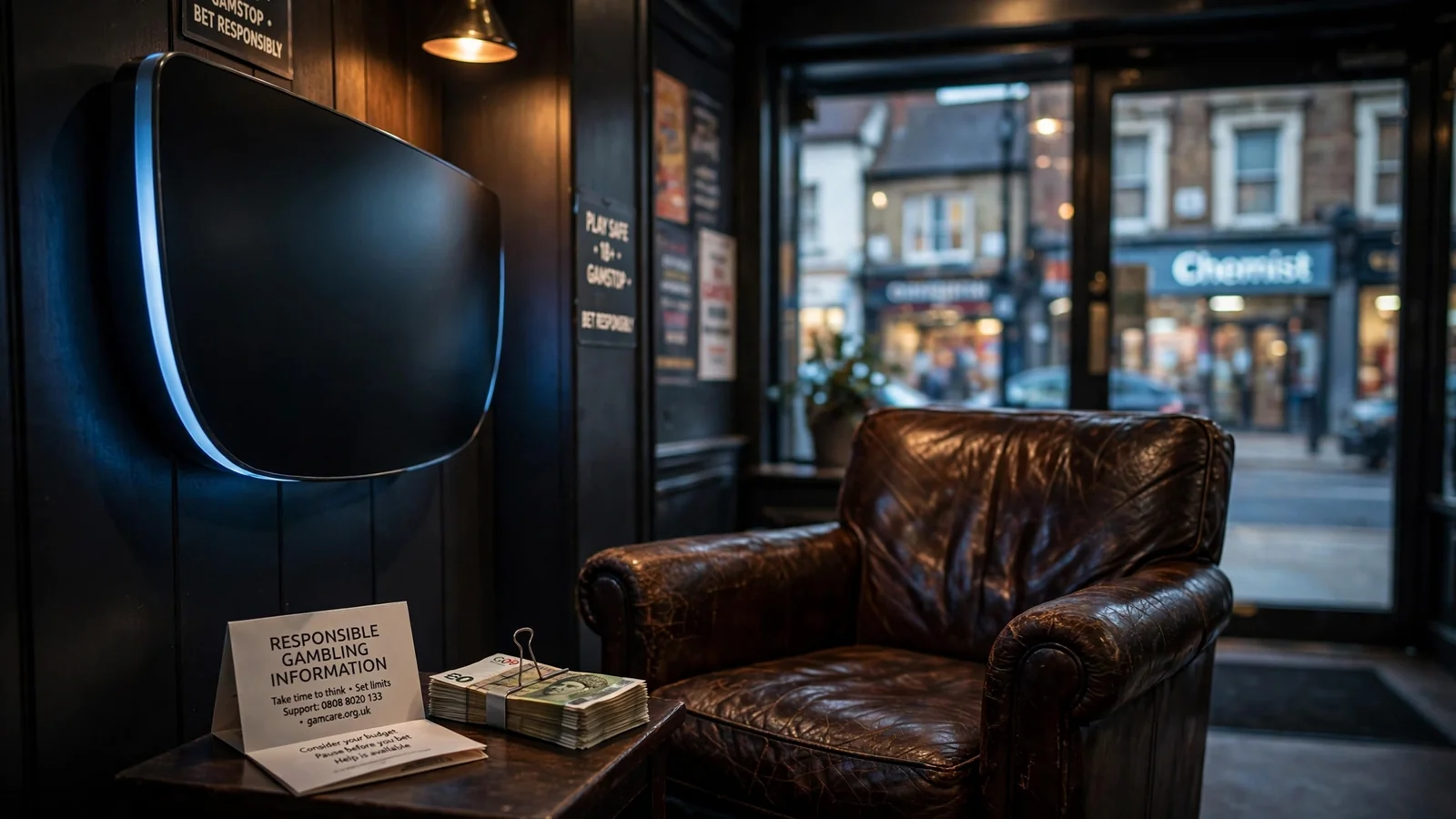
That matters most when you are deciding what a licence does for you personally. It may indicate that an operator has permission from the issuing jurisdiction, but it does not make the casino a UKGC-licensed operator. Nor does it bring the site into UK schemes by default. Casinos not on GamStop are outside the UKGC self-exclusion scheme, and Anjouan-licensed casinos are not required to connect to GAMSTOP.
That is not a small technicality. If you rely on GamStop to block your access to gambling, you should not assume it will prevent you from reaching an Anjouan-licensed site. Its coverage is tied to participating UKGC-regulated operators, not every website carrying a gambling licence somewhere in the world.
There is also no equivalent independent dispute route guaranteed by the Anjouan licence. Anjouan-licensed casinos do not have to provide an independent alternative dispute resolution service comparable to the services used by UKGC-regulated operators. So the protections available through the British framework should not be assumed to follow you to a site regulated elsewhere.
Keep the two questions separate
When I see “licensed” in a casino’s pitch, I now pause over the missing words: licensed by whom, and for which market? Anjouan may have issued the operator a licence, but that does not answer whether the operator is authorised to serve Great Britain. A foreign licence should not be read as a UK permission slip.
At the same time, the player’s legal position is not simply the mirror image of the operator’s. The fact that an operator may be acting without the licence required for the British market does not mean that a British player commits a criminal offence by using the site. Both points can be true at once. That is the distinction worth keeping in view.
An Anjouan licence does not make a casino part of the British regulatory system and does not provide UKGC protections or GamStop coverage.
The limit is practical as well as legal. If you choose to use a casino outside UKGC oversight, you are not choosing a UK-regulated service, and you should not count on UKGC protections or GamStop coverage applying. A licence from Anjouan does not erase that gap. It tells you the casino has a licence from that jurisdiction; it does not make the casino part of the British regulatory system.
I find that less confusing than treating every licence as the same kind of reassurance. The key is not just whether a casino says it is licensed. It is whether the licence covers the market in which it is offering gambling. For Great Britain, an Anjouan licence on its own does not.
What the Anjouan Licence Does—and Doesn’t—Require
An Anjouan casino licence can tell you that an operator falls under a licensing framework. It does not, by itself, tell you how independently the games and finances have been checked. I used to treat the word “licensed” as if it answered both questions. It doesn’t.
The distinction matters because a licence is not proof that every safeguard you might expect has been independently tested. Anjouan’s framework does not require casinos to have their random number generators tested, undergo audits, or keep player funds separate from the business’s own money. Those are substantial gaps when you are trying to judge how a site handles fairness and customer balances.

A licence is not a test report
Random number generation is what makes digital game outcomes unpredictable. If you are looking for evidence about how a casino’s games were tested, the licence alone does not supply it: RNG testing is not mandated by this framework. The same goes for audits. A licence should not be read as proof that an independent auditor has examined the operator’s accounts or processes.
That does not establish that a particular casino’s games are unfair or that its accounts have never been reviewed. It means the framework does not require those checks. There is a difference between an operator choosing to provide evidence and a requirement that applies across the licensing system. If a casino makes claims about testing or audits, look for the actual supporting information rather than assuming the licence confirms them.
I find it useful to separate three things: what the licence says, what the operator says it does, and what can be independently verified. Blurring them makes a badge look more informative than it is. A polished page is not an audit.
Player balances are not guaranteed to be separate
The framework also does not require player funds to be held separately from an operator’s business funds. So an Anjouan casino licence does not guarantee that money in customer accounts is ring-fenced or protected from the company’s other financial obligations.
That has a direct consequence if the operator fails. Players may be unsecured creditors, rather than having a guaranteed claim to a separately held pool of customer money. In practical terms, a balance displayed on a casino account should not be mistaken for funds safeguarded in a separate account. The licence does not promise that arrangement.
Financial Risk
An Anjouan licence does not require player funds to be held separately from business funds, meaning your balance may not be protected if the operator fails.
I would not infer from this alone that a particular operator is insolvent or mishandling money. But I also would not treat the displayed balance as equivalent to cash already in my bank. The framework’s lack of a segregation requirement leaves that risk unresolved. A reassuring brand design cannot change the legal position of the funds.
A response deadline is not a ruling
There is a complaint-handling requirement: operators must respond to complaints within 30 calendar days. That gives a stated period for the casino to reply. It does not mean an independent body will examine the dispute, decide who is right, or order the operator to pay.
This is an easy distinction to miss. A duty to respond belongs to the operator; adjudication would require a separate authority with a role in resolving the case. The Anjouan authority does not handle or decide player complaints. So, if an operator replies but rejects your account of events, the response requirement does not itself provide an outside ruling.
Keep any complaint clear and retain the correspondence and relevant account records. That is sensible documentation, not a promise that the dispute will be resolved in your favour. The deadline tells you when a response is due under the framework; it does not establish what remedy you will receive or who can enforce one.
What the licence can—and cannot—tell you
When I see an Anjouan casino licence, I read it narrowly. It indicates a licensing connection, but it does not automatically verify the casino’s RNG, confirm an independent audit, or guarantee that customer balances are segregated. Nor does the complaint-response period amount to an independent decision process.
Those limits are worth keeping in view when a site uses “regulated” as a broad reassurance. The word may sound like a complete quality check; here, it cannot stand in for evidence about testing, financial separation, or independent complaint adjudication. Separate claims need separate proof—and some protections are not required by this framework at all.
That is the practical point: the licence offers less assurance about oversight than its label might suggest. I would not dismiss every operator on that basis, but I would not fill the gaps with assumptions either. A licence is one piece of information. Not the whole picture.
How Anjouan Online Casinos Fit into the Offshore Market
“Offshore” can make this market sound like one neat category. It isn’t. A non-UK-regulated casino is an online gambling site operating without oversight from the UK Gambling Commission. That describes its relationship with the UK regulator; it does not tell you, by itself, which other jurisdiction has issued its licence or how the site handles its day-to-day business.
Anjouan is one of several jurisdictions associated with licensing online casinos outside the UK system. Malta, Curaçao and Gibraltar are also among the places that may license operators in this wider market. So an Anjouan casino is not a separate kind of game site. It is part of a varied group whose operators may be licensed in different places and whose terms and procedures can differ from one another.
One of several jurisdictions associated with licensing online casinos outside the UK system.
Another jurisdiction that may license operators in the wider non-UK-regulated market.
Part of the diverse group of jurisdictions providing licenses to offshore casinos.
An additional jurisdiction associated with licensing casinos operating without UKGC oversight.
That distinction is easy to lose when a site’s design gives a polished, uniform impression. Two casinos can offer similar-looking games while operating under different licensing arrangements. Conversely, two sites linked to the same jurisdiction need not have identical policies. The jurisdiction is useful context, but it is not a shortcut to understanding every practical detail of an individual casino.
What the category tells you
The phrase “non-UK-regulated” is about the absence of UK Gambling Commission oversight, not a promise that a site has no licence at all. A casino may be licensed elsewhere and still fall outside the UK regulator’s system. Anjouan-licensed online casinos sit within that broader pattern, alongside operators licensed in other jurisdictions.
I find it helps to keep those ideas separate: where a site is licensed, whether it is overseen by the UK regulator, and how it actually operates are related questions, but they are not interchangeable. Reading “licensed” on a casino page and treating that as a complete description is the sort of shortcut I used to take. It tells you too little on its own.
The wider market also means that the label “Anjouan casino” does not describe a single shared customer experience. Operators set their own policies and present their own processes. The licence’s jurisdiction gives you one piece of context; it does not mean every site handles deposits or withdrawals in the same way.
Why payment policies can feel different
Some non-UK-regulated casinos may set fewer restrictions around deposits and withdrawals than a player might encounter elsewhere. That flexibility can sometimes mean quicker payouts, but it is a possibility, not a promise. A broad description of the market cannot tell you what a particular operator will do with a particular transaction.
That matters because “fast” is an advertising word that can hide a lot. A casino might have a less restrictive policy in one respect without offering the same experience in every other respect. The method used, the operator’s own procedures and the terms attached to an account can all affect what happens. I would not read a general claim about offshore payment flexibility as a guarantee that money will arrive quickly or without friction.
There is a temptation to treat the most permissive-sounding policy as automatically the best one. I don’t think that follows. Fewer restrictions may sound attractive, but the phrase alone does not explain how a site applies its rules or whether the arrangement suits you. The detail matters more than the label. No shortcut here.
Comparing like with like
If you are looking at an Anjouan online casino beside a site licensed in Malta, Curaçao or Gibraltar, compare what each actually says about its operation rather than assuming the jurisdictions make the sites identical. The same caution applies when a site describes itself as one of the “best” Anjouan casinos. That is a judgement, not a description of the whole category, and a confident headline does not make one operator’s policies representative of the others.
I would start by separating the claims a site makes from the basic market context. Anjouan is one of several licensing jurisdictions found among non-UK-regulated casinos. Those casinos operate without UK Gambling Commission oversight. Some may offer more flexible deposit or withdrawal policies, and those policies may contribute to faster payouts, but no general statement settles what a specific site will do.
This is the useful way to place Anjouan in the offshore market: not as a guarantee of a particular product or payment experience, but as one jurisdiction within a diverse group of non-UK-regulated operators. Once that is clear, the word “Anjouan” becomes context—not a verdict.
Anjouan Casino Bonuses: Read the Wagering Terms First
A large welcome offer can look like free money until you find the small print. I used to compare bonuses by the headline amount and assume the wagering rule applied only to the bonus. That assumption can turn a tempting offer into a much bigger commitment than it first appears.

The key is to find out what the wagering multiple applies to. It might apply to the bonus alone, or to the bonus and your deposit combined. A specialist review of offshore offers describes 40x requirements applied in different ways, including to the bonus and deposit together, the bonus alone, or a bonus and free spins combined. Those are not interchangeable terms. If the deposit is included, the amount you need to wager can be substantially higher than if the calculation uses the bonus alone.
Some specialist reviews also report welcome offers with requirements of 35x or more. Treat that as a sign to inspect the individual promotion, not as a rule that applies to every Anjouan casino bonus. The operator’s own terms should say what is counted, which games contribute, and whether any games are excluded or count less towards completion.
Free spins can have their own conditions
“Free” does not necessarily mean the winnings are ready to withdraw. A specialist review reports free-spin winnings subject to wagering requirements of 30–50 times those winnings, alongside withdrawal caps of £5–£50. These figures describe terms reported in that review, not a fixed standard. Check the offer you are considering: the cap may limit what you can keep even after completing the wagering requirement.
Pay attention to whether the stated multiple applies to winnings from the spins or is folded into a wider bonus requirement. The wording matters. If the offer links free spins to a welcome bonus, check whether you must meet one requirement or more than one, and whether the same games count towards each.
Expiry is another easy detail to miss. A specialist review reports free-spin packages expiring within 24–72 hours. That is a reported range, not a promise about every promotion. Look for the exact expiry in the terms and note when the clock starts: an offer may have a short window to activate, use the spins, or complete wagering. A bonus that expires before you can reasonably use it is less valuable than the headline suggests.
Read the whole offer, not the banner
Before accepting, I would check the terms in this order: the wagering base, the games that count, the expiry, and any maximum withdrawal from bonus winnings. Those details tell you what the offer actually asks of you. If one is unclear, do not assume the friendliest interpretation.
- Check the wagering base and applicable games
- Verify the bonus expiry period
- Look for maximum withdrawal limits on winnings
- Rely on the headline bonus amount alone
- Assume the friendliest interpretation of unclear terms
- Trust a promotional banner over the full terms
Also check whether accepting the promotion affects your ability to withdraw funds before completing the requirements. The offer may distinguish between your own deposit and bonus funds, or it may attach conditions to the account while the bonus is active. Read the precise wording rather than relying on a short promotional summary.
“Big bonus” is advertising language. The practical value depends on the conditions attached, and a generous headline can be paired with a demanding wagering target, a tight expiry, or a cap on winnings. I have learned to treat the terms as the offer itself. The banner is just the pitch.
What an Anjouan Gaming Licence Allows
The word “licensed” can sound like a passport: one approval, then permission to serve players wherever they happen to be. That is not what an Anjouan gaming licence means. Its reach is limited, and it does not authorise a casino to operate in the United Kingdom or in other markets its terms restrict.
For a player in Great Britain, that distinction matters. An operator’s Anjouan paperwork does not replace the UK Gambling Commission licence required to serve the British market. A site may display an Anjouan gaming licence and still have no authority to offer gambling to customers here. The badge tells you something about the operator’s claimed licensing arrangement; it is not permission to treat the casino as UK-regulated.
I used to see a foreign licence and mentally file it under “someone official is keeping an eye on this”. That was too broad a conclusion. The licence’s territorial scope is not a universal stamp, and the fact that a site can be reached online does not establish that it is authorised in your location. Availability and permission are different things.
That also means you should not assume that every casino with an Anjouan licence is operating on the same footing in every country. A licence cannot simply erase the rules of the market where a customer is located. If you are considering a site, you are responsible for understanding the local rules and what using a non-UK-regulated casino means for you. A familiar-looking logo is not enough.
What the licence does not give you
The practical limit becomes clearer when something goes wrong. An Anjouan-licensed casino does not provide an independent dispute-resolution route comparable to the alternative dispute resolution services associated with UKGC-licensed operators. So the presence of a licence should not lead you to expect the same outside route for challenging a casino’s decision.
That is not a small technical detail. If you disagree with how a site has handled a complaint, the licence itself does not supply a UK-style independent adjudicator to take over the case. The casino may have its own process, but that is not the same thing as an independent body reviewing the dispute. “Licensed” does not mean “someone else will step in”.
I would keep those two questions separate: where the operator is authorised to work, and what route you would have if you and the operator could not agree. The Anjouan gaming licence does not authorise service in the UK, and it does not come with a UKGC-equivalent independent dispute route. Neither point is fixed by a site describing itself as international or by a polished licence badge.

That is the boundary to remember. Anjouan licensing is not UK authorisation, and it does not turn an offshore casino into a UK-regulated one. Before treating the licence as reassurance, be clear about what it actually allows—and what it leaves to the operator and the player.
Before You Use an Anjouan Casino Site, Check the Withdrawal Rules
I used to treat the cashier’s payment logos as the whole story. They tell you how you might deposit, not how quickly you can get a withdrawal approved or whether a large balance can come out in one go. Read the withdrawal rules before putting money in.
Published estimates for non-UK-regulated casinos disagree. Some describe withdrawals as arriving within 24 hours to five business days, depending on the payment method; other reports say delays can stretch to three or four weeks. There is no regulatory clock that ensures an operator acts within a particular time. A quick estimate is not a promise. Check whether the stated timing begins when you request the withdrawal or only after it has been processed.
Also look for limits that might divide a larger win into instalments. A specialist review has reported daily, weekly or monthly caps at some non-UK-regulated casinos, but that should not be read as a rule for every operator or as a guarantee that a particular site has one. If a cap applies, find the amount and frequency in the site’s current terms, then work out how much could be paid in each period and how long the full balance might take.

I now check for fees, processing stages, and rules that could change the route or timing of a payout. If the wording is vague, or the cashier gives one answer while the terms give another, treat that as uncertainty—not reassurance. Keep a copy of the rules shown when you join, because withdrawal conditions can matter more than the deposit page once you want your money back.
With Anjouan casino sites, the practical question is not just whether withdrawals are offered. It is whether the conditions are clear enough for you to judge the wait and any instalments before you play. Slow money out. Check first.
New Anjouan Casinos: Verification Can Get Complicated
A new site can look straightforward until you try to withdraw. Then the operator may ask for identity or payment checks that were not obvious when you deposited. Some specialist reviews report cases where a casino requested notarised documents or a video call before releasing a withdrawal. That is a reported possibility, not a standard requirement across every Anjouan casino.

I would not treat a request for extra documents as proof by itself that a site is acting improperly. But it is worth noticing how clearly the process was explained before you played, and whether the operator gives a specific reason for asking for more. If the goalposts seem to move each time you respond, the uncertainty is real. Keep copies of what you submit and of the messages you receive.
The possible delay is hard to pin down. Accounts differ: some describe withdrawals arriving within 24 hours to five business days, while others say a payout can take three or four weeks. At a non-UK-regulated casino, there is no regulatory clock to enforce a deadline. A stated processing estimate is not the same as a guaranteed arrival date.
Frozen accounts are another risk to keep in mind, especially if verification becomes prolonged or the operator stops explaining what it needs. A newer brand may have less of a public track record for you to assess, so polished design and confident claims do not tell you how a difficult withdrawal will be handled.
Before depositing, look for the operator’s verification and withdrawal terms, not just its sign-up page. Check what documents it may request, how it communicates about checks, and whether the procedure is explained in plain language. If those details are vague, you are accepting more uncertainty than the banner suggests.
I have learned not to assume that sending one document means the paperwork is finished. Keep the balance small enough that a delay would not put pressure on you, and do not deposit more while a withdrawal is unresolved. A slow process can become a costly one.
Anjouan Crypto Casinos and the Limits of Payment Choice
Anjouan casino sites may advertise a broad payment menu: cryptocurrencies alongside cards, e-wallets and bank transfers. In practice, an offshore operator may route transactions through alternative payment processors, so the name on a payment screen may not be the casino itself. That can make the process feel less straightforward than the bright row of logos suggests.
Crypto has a particular complication for UK players. A cryptocurrency payment can bypass the UK ban on gambling deposits funded by credit cards because it is not processed as a card payment. That describes the payment route, not permission to use a site: a crypto option does not turn an Anjouan casino into a UK-licensed operator or make the deposit an approved workaround. I would not confuse “accepted” with “protected”.
There is another catch I learned to look for before sending anything: a deposit method does not promise that the same method will be available for withdrawals. A casino might accept a particular coin or processor when you pay in, then set different conditions for paying out. The payment menu is not the whole journey.
Before depositing, read the cashier terms for both directions of travel. Check which methods are available for withdrawals, whether the operator requires you to use the original deposit route, and whether the rules differ by payment type. If those details are vague, treat that as uncertainty rather than assuming support will sort it out later.
Crypto can be quick to send and difficult to reverse. That matters if you have chosen the wrong network, sent funds to an incorrect address, or discover that the operator’s withdrawal process does not match what you expected. I would also avoid treating an alternative processor as a guarantee that a transaction will go through smoothly.
Payment choice is useful only when you understand its limits. Deposit first, ask questions later? I’ve made that mistake.
Summary of Risks
- An Anjouan licence is not a permission slip to serve the UK market.
- The framework lacks mandates for RNG testing, audits, and fund segregation.
- There is no independent dispute resolution comparable to the UKGC system.
- Bonus value depends on wagering terms, not the headline amount.
- Verification processes for withdrawals can be unpredictable and prolonged.
How to Read Anjouan Casino Reviews When Disputes Arise
When I read Anjouan casino reviews, I look for more than a star rating. A review can describe a player’s experience, but it cannot make an operator resolve your complaint or give you an independent route to challenge the outcome. That distinction matters most after something has gone wrong.
The Anjouan authority does not handle, mediate or decide individual player complaints. So a licence reference in a review should not be read as meaning that the regulator will step in on your behalf. Nor do Anjouan-licensed casinos provide an independent dispute-resolution service comparable to the approved ADR routes available through UK-regulated operators.
That leaves a gap. A reviewer may report that an operator responded, or describe how a dispute ended in one case. Useful context, perhaps; a remedy for your case, no. Someone else’s outcome does not establish what will happen when you raise a complaint, and a positive rating cannot supply the independent decision-maker the licensing framework does not provide.
I learned to treat phrases such as “fair complaints process” carefully. They may describe the operator’s own handling of complaints, not an external body with authority to assess the disagreement. Read the detail behind the label: does the review explain what happened, or merely repeat the casino’s assurances? Even a detailed account remains evidence of that person’s experience, not a guarantee of yours.
If you have a dispute, keep the review in its proper place: background, not protection. It may help you understand what other players say, but it cannot compel a response, mediate between you and the casino, or overturn a decision. Before depositing, I would ask myself whether I am comfortable with that limited recourse. No outside referee.
That is the part a glowing review can leave out. The practical question is not only whether players praise a site, but what options remain if you and the operator disagree. With an Anjouan casino, reviews cannot fill the independent appeal gap.
Offshore Casinos Licensed in Anjouan: Know the Trade-Offs
Anjouan is one of several places that may license casinos operating outside the UK system; Malta, Curaçao and Gibraltar are other examples. The label tells you something about where an operator’s licence comes from, but it does not mean the site follows the same player-protection approach as a UK Gambling Commission-regulated casino.
The difference can matter in ordinary moments, not just when something goes wrong. UK-regulated operators must provide responsible-gambling tools. A non-UK-regulated casino may apply less demanding standards to those protections and to handling personal information. So I would not assume that a familiar-looking account page includes the same controls, or that privacy practices match what you would expect from a UK operator.
“Player protection” can sound reassuring. The practical question is what you can actually use: whether the site lets you set limits, take a break, or close your account, and how clearly it explains those options. Casinos outside the UK system are not required to join GamStop, so a self-exclusion there should not be treated as a UK-wide block. Check the site’s own terms and privacy information before sharing documents or payment details. If the explanations are vague, that is useful information in itself.
I used to read a licence badge as if it settled the bigger question. It does not. The operator’s location and regulator can shape the safeguards and data rules around your account, but the badge alone cannot show how carefully a particular site handles either. That distinction is easy to miss when the rest of the page looks polished.
For me, the sensible trade-off is to decide whether the extra uncertainty is worth it before depositing, not after. Keep your own limits, avoid sharing more information than the site requires, and do not assume protections will match those at a UK-regulated casino. If you need firm, familiar safeguards, an Anjouan-licensed site may not be the right fit. No badge replaces caution.
What happens if I have a dispute with an Anjouan-licensed casino as a UK player?
You cannot rely on the UKGC’s dispute routes or an independent ADR service through the Anjouan licence. The operator must respond to complaints within 30 calendar days, but the Anjouan authority does not handle or decide player complaints.
Is it legal for a UK player to gamble at an Anjouan-licensed casino?
Yes, using the site is not a criminal offence for you under UK law. However, an Anjouan licence does not authorise the operator to serve customers in Great Britain; operators doing so require a UKGC licence.
Are sites that are not on GamStop legal for players in the UK to access?
Yes, accessing or gambling on such a site is not a criminal offence for you under UK law. But not being on GamStop does not mean the operator is authorised to serve Great Britain: that requires a UKGC licence.
What Are Non UK Regulated Casinos?
They are online gambling sites that operate without oversight from the UK Gambling Commission. They may be licensed in another jurisdiction, such as Malta, Curaçao, Gibraltar or Anjouan.
Written by the editors at Tenobet Casino 2.