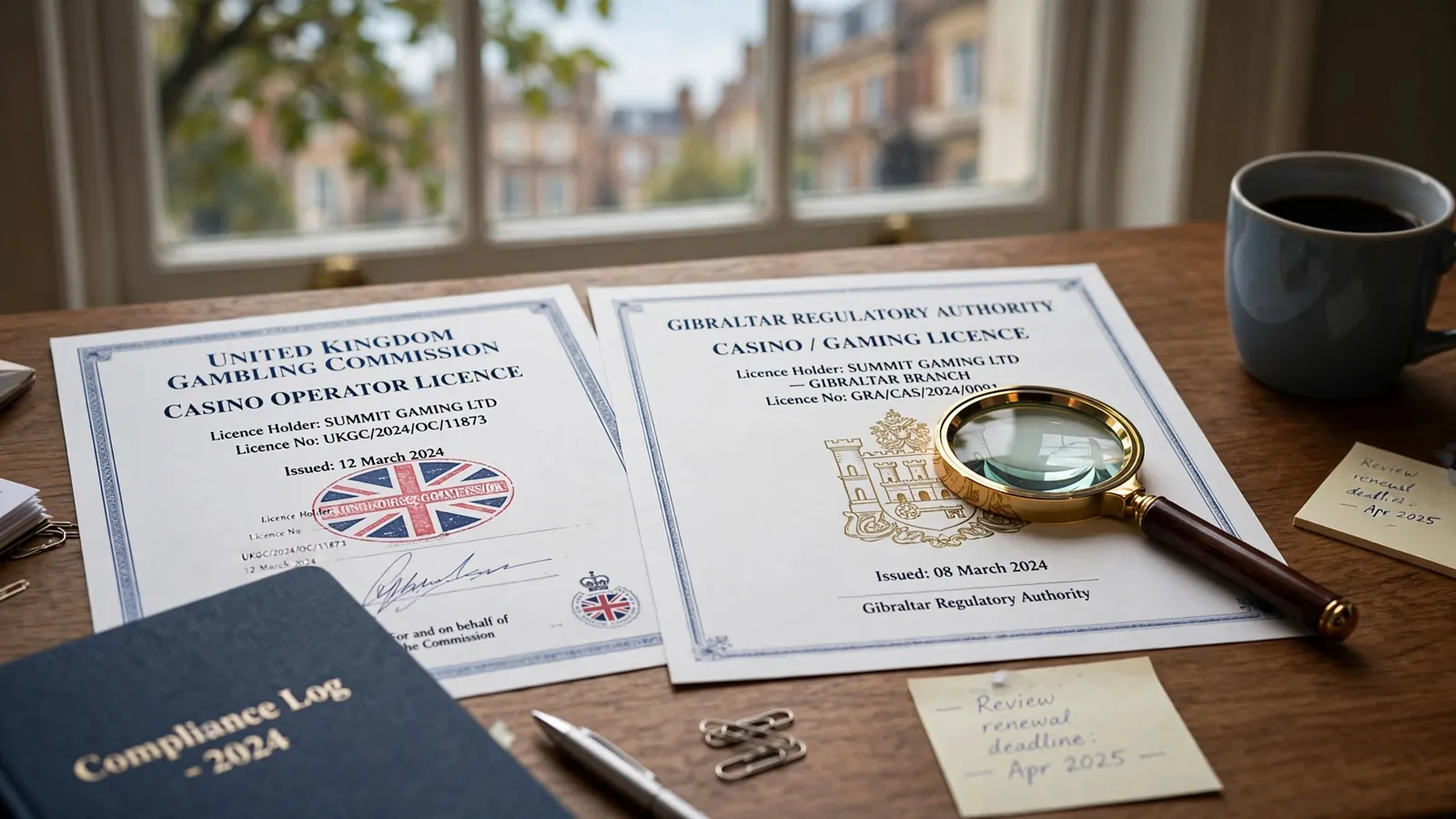
Non-UK Licence Casinos: What the Licence Means
 Available in GB
A casino may hold an overseas licence, but that does not establish that it has permission to serve customers in Great Britain.

Table of Contents
- What “Non-UK Regulated” Actually Means
- Malta, Curaçao and Other Overseas Licences: What They Tell You
- “Best Licensed Casino” Is Not the Same as Best for You
- Licensed Casino or UK-Licensed Casino? The Difference Matters
- Anjouan Licences: Check the Limits Before You Trust the Badge
- Curaçao Casinos, Crypto and the Payment Catch
- What UK Gambling Commission Approval Actually Gives You
- MGA-Licensed Casinos: Malta Is a Separate Licence, Not a UK One
- Checking a Casino’s Licence—and What a “UK-Licensed List” Leaves Out
- New Casino Licences: Check the Company and the Rules, Not the Launch Hype
What “Non-UK Regulated” Actually Means
A non-UK-regulated casino is an online gambling site that operates without oversight from the UK Gambling Commission. The phrase is about which regulator supervises the operator, not simply where the website is based or where its staff work.
That distinction matters. A company can be based outside Britain and still need UKGC authorisation if it serves customers in Great Britain. Equally, a site can hold a casino licence from another jurisdiction without having permission to serve the British market. The address on a company page and the licence relevant to a customer are not interchangeable.
I used to treat the word “licensed” as if it answered everything. It doesn’t. It tells you that some authority has issued a licence; it does not, by itself, tell you that the operator is authorised in Great Britain. The issuing regulator is the part I now look for first.
What the label does—and does not—say
“Non-UK regulated” describes the absence of UK Gambling Commission oversight. It does not automatically mean that a casino has no licence at all. Some operators are authorised elsewhere; the licence they hold is still not a UK casino licence. Other sites may make claims about regulation that need checking against the relevant authority.

So when you see “licensed online casino”, pause on the next question: licensed by whom, and for which market? A licence is not a universal pass that travels with a website wherever it accepts customers. The regulator and the scope of its authorisation matter.
The word “online” does not change that. An online casino licence is an operator’s authorisation to offer gambling under the rules of the jurisdiction that issued it. It is not automatically an online casino licence for the UK. A badge in a footer can look reassuring; it is not a substitute for understanding what that badge covers.
The British-market distinction
For customers in Great Britain, the key line is whether the operator holds the relevant UK Gambling Commission licence. Operators serving customers there need that authorisation regardless of their base of operation. Being headquartered abroad does not remove that requirement, and having a foreign licence does not replace it.
That is why “overseas operator” and “non-UK-regulated casino” are not quite the same idea. “Overseas” describes location. “Non-UK regulated” describes the operator’s relationship with the UKGC. A business can be physically based elsewhere, but the question for the British market is still whether it has UKGC authorisation to serve customers here.
A search for a “UK casino licence” can also blur two different things: a licence issued by the UK regulator, and a licence held by a casino that happens to accept British visitors. Only the first establishes UKGC oversight. The second may refer to another jurisdiction’s rules, not permission to operate in Great Britain.
That is the part I’d keep in mind before trusting a prominent licence badge or a polished “licensed casino” claim. A logo can tell you which authority the operator wants you to notice. It cannot make a non-UK licence into a UK one.
Location is not authorisation
The distinction is easy to miss because casino websites are available through a browser, and their branding may look much the same from one country to another. But accessibility and authorisation are separate questions. A site being online, having a British-facing page, or describing itself as international does not establish that it holds the licence required to serve customers in Great Britain.
Nor does the phrase “new licensed online casino” settle the matter. “New” describes a launch or a recent arrival; “licensed” still needs a regulator attached to it. The important point is not how fresh the site looks, but whether the authorisation matches the market it is offering to serve.
I find it useful to translate the label into plain English: “This operator is not overseen by the UK Gambling Commission.” That says something specific. It avoids the mistaken leap from “licensed somewhere” to “approved for Britain”.
The basic distinction is enough to start with: a casino may be licensed outside the UK, but if it serves customers in Great Britain, its location does not remove the requirement for UKGC authorisation. A licence from elsewhere is not the same thing.
Attention: A licence from another jurisdiction is not the same as UKGC authorisation, and being headquartered abroad does not remove the requirement for a UK licence to serve British customers.
Malta, Curaçao and Other Overseas Licences: What They Tell You
When I first started comparing casino sites, I treated the licence badge like a quick quality rating. Malta sounded reassuring; a different place sounded either better or worse. That was too simple. The name on a badge tells you which jurisdiction the operator says its licence comes from. It does not, by itself, tell you whether the site is authorised to serve people in Great Britain.
Non-UK-regulated casinos are commonly associated with Malta, Curaçao, Gibraltar and Anjouan. Those names can appear in a site’s footer, terms or account information. They are not interchangeable labels for one shared regulator: each points to a different licensing jurisdiction. For a player, the first useful step is noticing which name the casino actually gives, rather than letting a broad phrase such as “internationally licensed” stand in for it.
That is orientation, not a verdict. A Malta-licensed online casino and a casino naming Curaçao may both be operating under an overseas licence, but the place named does not establish UK Gambling Commission authorisation. Operators offering real-money gambling to customers in Great Britain need the relevant UK licence, wherever the company is based. An overseas badge cannot be read as a UK one.

I’d also be wary of treating “licensed” as a complete answer to “safe”. It confirms a claim about authorisation only if the claim is genuine and applies to the company and site you are using. It does not tell you everything about what happens if you disagree with a decision, or what protections apply to your account. Those questions need more than a flag or seal beside the word “licensed”.
Read the label, then check what it refers to
If you are trying to check whether an online casino is licensed, start with the casino’s own wording. Look for the name of the authority and the legal company operating the site. Then consider whether the licence being presented is the one that matters for the service offered to you in Great Britain. A logo alone can be copied, out of date or too vague to identify the operator behind the site.
The same goes for broad claims about being “regulated”. Ask yourself: regulated by whom, and for which market? A casino may present an overseas licence openly, while the important point for a British customer is that this is not the same as holding a UK Gambling Commission licence. No badge can make those two things equivalent.
People also search for Kahnawake-licensed online casinos, but a jurisdiction name in a search or on a website should not be taken as proof of a particular casino’s authorisation. The practical habit is the same whichever place is named: identify the claimed authority and operator, and avoid relying on a vague licensing slogan. I would not assume that a familiar-sounding name settles the question.
An overseas licensing jurisdiction that does not establish UK Gambling Commission authorisation.
A common jurisdiction for non-UK-regulated casinos, identifying a regulatory connection outside the UK.
One of the overseas jurisdictions often associated with non-UK-regulated operators.
A licensing jurisdiction that does not authorise an operator to serve customers in the United Kingdom.
The phrase “remote casino operating licence” can sound more definitive than it is. It describes permission claimed under a particular system, not a universal passport to operate everywhere. The location of a company and the market it serves are separate matters. That distinction is easy to miss when a site’s branding makes the licence look like a general stamp of approval.
There is no useful shortcut in asking how many licensed online casinos there are in the UK unless “licensed” is defined first. A count of sites with some overseas authorisation would not answer how many hold a UK Gambling Commission licence. The two categories should not be folded together.
I can see why people want a simple answer to how to choose a reputable licensed casino. I wanted one too. But the first check is narrower: what jurisdiction is named, and is the casino presenting that overseas authorisation as if it were UK approval? Malta, Curaçao, Gibraltar and Anjouan are useful clues to where a licence is said to come from. They are not, on their own, a recommendation. A label is only a starting point.
“Best Licensed Casino” Is Not the Same as Best for You
If you’re considering a casino operating without a UK licence, check its licensing and terms carefully before deciding whether to play. This list gives you the payout-speed information available for each operator.
Payout speed: 1-3 business days x3bet has a stated payout speed of 1–3 business days.
Payout speed: 1-3 business days NightWin has a stated payout speed of 1–3 business days.
Payout speed: 1-3 business days Amunbet has a stated payout speed of 1–3 business days.
Payout speed: 1-3 business days WinBeast has a stated payout speed of 1–3 business days.
Payout speed: 1-3 business days Jetsetspins has a stated payout speed of 1–3 business days.
Payout speed: 1-3 business days Chanze has a stated payout speed of 1–3 business days.
Payout speed: 1-3 business days EvoSpin has a stated payout speed of 1–3 business days.
Payout speed: 1-3 business days SpinFormula has a stated payout speed of 1–3 business days.
Payout speed: 1-3 business days Dieselwin has a stated payout speed of 1–3 business days.
Payout speed: 1-3 business days Revery Play has a stated payout speed of 1–3 business days.
I used to treat a licence badge as a shortcut: see a regulator’s name, assume the casino was sorted, move on. That saved me a few minutes and told me very little about whether I’d be happy with the terms once I actually played.
A licence can tell you which authority oversees an operator. It does not, by itself, tell you whether the casino’s rules suit you, how a bonus is calculated or what happens if you want to withdraw. “Best licensed” sounds like a verdict. In practice, it’s one detail to weigh alongside the offer and the rules attached to it.
The trade-off can look tempting. Non-UK-regulated casinos may set more lenient deposit and withdrawal policies, which can mean fewer restrictions and potentially faster payouts. That may appeal if you dislike tight limits or extra steps. But leniency is not the same as a promise: payment rules can vary, and an attractive headline does not settle how a particular account or withdrawal will be handled.
Bonuses are where I learnt to slow down. A large welcome offer is easy to notice; the wagering conditions are less exciting, and that is exactly why I once skimmed them. Specialist reviews have reported offshore offers with wagering requirements of 35 times or more. Treat that as a prompt to inspect the offer in front of you, not a rule that applies to every casino or promotion.
Even a figure such as 40 times can mean different things. Depending on the promotion, the wagering may apply to the bonus and deposit together, to the bonus alone, or to the bonus and free spins as a package. Those are not minor differences: they change what you need to wager before winnings can become withdrawable. Read the definition on the casino’s own terms page, and check whether the offer has a separate expiry or maximum cash-out rule.
- Inspect the specific wagering conditions of every offer.
- Check the definition of wagering on the casino’s terms page.
- Verify withdrawal conditions before accepting a bonus.
- Assume a large welcome offer is a sign of a good fit.
- Skim over the wagering requirements.
- Assume a deposit method is automatically available for withdrawals.
Free spins deserve the same scrutiny. Specialist reviews describe offers where winnings may need to be wagered 30–50 times and withdrawals may be capped at £5–£50; they also report packages that expire within 24–72 hours. Those figures are not universal terms. The point is to check the exact promotion, including what counts as eligible play, when the spins expire and whether a cap applies to any winnings. A bonus can be real and still be a poor fit.
I now compare the conditions with how I actually play. If I do not want to keep track of wagering, a bonus with complicated rules is not useful to me, however generous the headline looks. If I might want to withdraw a win rather than continue playing, I look for the withdrawal conditions before accepting anything. And if the terms are hard to find or written in a way I cannot follow, I take that as a reason to pause.
A sensible comparison starts with the casino’s licence, but does not finish there. Check the operator’s rules for deposits, withdrawals and bonuses; make sure you understand what you must do before bonus funds or winnings can be withdrawn; and decide whether those conditions are worth accepting. Don’t assume that a payment method used to deposit will necessarily be available for withdrawals.
There is no single best licensed casino for every player. A generous offer may come with demanding conditions; a less restrictive policy may not make the rest of the experience right for you. I’ve learnt that the hard way. Read the small print first.
Licensed Casino or UK-Licensed Casino? The Difference Matters
“Licensed” sounds reassuring, but it leaves out the question that matters to a player in Britain: licensed by whom, and for which market? A casino may hold permission from an overseas regulator and still not be authorised to serve customers in Great Britain. Those are different things, even if the site puts a licence badge beside its logo.
I used to treat the word as a pass-or-fail test. It isn’t. A licence tells you that an operator is subject to some regulator’s rules; it does not, by itself, mean that the operator meets UK casino licence requirements or has permission to offer gambling to people in Great Britain. The regulator named on the badge matters.
For operators, the UK rule is clear: a business offering real-money gambling to customers in Great Britain needs authorisation from the UK Gambling Commission, wherever that business is based. A foreign licence does not replace it. So a UK-licensed casino is not simply any licensed casino that happens to accept a British player. It means the operator holds the relevant UK permission.
That distinction can get blurred on sites describing themselves as licensed online casino sites. The label might refer to a licence issued elsewhere, not one from the UK regulator. The same applies to online casinos licensed in Curaçao or Anjouan: the word “licensed” identifies a regulatory connection, but does not turn that permission into a UK licence.
There is a player-side wrinkle, too. The Gambling Act 2005 is aimed at operators supplying gambling services into the UK market, rather than at punishing individual customers. British law does not specifically make it an offence for a person to use a gambling service licensed abroad, and playing on a site without a UK licence does not itself amount to a criminal offence for the player.
Under the Gambling Act 2005, British law does not specifically make it a criminal offence for an individual player to use a gambling service licensed abroad.
That is not the same as saying every such service is lawful to offer in Britain, or that a foreign licence grants the operator permission to target the British market. The legal responsibility and the player’s position are not identical. Easy to muddle.
If you see “licensed Litecoin casino” or “licensed Litecoin casinos” in promotional copy, the payment option tells you nothing about which regulator authorises the operator. Litecoin is not a licence, and accepting it does not make a site UK-licensed. Check the regulator and the scope of the permission, rather than letting a payment logo or a polished badge do the thinking for you.
So when someone says “licensed casino,” ask what the word is doing in that sentence. Does it mean the operator has a licence somewhere, or that it is authorised to serve customers in Great Britain? Those claims are not interchangeable. A site can make the first claim without satisfying the second, and a licence badge alone will not resolve the difference.
I wouldn’t read this as a recommendation to use a site just because it displays a foreign licence. It is simply a way to read the label accurately: a licence may tell you something about the operator’s oversight, but it does not establish UK authorisation. For a British player, that distinction is the one worth keeping in view.
Anjouan Licences: Check the Limits Before You Trust the Badge
An Anjouan casino licence can look reassuring when it appears in a site footer. I used to treat a licence badge as a kind of all-purpose seal: if a regulator had issued it, I assumed the site was allowed to take my custom and would step in if anything went wrong. That is too much to read into the badge.
An Anjouan casino licence does not authorise an operator to serve customers in the United Kingdom or other restricted markets. A casino serving customers in Great Britain needs the relevant UK Gambling Commission licence, regardless of where the company is based. So an Anjouan badge is not a substitute for UK authorisation. If you are considering a non-UK licensed casino, check the rules that apply where you live and understand the implications of using an offshore gambling service.
What the badge does not promise
The licence does not guarantee that your balance is held separately from the operator’s money. If the business fails, players can be treated as unsecured creditors, rather than having a guaranteed claim on a ring-fenced pot. That distinction only becomes painfully practical when you are trying to recover funds.
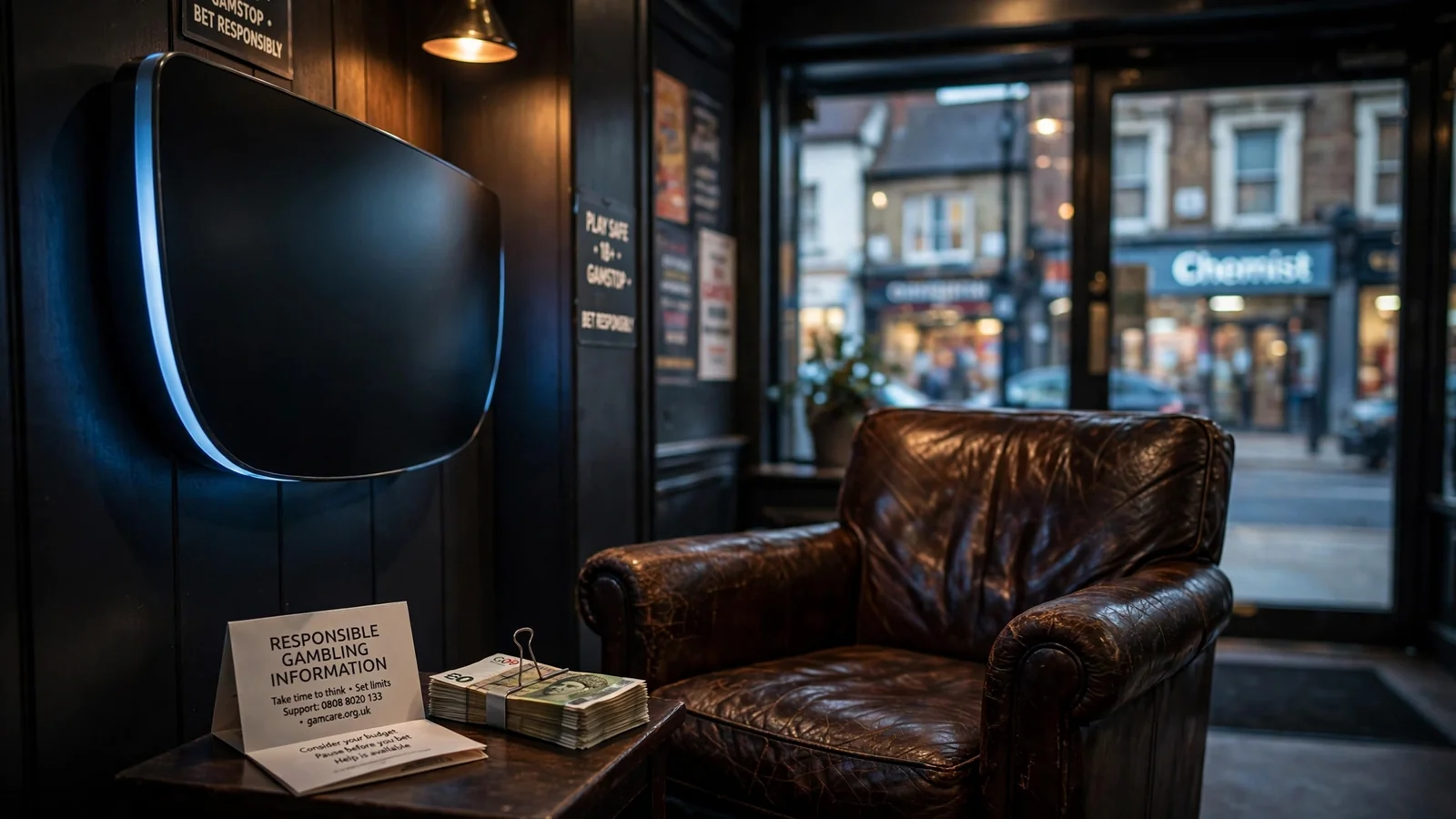
Nor does the Anjouan framework require casinos to integrate GAMSTOP. A site holding this licence may therefore remain accessible even if you have registered with the UK self-exclusion scheme. I would not treat a familiar logo, or the word “licensed”, as proof that UK safeguards apply.
Financial Risk
Anjouan licences do not guarantee that your balance is held separately from the operator’s money; if the business fails, you may be treated as an unsecured creditor.
Complaint handling is another limit. The Anjouan authority does not investigate, mediate or decide individual player complaints. Operators must respond to complaints within 30 calendar days under the framework, but a required response is not the same thing as an independent decision in your favour. Anjouan-licensed casinos are not required to offer an independent dispute-resolution service comparable to the routes attached to UKGC-approved operators.
That leaves a real gap. If the casino changes how it interprets its terms, delays a payment or closes an account, you do not gain access to the UK regulator’s complaints process simply because the operator has a licence elsewhere. Read the terms before depositing, and keep copies of the relevant rules and any messages. Useful, not a guarantee.
Check the exact operator
Before trusting an Anjouan casino licence, look for the operator’s public register entry. Check that the company name matches the one running the site and that the licence has not expired. A badge alone does not establish either point. If the names differ, or you cannot confirm the entry, do not assume the licence covers that casino.
This is where “best” becomes a slippery label. An Anjouan licensed casino may display a valid authorisation for its permitted markets, but that does not establish that it may accept players in Britain, protect balances through fund segregation or provide independent complaint adjudication. Those are separate questions.
I would make the limits part of the decision, not a footnote after signing up. Check the licence, the company, the terms and where the operator is authorised to serve customers. And be honest with yourself about what happens if a dispute lands in a place where the regulator will not take it up. A badge is only a starting point.

Curaçao Casinos, Crypto and the Payment Catch
A Curaçao licence can sit beside a cashier offering cards, e-wallets, bank transfers or cryptocurrency. That menu tells you how a site may take a deposit; it does not, by itself, tell you whether the payment is suitable for you or what protections apply. Offshore operators may route transactions through alternative processors, so the name shown at checkout might not match the casino brand.
I used to treat a familiar payment logo as a kind of reassurance. It isn’t. Before sending money, check the payment page and the operator’s terms: which methods are available to customers in Britain, whether the payment is processed by a third party, and whether the method you use is permitted for gambling. A method appearing on the deposit screen is not a promise that it will work for every customer or every transaction.
Crypto is the part that needs the clearest explanation. A cryptocurrency deposit can get around the UK ban on gambling deposits funded by credit cards. That is a technical route around a payment restriction, not evidence that the casino is UK-regulated or that using crypto makes the transaction safer. Once you move money into a digital asset, you also need to understand the asset and transfer process yourself. Don’t confuse “accepted” with “protected”.
The phrase “licensed crypto casino” can sound more definite than it is. A Curaçao casino licence does not turn cryptocurrency into a regulated payment method for your benefit, and it does not establish that a site offers a no-verification account. A casino may still ask you to confirm your identity or the source of funds under its own procedures. Read the rules before depositing; don’t assume that paying in crypto means you can remain anonymous.
Attention: Using cryptocurrency to bypass credit card restrictions does not mean the casino is UK-regulated or that the transaction is protected.
Some specialist reviews have also reported casinos offering deposits charged to a mobile phone bill or taken from prepaid credit. Treat that as a possibility to verify directly, not a standard feature: availability can change, and the operator’s payment terms are what matter.
I’d keep the deposit decision separate from the excitement of a bonus or a new cashier option. Check who receives the payment, what currency or asset is involved, and whether you can afford to lose the amount sent. A supported deposit method does not guarantee that it can be used for every later transaction.
Most importantly, check the law that applies where you live and understand the implications of using an offshore gambling service. Operators offering real-money gambling to customers in Great Britain need UK Gambling Commission authorisation; a payment route does not replace that requirement. Don’t let a smooth checkout do the thinking for you.
What UK Gambling Commission Approval Actually Gives You
A UK Gambling Commission licence is more than a badge on a casino’s footer. It means the operator is authorised to offer gambling to customers in Great Britain and sits within the UK regulatory system. That matters most when something goes wrong, not when a welcome banner is flashing.
One difference you can feel is access to responsible-gambling protections. UKGC-regulated operators must provide mandatory tools; a casino outside that system does not have the same obligation. At a non-UK regulated casino, you may have fewer ways to put limits around your play or step away from it. The exact features vary by operator, so I would not assume a familiar logo or menu means the same safeguards apply.
GamStop is part of that distinction. Casinos not on GamStop are not included in the UK Gambling Commission’s self-exclusion scheme. If you have registered with GamStop, do not treat a non-UK site as another route through the same system: it will not be covered by that exclusion. That is a serious practical gap, not a minor difference in branding.
Complaints are another point where the licence matters. When you play offshore, you give up access to the UK’s Financial Ombudsman Service and the mandatory responsible-gambling tools available through the UK system. If a dispute arises, you cannot assume that a UK body will step in just because the site accepts your account or displays a foreign casino gaming licence. Different regulator, different protections.
I learned not to read “licensed” as “protected in the way I expect”. The word tells you there is some form of authorisation; it does not tell you that the operator is answerable to the UK Gambling Commission. Nor does it mean a UK complaints route applies. Check which regulator issued the casino operating licence and whether the operator is authorised for Great Britain. A licence comparison between the MGA and UKGC, for instance, is not a comparison between two versions of the same UK approval.
UKGC vs Non-UK
- UKGC-regulated operators must provide mandatory responsible-gambling tools.
- Non-UK sites are not covered by the GamStop self-exclusion scheme.
- Offshore players lose access to the UK’s Financial Ombudsman Service.
- A foreign casino gaming licence does not grant access to UK complaints routes.
If you are checking a list of UK Gambling Commission licensed online casinos, the key question is whether the named operator is actually authorised by the Commission—not whether a site calls itself licensed. The regulator’s approval is relevant because it ties the operator to UK requirements and protections. It is not a promise that you will never have a dispute. But if you do, the difference between being inside and outside the UK system is real.
I used to skim past that part. Bad habit.
MGA-Licensed Casinos: Malta Is a Separate Licence, Not a UK One
An MGA-licensed casino is authorised by the Malta Gaming Authority, not by the UK Gambling Commission. That sounds obvious when written down, but a polished site can make a Malta licence feel like a stamp of approval for British customers. It isn’t. A licence identifies the regulator behind the operator; it does not turn that regulator into the UK one.
Malta is one of the jurisdictions associated with non-UK-regulated casinos, alongside Curaçao, Gibraltar and Anjouan. So if a site highlights a Malta licence, read that as information about its licensing base—not proof that it is authorised to offer gambling in Great Britain. Operators serving customers there need the relevant UK Gambling Commission licence, wherever the company itself is based.
I used to treat a regulator’s name as if it answered every question. It doesn’t. Check what company the licence belongs to, whether the site’s own terms identify the same operator, and whether the licence can be verified through the regulator’s public information. A badge in a footer is easy to display; matching the details takes a little more effort. Small check. Big difference.
The same goes for labels such as “small casino licence UK” or “casino app licence”. A smaller site does not get a different pass, and an app is still a way to access a gambling service. The format and size of the business do not replace the question of which regulator authorises it to serve British customers.
If you are weighing up a Malta-licensed casino, don’t assume that UK protections travel with the Malta badge. Non-UK-regulated casinos are outside the UKGC system; you should not expect access to UK regulator complaint routes or GamStop through them. Responsible-gambling safeguards and data protections may also be less stringent than at UKGC-licensed operators. Terms can change, disputes can be hard to resolve, and withdrawal or verification problems may leave you without a UK regulator to turn to.
That is not a claim that every Malta-licensed operator behaves the same way. It is a reason not to make the licence label do more work than it can. Read the operator’s terms, understand which company you would be dealing with, and check the legal position before using an overseas gambling service. A Malta licence and a UK licence are separate things. Don’t blur them.
Checking a Casino’s Licence—and What a “UK-Licensed List” Leaves Out
A list of UK-licensed online casinos can be a useful starting point, but a name on a page is not proof that the casino you have open is covered. Check the UK Gambling Commission’s own register and compare the listed company and website with the details shown by the operator. A similar brand name is not enough; the licence must relate to the business actually taking your deposits.
Verify Casino Licence
- Check the UK Gambling Commission’s own register.
- Compare the listed company name with the operator’s details.
- Verify that the website URL matches the licensed entity.
- Read the terms regarding withdrawals and account verification.
That distinction matters because an offshore licensed casino may hold permission from another jurisdiction without holding a UKGC licence. Operators serving customers in Great Britain need UKGC authorisation, wherever the company is based. A list that simply groups sites under a “licensed” heading can blur those two different things.
I used to treat a badge in a footer as the end of the check. It isn’t. Read the casino’s terms as well, especially the sections on withdrawals, account verification and complaints. If the company name or licence details do not line up, or the terms leave key steps unclear, pause before sending money. You are responsible for checking the laws that apply to you and understanding the implications of using an offshore gambling service.
The practical trouble often starts when you ask to withdraw. Accounts can be delayed or frozen while documents are reviewed, and the route to challenge a decision may be limited. A specialist review has reported cases where offshore operators asked for notarised paperwork or a video call before releasing funds; treat that as a reported possibility, not a standard procedure. The same kind of review has described daily, weekly or monthly withdrawal caps that can split a larger win into instalments. Check the operator’s current terms rather than assuming those reports apply to every site.
Withdrawal-time claims also conflict. Some accounts say cash-outs can arrive within 24 hours to five business days; others warn that they may take three or four weeks. For a casino outside UKGC oversight, there is no UK regulatory clock forcing the operator to resolve a delay by a set deadline. That uncertainty is the point.
A “UK-licensed” label should mean more than a reassuring logo. Verify the operator, check the exact site, and understand what happens if a payment is held up. If you cannot establish those basics, don’t rely on a list to do the checking for you.

New Casino Licences: Check the Company and the Rules, Not the Launch Hype
A fresh design, a welcome offer and a “just launched” badge tell you very little about who is allowed to take your money. I used to treat a new site as a chance to get in early. That was the wrong question. The useful one is whether the operator is authorised for the market it is targeting.
If a casino serves customers in Great Britain, it needs a UK Gambling Commission licence, wherever the company itself is based. So a newly opened site is not a newly licensed UK casino just because its adverts mention Britain, use pounds or show familiar payment options. The claim needs to relate to the operator and the service you are signing up for.
I’d also separate a new MGA-licensed casino from one licensed for Great Britain. The initials may look reassuring, but they do not mean the same regulator has approved the site for the same market. A licence from elsewhere is not a substitute for the UK authorisation required to serve British customers.
Before registering, look up the operator’s legal company name and check that the licence information on the site matches the relevant regulator’s public records. Read the terms that apply to your account, not just the launch-page headline. If the company behind the casino is unclear, the licence details do not line up, or the site gives you no way to establish what rules govern your play, I would stop there.
That is not me calling every new casino a scam. It is me refusing to treat “new” as evidence of safety. A launch is marketing. Authorisation is something you verify.
What payment methods work best at non-UK-regulated casino sites?
You may find credit cards, e-wallets, bank transfers and cryptocurrencies, often handled through alternative processors. Some sites also accept payments charged to a mobile phone bill or deducted from a prepaid balance.
Can I complain to the Anjouan regulator if a casino won’t pay me?
No. The Anjouan authority does not handle or decide player complaints, and Anjouan-licensed casinos do not have to offer an independent dispute process comparable to UKGC-approved ADR. Operators must respond to complaints within 30 calendar days.
Are gaming sites not on GamStop permitted for UK players?
UK law does not explicitly prohibit players from using gambling services licensed in other countries, and players do not commit a criminal offence by using an unlicensed site. However, operators serving customers in Great Britain need a UK Gambling Commission licence, and an overseas licence does not replace it.
How do casinos outside GamStop operate?
They operate outside the UK Gambling Commission’s self-exclusion scheme because they are not part of GamStop. An overseas licence does not authorise an operator to serve customers in Great Britain without the required UK licence.
Are sites that are not on GamStop legal for players in the UK to access?
UK law does not explicitly prohibit British players from using gambling services licensed elsewhere, and players do not commit a criminal offence by gambling on an unlicensed site. Operators serving customers in Great Britain are still required to hold a UK Gambling Commission licence.
Is it legal for a UK player to gamble at an Anjouan-licensed casino?
UK law does not explicitly prohibit players from using gambling services licensed in other countries, and players do not commit a criminal offence by using an unlicensed site. An Anjouan licence does not authorise a casino to operate in the United Kingdom; operators serving customers in Great Britain need a UK Gambling Commission licence.
Can UK players legally play at casinos licensed in Anjouan?
UK law does not explicitly prohibit players from using gambling services licensed in other countries, and players do not commit a criminal offence by gambling on an unlicensed site. An Anjouan licence is not permission to operate in the United Kingdom, where operators serving customers in Great Britain need a UK Gambling Commission licence.
Published by the Tenobet Casino 2 team.