
Non-Gamban Casinos UK: What the Label Means
 Available in GB
A site’s absence from Gamban’s blocking coverage says nothing by itself about its safety, licensing or relationship to self-exclusion.

Table of Contents
- What “not on Gamban” means for a UK casino
- GAMSTOP still covers every UK-licensed online casino
- Why a site may not be blocked—and why that is not a safety check
- If you’re looking for a casino without Gamban, pause first
- “Gamban-free” does not mean gambling is risk-free
- What “best” can mean when no safe alternative can be named
- Non-GAMSTOP sites and slots: the limits still apply
- Outside Gamban is not outside your self-exclusion
- “Not part of Gamban” is not the same as being cleared to play
What “not on Gamban” means for a UK casino
“Not on Gamban” describes a relationship between a gambling site and a particular blocking tool. It does not, by itself, identify a checked group of casinos or tell you whether a site is licensed, suitable, or safe to use.
That distinction can get lost in phrases such as “Gamban-free”. The wording sounds like a status a casino has earned, as if somebody has inspected it and confirmed what kind of operator it is. That is not what the phrase establishes. It says, at most, that the site is understood to be outside the reach of Gamban’s blocking software. It is not a certification.
I used to read labels like this as if they settled more than they did. They don’t. “Not on Gamban” is about a tool’s coverage, not a stamp of approval.
Gamban and GAMSTOP are different things. Gamban is a blocking tool; GAMSTOP is Great Britain’s national online self-exclusion scheme. GAMSTOP is a multi-operator scheme that blocks access across participating licensed gambling websites and apps. So a casino being described as outside Gamban does not tell you whether it is covered by GAMSTOP, and the two names should not be used as if they mean the same thing.
The difference is easier to see when you separate the questions. One is whether a blocking tool prevents access to a particular website or app. Another is whether a person has registered for self-exclusion through GAMSTOP. A third is what regulatory status a gambling operator has. A short label about Gamban answers none of those other questions by itself.
This matters for online casinos, casino apps and sites offering slots alike. A search for casinos or slots “not on Gamban” can sound like a request for a ready-made directory, but the phrase does not supply one. It does not confirm that a site is actually absent from the tool, that the information is current, or that a particular app and its related website are treated identically. Nor does a collection of sites using that description become verified simply because they are grouped together on a page.

The word “best” makes the label sound even more decisive. Best by what measure? If the only stated feature is that a site is said not to be covered by Gamban, that tells you nothing about the quality of the casino or whether using it fits your circumstances. “Best” is an advertising word here unless it is backed by relevant, independently checked information. And the Gamban label alone is not that information.
I would be wary of treating a casino’s own wording as proof, too. A claim that a site is outside a blocking tool is not the same as a statement from that tool confirming its coverage. Even where the claim is accurate, it still describes only the tool-site relationship. It does not change the meaning of a self-exclusion registered separately through GAMSTOP.
There is also a practical difference in what the names point to. A blocking tool is concerned with restricting access on a device or through its service. GAMSTOP is a self-exclusion scheme spanning participating licensed online gambling websites and apps. They may both be discussed in conversations about avoiding gambling, but they are not interchangeable controls. Calling a casino “non-Gamban” cannot tell you that a GAMSTOP exclusion has ended or no longer applies.
That is the useful way to read the phrase: as a narrow claim about Gamban, not a verdict on the casino and not a substitute for understanding GAMSTOP. If you encounter a list of online casinos, casino apps or slot sites described this way, the heading itself does not verify the entries. It does not establish that the list is complete, current or suitable for a UK player. The label is not enough.
GAMSTOP still covers every UK-licensed online casino
A casino holding a UK licence is not a route around GAMSTOP. Since 31 March 2020, online gambling operators have been required to participate in the scheme. That means a UK-licensed casino must block customers whose GAMSTOP self-exclusion is active; it cannot decide to ignore the exclusion because a player has found its website or opened an account there before.
GAMSTOP Compliance
A UK-licensed casino must block customers with an active GAMSTOP self-exclusion; it cannot ignore the exclusion even if you have accessed the site previously.
I used to think the important question was whether a particular site seemed accessible. That misses the distinction between a blocking tool on your device and a formal self-exclusion registered with GAMSTOP. They do different jobs. A site not being stopped by one tool does not alter what a UK-licensed operator is required to do when a customer is on GAMSTOP.
Registering with GAMSTOP blocks access across UK Gambling Commission-licensed gambling platforms for the period selected. The available periods include six months, one year or five years. This is a multi-operator scheme, not a request to one casino that leaves other licensed casinos untouched. The rule applies across regulated online gambling platforms, including casinos.
Why a UK licence matters here
A UK licence is not a sign that a casino can offer an exception to GAMSTOP. It places the operator within the system that requires participation. So a claim that a casino is both UK-licensed and a way to gamble while your GAMSTOP exclusion remains active should make you stop and check what is actually being claimed.
The words “not on Gamban” can sound as though they describe a casino’s relationship with a blocking app. They do not tell you whether a UK-licensed operator is permitted to serve a person who has self-excluded through GAMSTOP. Those are separate questions. The relevant point here is straightforward: a licensed online casino must respect the scheme.
This is why looking for a non-Gamban casino in the UK does not change the scope of a GAMSTOP exclusion. If your registration is active, you should not treat a site’s apparent availability as permission to gamble there. Trying to play at a site that is outside your expectations could breach your self-exclusion, and attempting to open another account elsewhere is not a safe workaround.

One registration, broad coverage
GAMSTOP is designed to apply across participating licensed operators rather than only at the casino where a person first decided to stop. Once registered, the player is blocked from all UKGC-licensed gambling platforms during the chosen period. The requirement that operators participate has been in place since 2020, so a regulated casino cannot present itself as a special exception to the scheme.
That broad coverage matters because gambling accounts can be spread across different businesses. A person may have an account with one casino and be tempted by another. GAMSTOP is intended to cover those licensed platforms together, rather than asking the person to contact each one individually before the exclusion has any effect.
I understand why someone might hope the wording on a site offers a loophole. It can be tempting to focus on the label—“Gamban-free”, for instance—and ignore the separate commitment already made through self-exclusion. But the label does not rewrite the operator’s obligations or cancel the player’s registration. Different systems, different purposes.
If you have excluded yourself through GAMSTOP, the useful response is not to test which licensed casino might let you through. Do not open another account elsewhere to work around the exclusion. Keep the commitment in place and exclude yourself from every place where you may be tempted to gamble. Gambling businesses are required to offer self-exclusion, and the point is to put distance between you and gambling, not to find a regulated account that defeats it.
- Keep your self-exclusion commitment in place
- Exclude yourself from every place you may be tempted
- Contact the scheme or business directly to check status
- Open another account to work around an exclusion
- Test if a licensed casino will let you through
- Treat a device blocker’s failure as permission to gamble
There is also a practical limit to what a regulator can do after a loss: the Gambling Commission cannot refund money spent gambling. That is another reason not to treat a licence as personal protection from every consequence. Here, its relevance is that licensed casinos must follow the self-exclusion framework—not that a licence makes gambling harmless or gives a player a way to reverse a decision.
So, if a site presents itself as a UK-licensed online casino, it should be covered by the compulsory participation rule. If your GAMSTOP exclusion is active, that is the point to act on. A device blocker and a multi-operator self-exclusion scheme are not interchangeable, and searching for casinos said to be unaffected by one does not remove the other.
Why a site may not be blocked—and why that is not a safety check
A casino page opening on your phone does not tell you whether the site is safe, properly regulated or suitable for you. It tells you only that the page opened. I used to treat that sort of easy access as a quiet green light. It isn’t one.
People may describe a casino as unaffected by Gamban when they can still reach it while using the blocking tool. But that observation does not explain why access is possible. It does not confirm the site’s regulatory status, establish what protections apply there, or show that the site has been checked against your circumstances. The absence of a block is not a certificate.


There may be different reasons a particular page can be reached, and guessing at them does not help you make a sound decision. A site’s name, design or claims about being “trusted” cannot fill in the gap. That word can look reassuring; it is still just a claim unless backed by something relevant and verifiable.
For a UK player, the distinction between being reachable and being properly authorised matters. Remote gambling operators serving the British market must hold the relevant UK Gambling Commission licence. A site that is accessible is not thereby shown to hold one. Nor does a page loading prove that the operator has the safeguards you might expect from a UK-licensed business. Check the status through the regulator’s own information rather than treating a working link as evidence.
That still does not make a check a reason to gamble. If you have excluded yourself from a casino or website, the agreement is about not gambling there; it is not cancelled by the fact that another page is reachable. Self-exclusion is a formal commitment, and the responsibility to stick to it remains with you. Playing at a site that you excluded yourself from could breach that agreement.
GAMSTOP is a multi-operator scheme covering participating licensed online gambling websites and apps. That is a different question from whether a particular blocking tool stops a page from loading. A site’s relationship to Gamban cannot tell you whether you are excluded from it, and it cannot change the terms of an exclusion you have already made.
A site’s relationship to Gamban is a technical detail about a blocking tool and does not indicate whether you are excluded from that site via GAMSTOP.
I know how easy it is to turn a technical detail into permission: “It isn’t blocked, so it must be fine.” That is a shortcut, not a safety check. The more tempting the exception sounds, the less useful it is to rely on an assumption.
If you are trying to work out whether you can play, separate the questions. Is the operator authorised to serve the British market? Have you excluded yourself from that business or through a scheme that applies to it? Does opening the page conflict with the commitment you made? A visible website answers none of those questions by itself.
A block that fails to appear does not mean the risk has disappeared. It does not make a site suitable, and it does not make an existing self-exclusion less binding. Keep those things separate. A page loading is only a page loading.
If you’re looking for a casino without Gamban, pause first
When a block stops you getting to a gambling site, the urge to find a way around it can feel immediate. I understand the logic: if one door is shut, look for another. But looking for a casino that Gamban does not block can turn a moment of frustration into a decision that cuts across a commitment you made to stop.
If you have self-excluded, do not open an account elsewhere to get around it. Playing at a non-GamStop casino could breach the terms of your self-exclusion, even if the site is accessible on your device. Self-exclusion is a formal agreement not to gamble; sticking to it is your responsibility. A technical barrier failing to stop access does not change that agreement.

I used to treat a block like an obstacle to outsmart. That was the wrong way round. The useful move is to make gambling harder to reach, not to search for another place where it might still be possible. No workaround. No new account.
Gambling businesses must offer self-exclusion by law. You can ask an individual online casino to exclude you, or use GAMSTOP to self-exclude from online gambling operators through one request. For a venue, you can ask at the casino’s customer service desk. The important practical point is to cover every place where you may be tempted to gamble, not only the site that prompted you to stop.
That might mean more than one online account or venue. Take a clear-eyed look at where you tend to go when the urge returns, then use the relevant self-exclusion options there. If you have already excluded yourself from a particular business, its venues or website should refuse you service. Do not test whether the barrier holds by trying to sign in or registering with different details.
If you are unsure what you agreed to, check the confirmation you received or contact the scheme or business directly. Do not treat uncertainty as permission to gamble somewhere else. And if money has already been spent, the Gambling Commission cannot provide a refund for gambling losses; trying another site will not undo them.
I know a pause can feel irritating when you want an answer now. Still, waiting out that urge is safer than building a route around the block. You do not have to solve everything at once. Start by not opening another account, and put self-exclusion in place wherever you might be tempted to play.
Managing the Urge
Wait out the immediate urge to find a way around a block rather than seeking a workaround.
Check your confirmation or contact the scheme directly if you are unsure what you agreed to.
Use self-exclusion options at every venue or website where you might be tempted to gamble.
“Gamban-free” does not mean gambling is risk-free
A site being described as “Gamban-free” can sound like a clean bill of health. It isn’t. It tells you, at most, something about whether a particular blocking tool appears to stop access. It does not tell you that gambling there is safe for you, or that an existing self-exclusion no longer matters.
I used to give reassuring labels more weight than they deserved. “Available” meant I could get in; I let that stand in for “right for me”. Those are not the same thing. A technical barrier and a personal commitment do different jobs, and the first cannot cancel the second.
Self-exclusion is a formal agreement with a gambling business: you ask it to stop you betting with it for a set period. In Britain, gambling businesses must offer self-exclusion and take reasonable steps to prevent an excluded customer from gambling. The agreement still depends on you respecting its purpose. A site that appears not to be blocked by Gamban does not make that commitment disappear.
That matters especially if you excluded yourself because gambling was becoming difficult to control. Trying another casino site because it seems outside a blocking tool may feel like a small exception. In practice, it can pull you back towards the behaviour you were trying to interrupt. A name suggesting “Gamban-free” does not change that risk; it is a label, not a safeguard.


Nor should the phrase be taken as reassurance that a site has checked your circumstances or is suitable for you. The key question is not whether a particular tool stops a page loading. It is whether opening an account would cut across a self-exclusion you chose to make. If it would, the sensible move is not to test the boundary.
I know how easy it is to turn a workaround into a justification: “I’m only checking”, “I’ll stop after this”. Those thoughts can sound harmless when you are looking for a way back in. They are not proof that the reason for your exclusion has gone away. Keep away from gambling places that might tempt you, rather than trying to find one the blocker does not catch.
If you are already excluded, do not open another account elsewhere to get around it. Treat the commitment as still in force, and use the support or blocking tools available to help you stick with it. No clever label changes the underlying choice.
That is the part I had to learn. Access is not permission.
What “best” can mean when no safe alternative can be named
If you’re looking into non-GamBan casinos in the UK for 2026, check each operator’s details carefully before deciding whether it suits you. The listed payout speed is one practical point to consider.
Payout speed: 1-3 business days x3bet has a listed payout speed of 1–3 business days. You can use this as one point of reference when assessing the operator.
Payout speed: 1-3 business days NightWin has a listed payout speed of 1–3 business days. You can factor that in when considering whether it meets your needs.
Payout speed: 1-3 business days Amunbet has a listed payout speed of 1–3 business days. You can keep this timing in mind as you review the operator.
Payout speed: 1-3 business days WinBeast has a listed payout speed of 1–3 business days. You can consider this detail alongside the other information available to you.
Payout speed: 1-3 business days Jetsetspins has a listed payout speed of 1–3 business days. You can use the stated timing as one factor in your assessment.
Payout speed: 1-3 business days Chanze has a listed payout speed of 1–3 business days. You can take this into account when reviewing the operator.
Payout speed: 1-3 business days EvoSpin has a listed payout speed of 1–3 business days. You can treat this as one practical detail to consider.
Payout speed: 1-3 business days SpinFormula has a listed payout speed of 1–3 business days. You can factor the stated timing into your decision.
Payout speed: 1-3 business days Dieselwin has a listed payout speed of 1–3 business days. You can keep this detail in mind while assessing the operator.
Payout speed: 1-3 business days Revery Play has a listed payout speed of 1–3 business days. You can use the stated timing as one point of reference.
“Best” only means something once you know what you are trying to solve. If you have not self-excluded and are comparing casinos, that is one situation. If you have excluded yourself and are looking for a way to gamble anyway, a list of non-GAMSTOP casinos does not solve the real problem. It points towards a workaround.
I know how easy it is to make the wording sound harmless. “Just looking” becomes “checking what’s available”, then opening an account starts to feel like the next small step. It isn’t small if you made a formal agreement not to gamble. Self-exclusion means committing not to gamble, and sticking to that commitment is your responsibility.
A casino that was not part of your exclusion does not automatically become a safe alternative. Playing there could breach the terms of your self-exclusion. Nor does a “best” label change the basic issue: if you are trying to get around a block, choosing somewhere else to play works against the boundary you set.
Attention: If you have a formal agreement not to gamble, seeking a “best” alternative casino is a workaround that works against the boundaries you set.
Gambling businesses are required by law to offer self-exclusion. They must also take reasonable steps to stop a customer who has excluded themselves from gambling with them. If you have excluded yourself from a venue or website, you should expect to be refused service there. That safeguard is not an invitation to look for another account elsewhere.
I used to treat a search for a better option as a practical problem: find a different place, carry on. What I missed was that the urge to find somewhere else was the part worth paying attention to. A new account might feel like a fresh start. It is not.
If you are already self-excluded, don’t open another account to work around it, whether the site is described as one of the best non-GAMSTOP casinos or anything else. Instead, exclude yourself from every place where you might be tempted to gamble. That can mean dealing directly with the gambling businesses where you have accounts, as well as keeping away from other gambling venues or websites that feel like an easy next step.
If you are not trying to bypass an exclusion, “best” still needs to mean more than a confident label or a polished offer. But no ranking can make gambling suitable for someone who has decided to stop. For that person, the useful choice is not between casinos. It is whether to honour the exclusion.
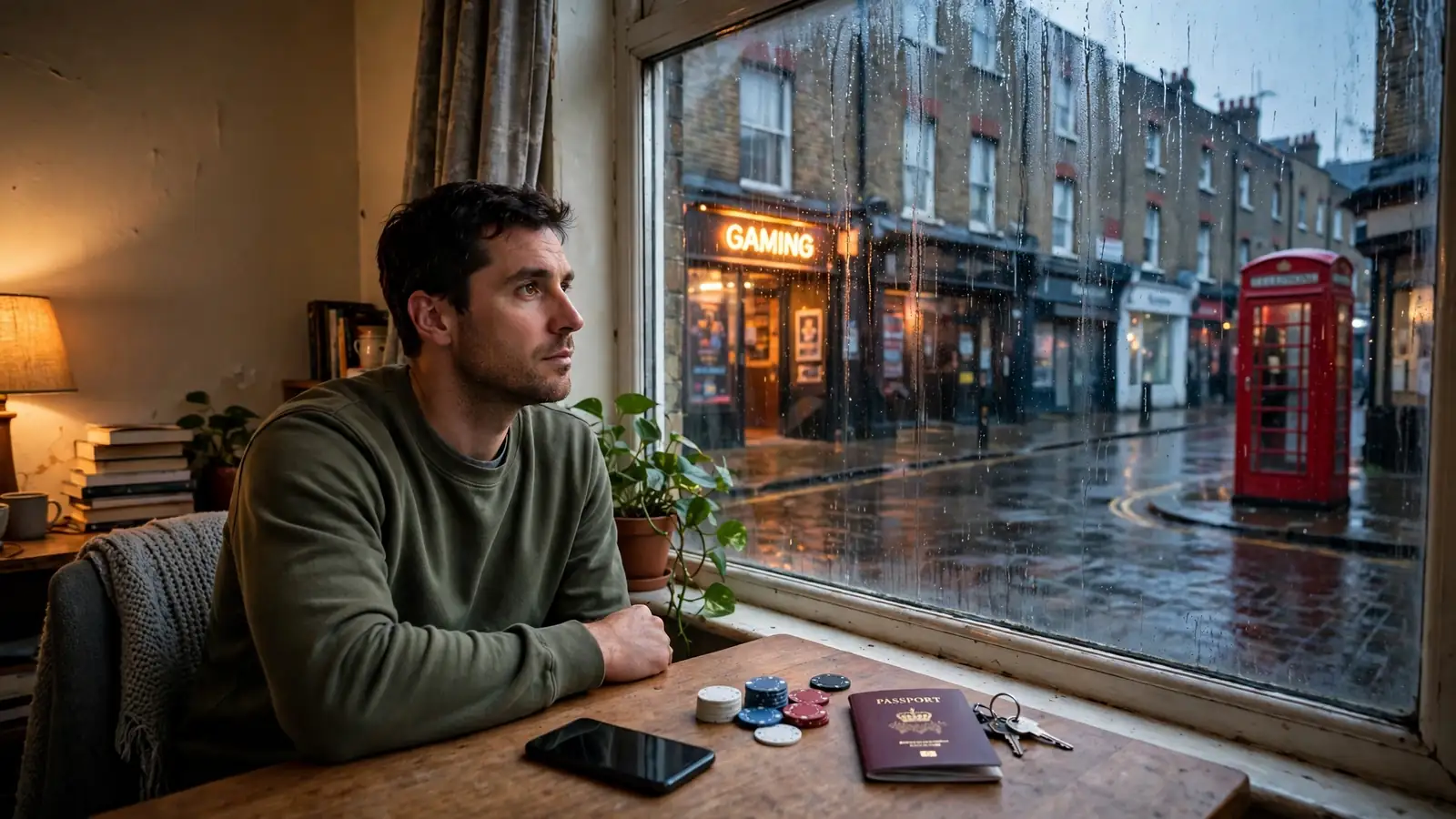
That distinction matters. The advertising can wait.
Non-GAMSTOP sites and slots: the limits still apply
When I used to think about slots, I treated the game and the website as separate things: find a slot, find somewhere to play it, and assume the rules followed the game. That misses the point. In Britain, protections apply to operators and the gambling they offer; they are not switched off because someone describes a site as “Gamban-free” or promotes slots as outside a blocking tool.
For online slots at UK-licensed operators, autoplay is banned. A spin must take at least 2.5 seconds. Those rules are meant to prevent play from being automated or sped up in ways that make it harder to keep track. They apply whether you are looking at a familiar game or one you have never seen before.
That is the regulated setting. A site’s apparent ability to load while Gamban is active does not show that the site is licensed, or that British safeguards apply there. “No Gamban” describes a relationship with a blocking tool, not a regulatory status. The two things are easy to muddle when you are focused on finding a place to play. They are not the same.
At UK-licensed operators, a spin must take at least 2.5 seconds.
Autoplay is prohibited for online slots at UK-licensed operators.
Maximum stakes are £5 for adults 25+ and £2 for those aged 18 to 24.
What the slot rules do—and do not do
A minimum spin time and a ban on autoplay are limits on how online slots can operate at UK-licensed casinos. They are not a promise that slots are safe, and they do not make it sensible to look for another place to gamble if you have excluded yourself. A technical rule can shape how a game works without changing your personal commitment not to play.
There are also maximum stakes for online slots in Britain: £5 per game cycle for customers aged 25 and over, and £2 for customers aged 18 to 24. The £5 limit for all adults took effect on 9 April 2025. Those limits belong to the UK regulatory framework; they should not be assumed to govern a site simply because it offers the same kind of game.
A site outside that framework may not provide the safeguards you expect. I have learned the hard way that a familiar-looking game or a polished page tells you little about what rules an operator follows. Labels are cheap. The rules matter.

Account limits are another safeguard
UK remote gambling operators must prompt new customers to set a financial limit before their first deposit and make account-level limit controls accessible. This is a way to set a boundary on an account, not a substitute for self-exclusion. If you have made a formal decision not to gamble, setting a limit at another casino is not a safe workaround.
UK-licensed casinos also cannot accept credit cards for gambling. That includes credit-card funding routed through a money service business, and operators cannot accept wallet payments where the wallet lets credit-card funds be used for gambling. These restrictions are part of the regulated system, not features to expect everywhere a slots page can be opened.
Operators must verify a customer’s age before allowing a deposit into a gambling account. For people aged 18 to 24, the lower maximum slot stake applies. These are safeguards with specific purposes; they do not establish that a particular site is suitable for you, or that you should be playing there at all.
The wider framework matters too. GAMSTOP is a multi-operator self-exclusion scheme covering participating licensed gambling websites and apps. Since participation became compulsory for UK-licensed online operators in 2020, regulated casinos have been required to block customers who are self-excluded. Slot rules do not create a separate route around that block.
Don’t treat a slot as a loophole
If you have self-excluded, looking for slots on a site that appears unaffected by Gamban can still put you in conflict with that decision. A game’s speed, stake cap or account controls do not cancel an exclusion. Nor does the absence of a blocking message tell you that an operator is authorised to serve customers in Britain.
I used to give reassuring labels too much weight because they made the next step feel small. It wasn’t. If you are trying to get around a block or self-exclusion, do not open another account elsewhere. Exclude yourself from every place where you may be tempted to gamble, rather than testing whether a different slots page lets you through. A rule on the screen is not permission.
Slot Safeguards
- Slot rules like stake caps and spin times apply only to UK-licensed operators.
- Technical access to a site does not prove the operator is authorised in Britain.
- No slot rule or technical loophole cancels a personal self-exclusion commitment.
Outside Gamban is not outside your self-exclusion
A site being outside Gamban’s reach does not switch off a self-exclusion you have made. Those are separate things: a blocking tool affects access on a device, while self-exclusion is a commitment not to gamble with the businesses covered by your agreement.
I used to look for a technical gap and tell myself it meant the decision no longer applied. It didn’t. If you have excluded yourself from a venue or website, trying to reach it another way does not undo that agreement. And opening an account somewhere else to keep gambling around an exclusion is not a safe workaround. It can put you in conflict with the commitment you made. Don’t do it.
GAMSTOP is a multi-operator scheme for online gambling. Registering through it blocks access across participating licensed gambling websites and apps, including UK-licensed online casinos. A casino being described as outside Gamban does not mean it is outside GAMSTOP, or that you are free to gamble there. The relevant question is whether you have excluded yourself from that business or through a scheme that covers it.
That distinction matters when temptation starts making technicalities sound convincing. “Not blocked” only describes access; it does not tell you that gambling is suitable for you, or cancel an exclusion. If you have self-excluded, avoid looking for another route to gamble. Exclude yourself from every place where you might be tempted, rather than relying on one barrier to cover every situation.
Gambling businesses must offer self-exclusion, and customers who have excluded themselves from a venue or website should be refused service there. GAMSTOP gives players a way to self-exclude across participating licensed online operators, rather than approaching each one separately. If you are unsure whether your exclusion is active or what it covers, contact the scheme or the business directly instead of testing access by trying to open an account.

An exclusion is there to create distance when your resolve is under pressure. A gap in a blocking tool is not permission to cross it. And if gambling has cost you money, the regulator cannot refund money spent gambling; finding another site will not put it right.
“Not part of Gamban” is not the same as being cleared to play
A site’s relationship with Gamban tells you about a blocking tool, not about your own agreement to stop gambling. If you have self-excluded from a gambling business, that commitment does not disappear because another site is not blocked by the software. The two things are separate.
Self-exclusion is a request to a gambling company not to accept your bets for an agreed period. You can make that request to one business, rather than through a scheme covering multiple operators. Once you have done so, trying to gamble elsewhere because it seems outside the block may still undermine the reason you excluded yourself.

I have made the mistake of treating a technical gap as permission. It is not. A site appearing accessible says nothing about whether opening an account would conflict with your own self-exclusion, and I would not use that appearance as a green light.
Gambling businesses are required to offer self-exclusion, and they must take reasonable steps to stop a person who has excluded themselves from gambling with them. That obligation concerns the customer’s exclusion from that business; it does not turn a blocking app into the measure of whether you are free to play. Nor does the name “not part of Gamban” tell you that a site has checked your circumstances or that gambling there is appropriate.
If you have excluded yourself and feel pulled towards another account, do not open one to get around the commitment. Make the boundary broader instead: exclude yourself from every gambling business or venue where you might be tempted to play. It is easier to keep a commitment when you are not testing it against a tempting open door.
A technical block can be useful, but it is not the agreement itself. Your self-exclusion still matters.
How does self-exclusion work?
You identify the gambling sites or venues you want to exclude yourself from, register, provide details to confirm your identity and choose a duration. The excluded businesses must refuse you service; online, you can exclude yourself through GAMSTOP or contact an individual casino.
How do I return from self-exclusion?
For GAMSTOP, you must contact the scheme directly to request removal. A 24-hour cooling-off period applies, and after removal it may take operators a further 24 to 48 hours to update your status.
How does GAMSTOP benefit me?
GAMSTOP lets you block access to your existing accounts and stop yourself creating new ones across UK-licensed online gambling operators, using one free registration. You can choose an exclusion period of six months, one year or five years.
How long does it take for GAMSTOP to become active after sign-up?
After your identity has been verified, GAMSTOP starts a 24-hour cooling-off period, and your exclusion remains active during that time.
Created by the ”Tenobet Casino 2” editorial team.